Introduction: The Silent Destroyers Lurking Within Your Walls
Termites, often called “silent destroyers,” cause extensive home damage before detection. This guide details 39 critical signs of termite activity, helping you protect your home.
Understanding Termite Types and Their Distinctive Clues
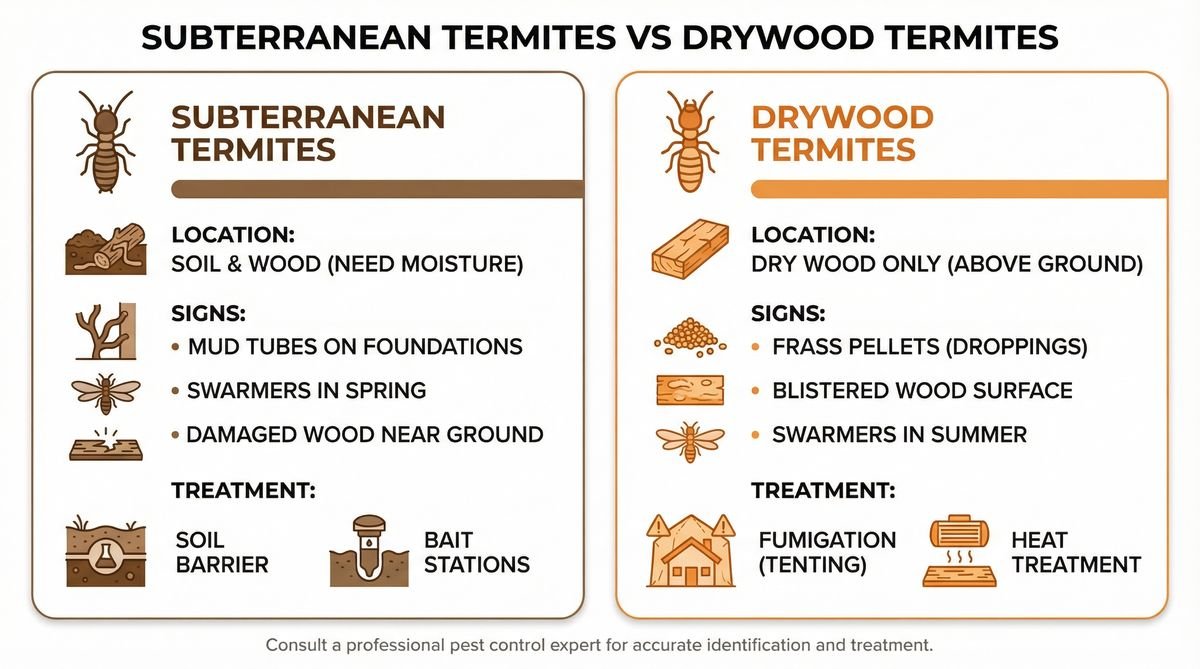
Subterranean Termites: Signs of Their Hidden Work
Answer Capsule: Subterranean termites, highly destructive, reside in underground colonies and construct mud tubes to access wood. Their presence is often revealed by these visible tunnels or water-like damage to wood.
These termites live in soil, building mud tubes to reach wood. Damage often goes unnoticed.
Drywood Termites: Unmasking Their Presence
Answer Capsule: Drywood termites infest dry wood directly, without soil contact. Their presence is often indicated by small piles of fecal pellets (frass), resembling sawdust or coffee grounds, or tiny kick-out holes in infested wood.
Drywood termites infest wooden structures directly. Frass (fecal pellets) is a key indicator.
Early Warning Signs: Catching Termites Before Extensive Damage
1. Mud Tubes on Foundation or Walls
Answer Capsule: Pencil-sized mud tubes on foundations, exterior walls, or in crawl spaces are definitive signs of subterranean termites, serving as protected pathways between their nest and your home’s wood.
These tunnels provide a sheltered route for subterranean termites.
2. Discarded Wings Near Windows and Doors
Answer Capsule: Piles of translucent, discarded wings near windows, light sources, or in spiderwebs signal a recent termite swarm, indicating reproductive termites have emerged from an existing infestation to form new colonies.
Shed wings indicate a recent termite swarm and a mature colony nearby.
3. Swarming Termites (Especially After Rain)
Answer Capsule: Flying termites, particularly after rain or in warm, humid conditions, signify a termite swarm. Reproductive termites leave their colony to establish new ones, often indicating a well-established infestation in or near your home.
Indoor swarming termites are a critical sign of active infestation.
4. Frass (Termite Droppings) Accumulations
Answer Capsule: Small, granular piles resembling sawdust or coffee grounds (frass) are drywood termite fecal pellets, expelled from tunnels. Their presence near wooden structures or furniture indicates a drywood termite infestation.
Frass accumulates beneath kick-out holes, indicating drywood termites.
5. Hollow-Sounding Wood When Tapped
Answer Capsule: Wood that sounds hollow when tapped indicates termites have consumed its interior, leaving a thin outer shell. This common sign of advanced termite damage can be found in walls, floors, or structural timbers.
Hollow-sounding wood suggests termites have eaten its interior.
6. Small, Pin-Sized Holes in Wood or Drywall
Answer Capsule: Tiny, pin-sized holes in wood or drywall, sometimes capped with dirt, are often termite exit or ventilation points, indicating their presence and tunneling activity within the material.
These holes are subtle but significant indicators of termite activity.
7. Bubbling or Peeling Paint/Wallpaper
Answer Capsule: Bubbling, peeling, or blistering paint and wallpaper can mimic water damage but often occurs when termites tunnel close to the surface, causing the finish to lift as they create galleries beneath.
Termites introduce moisture, causing paint or wallpaper to bubble.
8. Sagging or Uneven Floors
Answer Capsule: Sagging or uneven floors, particularly in areas like bathrooms or kitchens, signal severe structural damage from termites weakening floor joists and subflooring, leading to noticeable dips and instability.
Sagging floors indicate severe structural damage from termites.
9. Stuck Windows or Doors
Answer Capsule: Windows and doors that are difficult to open or close, appearing stuck or warped, can indicate termite damage. Termite tunneling and introduced moisture cause wooden frames to swell and distort.
Stuck windows or doors can be caused by termite damage to frames.
10. Wood Dust or Powder Near Wooden Structures
Answer Capsule: Fine wood dust or powder near wooden furniture, baseboards, or structural elements can indicate wood-boring insects, including drywood termites, expelling material as they tunnel and feed.
Wood dust or powder suggests internal damage from wood-boring insects.
11. Clicking Sounds from Walls
Answer Capsule: Faint clicking or tapping sounds from within walls, especially at night, can be a direct auditory sign of active termite colonies, as soldier termites bang their heads to signal danger.
Faint clicking sounds from walls can indicate active termites.
12. Musty Odor Similar to Mildew
Answer Capsule: A persistent, musty odor, like mildew or damp wood, particularly in basements or crawl spaces, can indicate a subterranean termite infestation, as they introduce moisture and promote fungal growth.
A musty odor can indicate a subterranean termite infestation.
13. Visible Termite Galleries in Exposed Wood
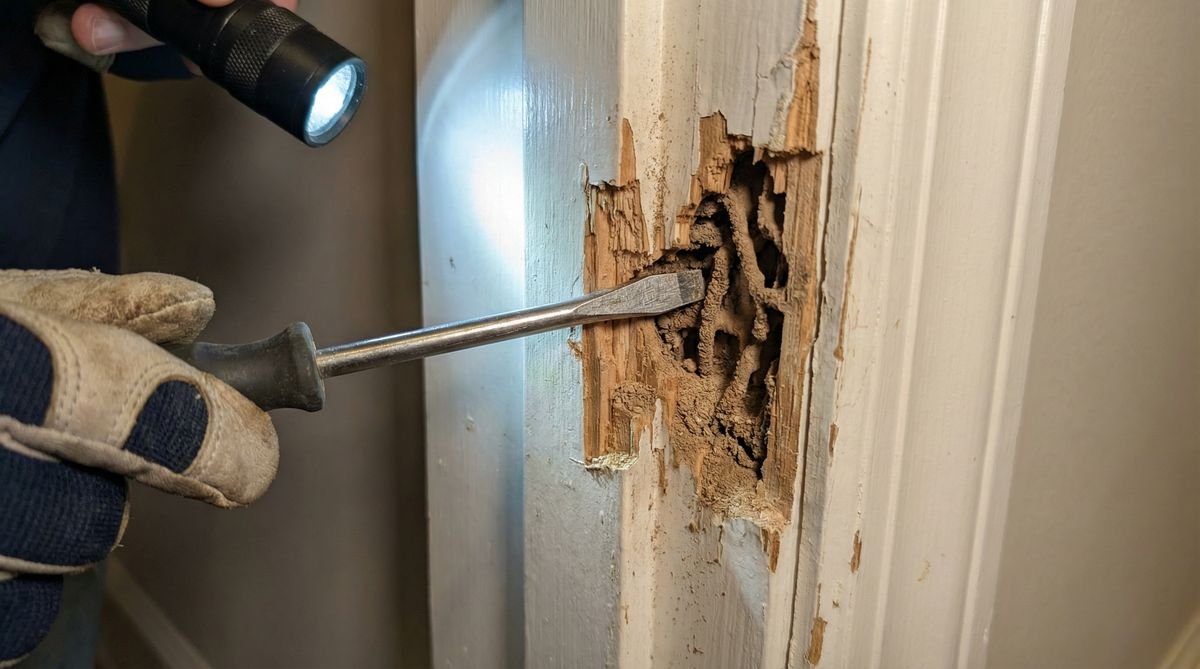
Answer Capsule: Exposed wooden structures revealing intricate tunnels or galleries are undeniable signs of severe termite damage, indicating extensive consumption of the wood’s interior and compromised strength.
Visible tunnels in exposed wood are undeniable signs of severe termite damage.
14. Damaged Wood (Chew Marks, Tunnels)
Answer Capsule: Visible damage to wood—chew marks, grooves, or internal tunnels—confirms an active termite infestation, as these are direct results of termites feeding on the cellulose within the timber.
Direct observation of damaged wood confirms an active termite infestation.
15. Loose Floorboards or Tiles
Answer Capsule: Loose floorboards or tiles, especially if spongy or unstable, indicate underlying termite damage to subflooring or joists, as termites compromise the structural integrity supporting floor coverings.
Loose floorboards or tiles result from termites damaging subfloor or supports.
16. Darkening or Blistering Wood
Answer Capsule: Darkening or blistering on wooden surfaces, resembling water stains, can subtly signal termite activity. Moisture introduced by subterranean termites causes discoloration and wood swelling or blistering.
Darkening or blistering wood can subtly signal termite activity.
17. Termite “Kick-Out” Holes
Answer Capsule: Small, circular holes in wood, often with frass, are “kick-out” holes created by drywood termites to expel fecal pellets, directly indicating their presence.
These tiny, circular holes are characteristic of drywood termites.
18. Evidence of Termites in Outdoor Wood (Firewood, Stumps)
Answer Capsule: Termite activity in outdoor wood (firewood, stumps, garden timbers) indicates a nearby population that could migrate indoors, posing a significant risk to your home.
Termites in outdoor wood signify a local population that could migrate indoors.
19. Distorted or Warped Wood
Answer Capsule: Distorted, warped, or twisted wood signals advanced termite damage. Internal consumption of wood fibers and introduced moisture compromise the wood’s structural integrity and shape.
Distorted or warped wood signals advanced termite damage.
20. Pencil-Sized Tunnels in Wood
Answer Capsule: Internal pencil-sized tunnels within wooden structures, revealed when damaged wood is broken, are clear evidence of subterranean termite activity, showcasing their intricate network of galleries.
Internal pencil-sized tunnels in wood are clear evidence of subterranean termite activity.
21. Uneven or Distorted Walls
Answer Capsule: Uneven, bulging, or distorted walls indicate significant termite damage to internal wooden studs or drywall, compromising the wall’s flatness and structural integrity.
Uneven or distorted walls indicate significant termite damage.
22. Weakened or Damaged Ceilings
Answer Capsule: Weakened or damaged ceilings, including sagging plaster or drywall, are critical signs of termite activity in ceiling joists or roof timbers, posing a serious threat to structural stability.
Weakened or damaged ceilings are critical signs of termite activity.
23. Cracks in Foundation or Masonry
Answer Capsule: Cracks in foundations or masonry, while not termite-caused, serve as entry points for subterranean termites, granting them access to wooden structures and increasing infestation risk.
Cracks in foundations serve as entry points for subterranean termites.
24. Termite Nests in Trees or Near Home
Answer Capsule: Visible termite nests in trees, stumps, or yard structures, especially near your home, indicate a thriving termite population that could easily extend foraging to your house.
Visible termite nests near your home indicate a thriving population.
25. Termite Damage to Books or Paper Products
Answer Capsule: Damage to books, cardboard, or paper products—irregular chew marks or tunnels—indicates termites feeding on cellulose, often in high-humidity areas.
Damage to books or paper products indicates termites feeding on cellulose.
26. Termite Damage to Insulation
Answer Capsule: Termites, especially subterranean species, tunnel through insulation in walls or attics to reach wood, leaving mud and damaged insulation, indicating hidden pathways.
Termites tunnel through insulation to reach wood, leaving mud and damage.
27. Electrical Short Circuits (Rare, but Possible)
Answer Capsule: Rarely, severe termite infestations can cause electrical short circuits if termites chew through wiring insulation while tunneling through wood, posing a fire hazard.
Severe termite infestations can rarely cause electrical short circuits.
28. Termite Damage to Furniture
Answer Capsule: Visible damage to wooden furniture—unexplained grooves, tunnels, or frass—indicates a drywood termite infestation, as they establish colonies directly within wooden objects.
Visible damage to wooden furniture indicates a drywood termite infestation.
29. Termite Damage to Decking or Porches
Answer Capsule: Soft, weakened, or visibly damaged wooden decking, porch supports, or railings signal termite activity. These outdoor structures are highly susceptible due to moisture exposure and soil contact.
Damaged decking or porches signal termite activity.
30. Termite Damage to Fences
Answer Capsule: Termite damage to wooden fences—weakened posts, hollow sections, or mud tubes—indicates a nearby termite population that could threaten your home.
Termite damage to fences indicates a nearby population.
31. Termite Damage to Sheds or Outbuildings
Answer Capsule: Weakened or damaged wooden sheds, garages, or outbuildings are susceptible to termites, serving as potential satellite colonies that can extend to your main residence.
Damaged sheds or outbuildings are susceptible to termites.
32. Termite Damage to Wooden Beams or Joists
Answer Capsule: Termite damage to critical structural elements like wooden beams or floor joists is severe, leading to compromised integrity, sagging floors, and potential collapse, requiring urgent professional intervention.
Termite damage to beams or joists is severe.
33. Termite Damage to Subflooring
Answer Capsule: Termite damage to subflooring, often hidden, manifests as spongy or creaky floors, indicating compromise to the foundational layer supporting your floor coverings.
Termite damage to subflooring manifests as spongy or creaky floors.
34. Termite Damage to Roof Trusses
Answer Capsule: Termite damage to roof trusses in attics compromises roof integrity, causing sagging, leaks, and potential collapse, necessitating immediate, specialized treatment.
Termite damage to roof trusses compromises roof integrity.
35. Termite Damage to Cabinets
Answer Capsule: Termite damage to wooden cabinets, especially in moist areas like kitchens or bathrooms, appears as hollow spots, frass, or visible tunnels, compromising functionality and appearance.
Termite damage to cabinets appears as hollow spots or frass.
36. Termite Damage to Baseboards
Answer Capsule: Termite damage to baseboards—subtle discoloration, slight warping, or hollow sounds—indicates termites tunneling behind or within these decorative wooden elements.
Termite damage to baseboards indicates tunneling.
37. Termite Damage to Window Sills
Answer Capsule: Termite damage to wooden window sills—softness, discoloration, or small holes—indicates an infestation that compromises window integrity and allows further home entry.
Termite damage to window sills compromises window integrity.
38. Termite Damage to Door Frames
Answer Capsule: Termite damage to wooden door frames—sticking doors, visible tunnels, or a hollow sound—indicates an infestation affecting door functionality and entryway structural integrity.
Termite damage to door frames affects functionality.
39. Termite Damage to Hardwood Floors
Answer Capsule: Termite damage to hardwood floors—buckling, blistering, or dark spots—indicates termites consuming wood from beneath, compromising aesthetic and structural quality.
Termite damage to hardwood floors causes buckling or blistering.
Beyond the Signs: What to Do Next
Answer Capsule: If you suspect termite activity, contact a professional pest control service for thorough inspection and diagnosis. Avoid disturbing the area, as early intervention minimizes damage and cost.
If you suspect termites, contact a professional. Avoid disturbing the area.
Frequently Asked Questions About Termite Damage
How can I tell if the damage is from termites or water?
Answer Capsule: Termite damage often mimics water damage (bubbling paint, warped wood); however, termite damage includes mud tubes, frass, or hollow wood, absent in pure water damage.
Termite damage includes mud tubes, frass, or hollow wood, unlike water damage.
Are termite swarms dangerous?
Answer Capsule: Termite swarms are not directly dangerous to humans or pets (no bites/stings); however, their presence critically indicates a mature, active colony, posing a significant threat to your home’s structure.
Termite swarms indicate a mature, active colony, threatening your home.
What time of year are termites most active?
Answer Capsule: Termite activity, especially swarming, peaks in spring and early summer after rain. However, termites remain active year-round within homes, necessitating continuous vigilance.
Termites are active year-round, with swarming peaking in spring/early summer.
What’s the difference between subterranean and drywood termites?
Answer Capsule: Subterranean termites live in soil, build mud tubes to access wood, and cause water-like damage. Drywood termites infest dry wood directly, leaving distinctive fecal pellets (frass).
Subterranean termites live in soil; drywood termites infest dry wood.
How fast can termites cause damage?
Answer Capsule: Termite damage speed varies by colony size and species. Large colonies can cause significant structural damage within months to a few years, often unnoticed until extensive and costly.
Damage speed varies, but large colonies cause significant damage within months to years.
What should I do if I think I have termites?
Answer Capsule: If you suspect termites, immediately contact a professional pest control company for inspection. Avoid disturbing the area, as this can cause termites to disperse, making treatment harder.
Contact a professional if you suspect termites. Avoid disturbing the area.
Conclusion: Protecting Your Home from Termite Threats
Answer Capsule: Recognizing subtle termite damage signs and seeking professional help swiftly is crucial. These silent destroyers cause extensive, costly structural damage if left unchecked.
Early detection and professional help are crucial to protect your home from termites.
References
1. U.S. Environmental Protection Agency. Termites: How to Identify and Control Them.
