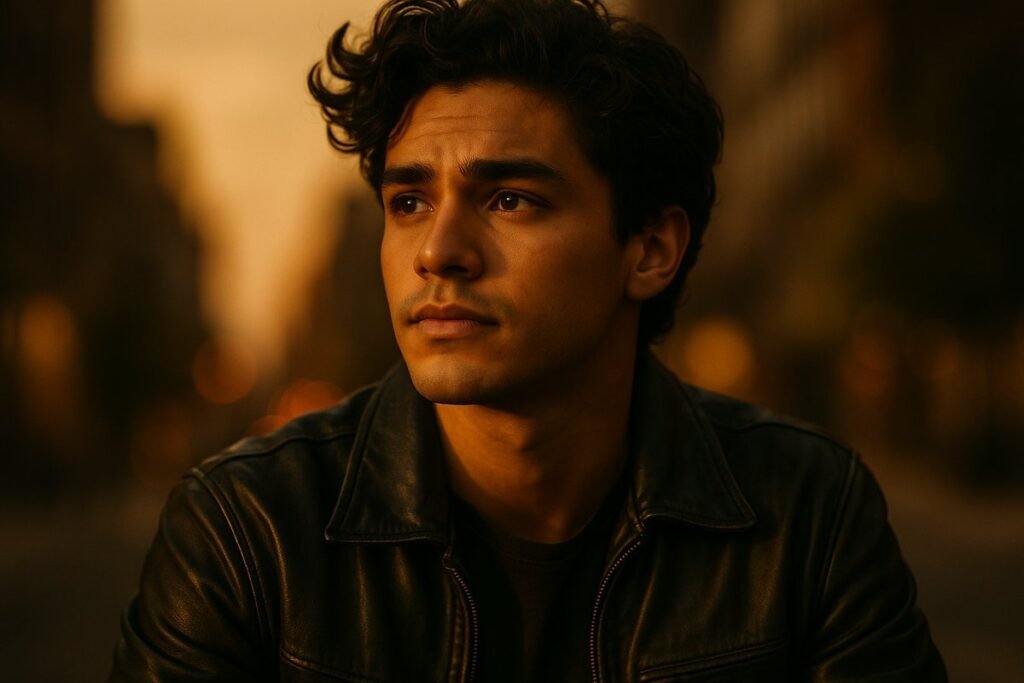
A Chilean Beginning, An American Journey
Fleeing Pinochet’s Regime
Long before he became a household name, the story of a young Pedro Pascal began with a dramatic upheaval. Born José Pedro Balmaceda Pascal in Santiago, Chile, his early life was shaped by political turmoil.
His parents were involved in opposition movements against the brutal dictatorship of Augusto Pinochet. Just nine months after his birth, the family was forced to flee their homeland, seeking political asylum to ensure their safety.
Finding a New Home in the United States
The family’s journey first led them to Denmark before they eventually settled in the United States. They built a new life in San Antonio, Texas, and later moved to Orange County, California.
Growing up in a bilingual household, Pascal navigated two cultures, speaking both Spanish and English. This cross-cultural upbringing would become an integral part of his identity as a person and an artist.
The Seeds of an Actor
An Early Love for Cinema
The spark for performing was ignited early. Pascal’s father often took the family to the movies, an experience that captivated his imagination. He was particularly enthralled by characters like Indiana Jones.
His fascination was so intense that he famously broke his arm on two separate occasions while trying to emulate the adventurous archaeologist. It was a clear, if painful, sign of his passion for storytelling.
From School Bullying to the Stage
The transition to life in California wasn’t always smooth, as he faced bullying in his new environment. However, this challenging experience pushed him toward an outlet that would change his life.
He found his refuge and his calling at the Orange County School of the Arts. Immersing himself in drama, classic movies, and plays, he discovered a community where his passion could flourish.
Forging a Path in New York
Training at NYU’s Tisch School of the Arts
Determined to pursue his dream, a young Pedro Pascal moved to New York City in 1993. He enrolled in the prestigious Tisch School of the Arts at New York University to formally train as an actor.
This period was not only crucial for his craft but also for the relationships he built. It was at NYU that he met fellow student Sarah Paulson, who would become a lifelong friend and a vital support system.
The “Struggling Actor” Years
Graduation didn’t lead to instant success. For over a decade, Pascal lived the quintessential life of a struggling artist in New York, waiting tables to make ends meet and facing constant rejection.
He has spoken openly about the financial hardships, at one point having less than seven dollars to his name. During these tough times, friends like Paulson would give him their meal money just so he could eat.
The Faces of a Young Pedro Pascal on Screen
Memorable Early Television Roles
Despite the struggle, the young Pedro Pascal was honing his craft with small television roles. He appeared in an episode of *Buffy the Vampire Slayer* as a college student who meets a tragic, vampiric end.
He also landed guest spots on shows like *NYPD Blue* and *The Good Wife*, the latter being his first recurring role. These early parts showcased the versatility that would later define his career.
Honoring His Mother Through His Name
In 1999, following the tragic death of his mother, Verónica Pascal, he made a significant professional decision. He changed his last name from his father’s, Balmaceda, to his mother’s, Pascal.
He did this to honor her memory and because, as he noted, Americans found Balmaceda difficult to pronounce. This change marked a new chapter in his personal and professional journey.
The Dawn of Stardom
The Role That Changed Everything
After nearly two decades of persistence, his big break finally arrived. His role as the charismatic and fiery Oberyn Martell in HBO’s *Game of Thrones* catapulted him into the international spotlight.
The journey of the young Pedro Pascal, from a political refugee to a struggling actor, is a powerful story of resilience. His eventual stardom is a testament to his unwavering dedication to his craft, proving that even the longest and most difficult paths can lead to incredible destinations.
