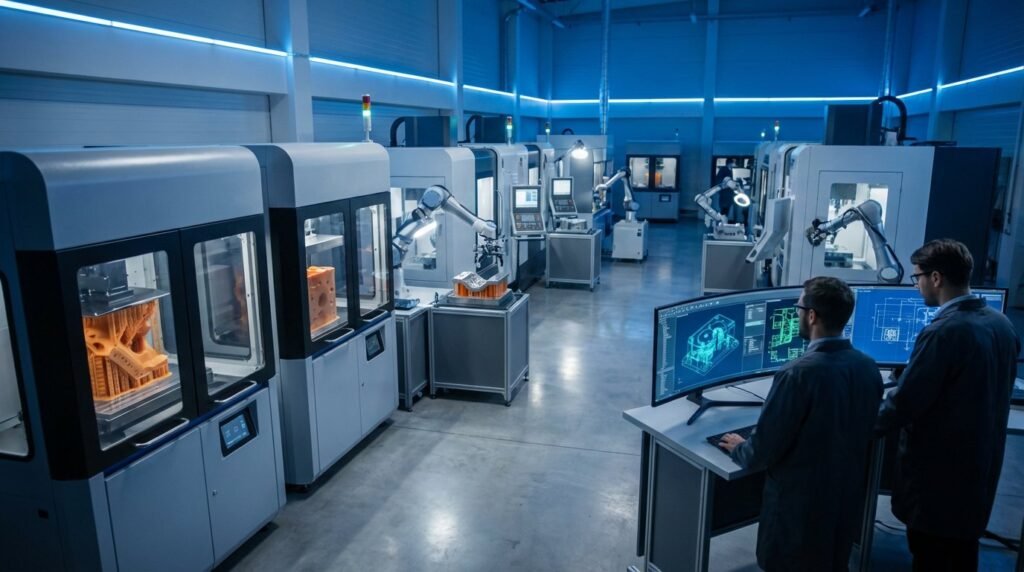
In the fast-paced world of modern manufacturing, companies are constantly seeking ways to innovate, improve efficiency, and reduce costs. A groundbreaking technology known as repmold has emerged as a transformative force, offering a powerful solution to the challenges of traditional mold-making.
This innovative approach is revolutionizing how products are designed, prototyped, and brought to market. It combines speed, precision, and sustainability in a way that was once thought impossible.
What Is Repmold Technology?
At its core, repmold—short for replication molding—is an advanced manufacturing process that creates high-fidelity molds by replicating a master pattern. This technique leverages digital design tools, 3D printing, and advanced materials to produce molds with exceptional accuracy and speed.
Unlike traditional methods that often rely on slow and expensive steel tooling, repmold offers a more agile and cost-effective alternative. It empowers manufacturers to move from concept to production in a fraction of the time.
The Repmold Process: A Step-by-Step Guide
The repmold process is a streamlined workflow that integrates digital precision with hands-on craftsmanship. It can be broken down into three key stages.
Digital Design and Master Model Creation
Everything begins with a digital blueprint. Using computer-aided design (CAD) software, engineers create a detailed 3D model of the desired part. This digital file is then used to produce a physical master model, typically through 3D printing.
This initial step ensures that the design is perfected in a virtual environment before any physical production begins, minimizing errors and material waste.
Mold Creation and Replication
Once the master model is ready, it is used to create the mold. The model is coated with a specialized material, such as silicone, epoxy resin, or polyurethane, which captures every intricate detail. This material then cures and solidifies, forming a durable and precise mold.
This mold can then be used to replicate the part multiple times, ensuring consistent quality across every unit produced.
Finishing and Quality Control
After the parts are cast from the mold, they undergo a finishing process. This may include cleaning, polishing, or other surface treatments to meet the final product specifications. Each part is then rigorously inspected to ensure it meets the required quality standards.
Key Advantages of Adopting Repmold
The adoption of repmold technology offers a multitude of benefits that give companies a significant competitive edge.
Unmatched Speed and Efficiency
Traditional mold-making can take weeks or even months. With repmold, the entire process can be completed in just a few days. This dramatic reduction in lead time allows companies to accelerate their product development cycles and respond more quickly to market demands.
Superior Precision and Consistency
The digital nature of the repmold process ensures an incredibly high level of precision. Each part produced is a near-identical replica of the master model, resulting in exceptional consistency and reduced scrap rates.
Cost-Effectiveness and Flexibility
By avoiding the high upfront costs of traditional tooling, repmold makes it economically viable to produce small batches and custom designs. This flexibility allows for greater innovation and customization without the financial risk.
Repmold’s Impact Across Industries
The versatility of repmold has led to its adoption in a wide range of industries, where it is driving innovation and efficiency.
Automotive and Aerospace
In the automotive and aerospace sectors, repmold is used to create complex, lightweight components that meet stringent safety and performance standards. It enables rapid prototyping of new designs and the production of custom parts.
Consumer Electronics and Medical Devices
For consumer electronics, repmold allows for the creation of intricate and aesthetically pleasing casings and components. In the medical field, it is used to produce custom surgical tools, implants, and prosthetic devices with the highest degree of precision.
Sustainability: Repmold’s Eco-Friendly Approach
In an era of increasing environmental awareness, repmold stands out as a sustainable manufacturing solution. The process minimizes material waste by allowing for precise control over the amount of material used.
Furthermore, the ability to rapidly iterate designs reduces the need for physical prototypes, further conserving resources. Many of the materials used in repmold are also recyclable, contributing to a more circular economy.
The Future of Manufacturing with Repmold
Repmold is more than just a new technique; it represents a fundamental shift in the manufacturing paradigm. As the technology continues to evolve, with advancements in materials and automation, its impact will only continue to grow.
By embracing repmold, companies can unlock new levels of speed, precision, and sustainability, positioning themselves at the forefront of the next industrial revolution.
