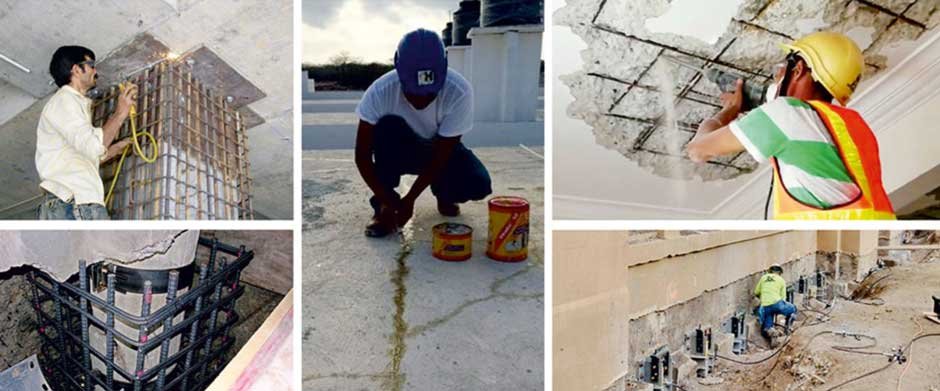
A New Era in Restoration Engineering
In 2025, the landscape of foundation repair and structural reinforcement is undergoing a dramatic transformation. The driving force behind this shift is the emergence of advanced materials that offer superior performance, durability, and adaptability compared to traditional options, according to Streamline Management experts. These innovations are not only enhancing the effectiveness of restoration projects but also redefining industry standards. From fiber-reinforced polymers to self-healing concrete, the integration of cutting-edge materials is enabling engineers to tackle complex challenges with unprecedented precision and resilience.
The Rise of Fiber-Reinforced Polymers in Structural Strengthening
Fiber-reinforced polymers, commonly known as FRPs, have become a cornerstone of modern structural reinforcement. Composed of high-strength fibers such as carbon, glass, or aramid embedded in a polymer matrix, FRPs offer exceptional tensile strength and corrosion resistance. Their lightweight nature makes them ideal for retrofitting aging infrastructure without adding significant load. In foundation crack repair NYC, FRPs are used to wrap columns, beams, and walls, enhancing their load-bearing capacity and ductility. This is particularly valuable in seismic zones, where flexibility and energy dissipation are critical to structural survival.
The application process for FRPs is relatively straightforward, involving surface preparation, adhesive bonding, and curing. Once installed, these materials provide long-term reinforcement with minimal maintenance. Their versatility allows for use in both vertical and horizontal elements, making them suitable for a wide range of restoration scenarios. As research continues to refine their properties, FRPs are expected to become even more integral to structural engineering practices.
Self-Healing Concrete: A Leap Toward Sustainability
Concrete has long been the backbone of construction, but its susceptibility to cracking and degradation has posed persistent challenges. Enter self-healing concrete—a material engineered to repair its own cracks through chemical or biological processes. This innovation is changing the game in foundation repair by extending the lifespan of concrete elements and reducing the need for frequent interventions.
Self-healing concrete typically incorporates microcapsules filled with healing agents or bacteria that activate when exposed to moisture. These agents react with the surrounding material to seal cracks and restore structural integrity. In foundation applications, self-healing concrete is used in slabs, footings, and retaining walls to mitigate damage caused by settlement, water infiltration, and thermal expansion. Its ability to autonomously maintain performance makes it a valuable asset in sustainable construction and long-term restoration planning.
Geosynthetics and Soil Interaction Enhancement
The stability of a foundation is heavily influenced by the interaction between the structure and the underlying soil. Advanced geosynthetics are now being used to improve this interaction, offering solutions for soil reinforcement, drainage, and erosion control. Materials such as geotextiles, geogrids, and geomembranes are engineered to provide mechanical and hydraulic functions that enhance foundation performance.
Geotextiles, for instance, are permeable fabrics that separate, filter, and reinforce soil layers. They are commonly used in foundation repair to stabilize slopes and prevent soil migration. Geogrids, with their grid-like structure, distribute loads more evenly and reduce differential settlement. Meanwhile, geomembranes act as barriers to moisture, protecting foundations from water-related damage. These materials are particularly effective in areas with challenging soil conditions, such as expansive clay or loose fill, where traditional methods may fall short.
Nanomaterials and Their Role in Structural Enhancement
Nanotechnology is making its mark on the construction industry through the development of nanomaterials that offer unique properties at the molecular level. In foundation repair and structural reinforcement, nanomaterials are used to improve the strength, durability, and resistance of conventional building materials. For example, nano-silica is added to concrete mixes to enhance compressive strength and reduce permeability. This results in more robust foundations that are less prone to cracking and water damage.
Other nanomaterials, such as carbon nanotubes and graphene, are being explored for their potential to create ultra-strong composites. These materials can be integrated into coatings, adhesives, and reinforcement systems to provide superior performance under stress. Although still in the early stages of widespread adoption, nanomaterials represent a promising frontier in restoration engineering, with the potential to revolutionize how structures are repaired and maintained.
Smart Materials and Real-Time Monitoring
The integration of smart materials into foundation and structural repair is enabling real-time monitoring and adaptive response to environmental changes. These materials are embedded with sensors that detect stress, temperature, moisture, and other variables. When anomalies are detected, the system can alert engineers or even initiate corrective actions autonomously.
Shape-memory alloys, for instance, can return to their original form after deformation, providing dynamic reinforcement in response to seismic activity or load shifts. Piezoelectric materials generate electrical signals under mechanical stress, allowing for precise monitoring of structural health. These innovations are not only improving safety but also reducing maintenance costs by enabling predictive maintenance strategies.
Conclusion: Redefining Restoration Standards
The adoption of advanced materials in foundation repair and structural reinforcement is setting new benchmarks for restoration standards. These materials offer enhanced performance, greater longevity, and improved sustainability, making them indispensable tools in modern engineering. As the industry continues to evolve, the integration of fiber-reinforced polymers, self-healing concrete, geosynthetics, nanomaterials, and smart technologies will become increasingly common. Together, they represent a paradigm shift in how we approach the preservation and enhancement of our built environment, ensuring that structures are not only restored but reimagined for the future. Transform your home with expert craftsmanship and innovative design solutions from Zicklincontracting.com, where every renovation begins with your vision.
