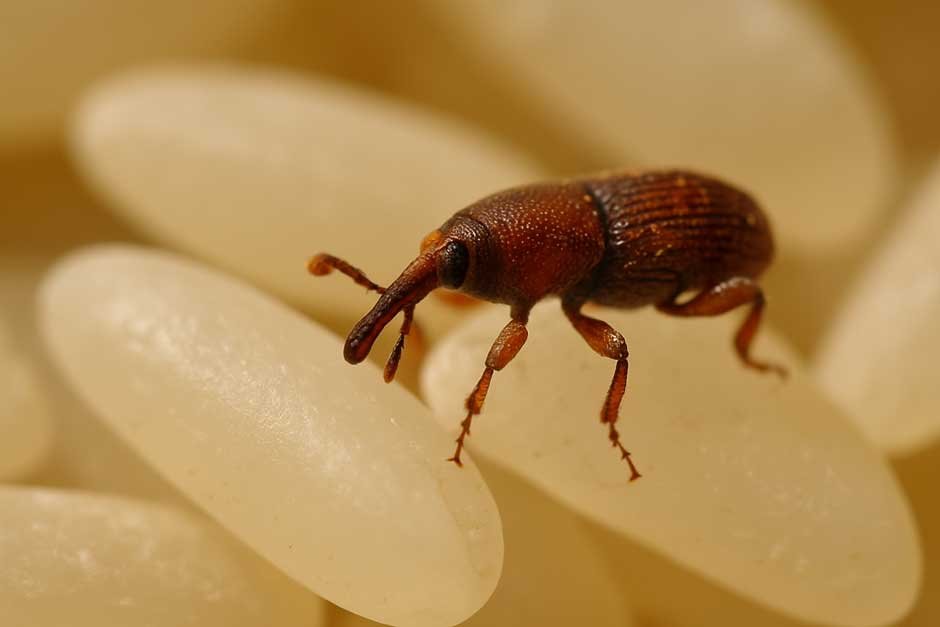
Have you ever opened a bag of rice or a box of pasta only to find tiny, dark beetles crawling inside? If so, you have likely encountered the rice weevil, a common and highly destructive pest of stored grains.
These small insects are a major headache for homeowners and a significant threat to the global food supply. Understanding this tiny intruder is the first step in protecting your pantry from an unwelcome infestation, explains Ocean Realty & Crescent City Management.
What Exactly is the Rice Weevil?
Scientific Classification and Appearance
The rice weevil, scientifically known as Sitophilus oryzae, is a type of beetle belonging to the family Curculionidae. It is a classic example of a stored product pest, meaning its entire life cycle can be completed within the food source itself.
Adult weevils are quite small, typically measuring between 2 and 3 millimeters in length. They have a distinctive reddish-brown to black coloration and possess four faint, reddish or yellowish spots on their wing covers.
Perhaps their most recognizable feature is the long, slender snout, or rostrum, which they use to bore into grain kernels. This specialized mouthpart is key to their survival and reproductive success.
Distinguishing Rice Weevils from Granary Weevils
The rice weevil is often confused with its close relative, the granary weevil (Sitophilus granarius). While both are serious pests, there are a few key differences that can help in identification.
The most notable distinction is the presence of wings. Rice weevils are strong fliers and will readily take flight, especially in warmer conditions. Granary weevils, on the other hand, are flightless.
Additionally, the granary weevil is generally darker, lacks the distinct spots, and has a slightly different pattern of pits on its thorax. Knowing which pest you are dealing with can sometimes influence the control strategy.
The Life Cycle of a Stored Grain Pest
The Hidden Egg and Larval Stages
The life cycle of the rice weevil is what makes it so difficult to detect early on. The female weevil uses her snout to chew a small hole into a grain kernel, such as rice, corn, or wheat.
She then deposits a single egg inside the cavity and seals the hole with a gelatinous plug. This ingenious method ensures the egg is protected and has an immediate food source upon hatching.
Once the egg hatches, the larva, a small, legless, white grub, begins to feed on the interior of the grain. The entire larval and pupal development takes place hidden inside the kernel, making the infestation invisible until the adult emerges.
Rapid Development and Reproduction
Under ideal conditions—warm temperatures and high humidity—the rice weevil can complete its development from egg to adult in as little as four weeks. This rapid turnaround allows for multiple generations to occur in a single year.
A single female can lay hundreds of eggs during her lifespan, leading to a quick and exponential population explosion. This reproductive efficiency is why a small initial infestation can quickly turn into a major problem.
Why the Concern? Damage and Infestation Signs
Preferred Hosts and Feeding Habits
The rice weevil is not picky, despite its name. While rice is a favorite, it will readily infest a wide variety of stored products. These include corn, wheat, barley, oats, rye, and even processed products like pasta and birdseed.
The primary damage comes from the larvae feeding inside the kernels, which hollows out the grain and significantly reduces its nutritional value. The adults also feed on the outside of the kernels, leaving behind small, irregular holes.
Recognizing an Active Infestation
The most obvious sign of an infestation is the presence of adult weevils crawling on pantry shelves, walls, or inside food packages. However, there are more subtle clues to look for.
Infested grain may contain a fine, powdery dust, which is a mix of chewed grain and weevil excrement. You might also notice kernels with small, pin-prick-sized holes where the female laid her eggs or larger holes where the adults emerged.
A strong, musty odor in the pantry or near the infested product is another common indicator. This smell is caused by the weevils’ waste and the growth of mold or fungi they introduce.
Effective Strategies for Rice Weevil Control
Immediate Steps for Infested Products
If you discover an infestation, the first and most crucial step is to immediately discard all infested products. Do not try to salvage them. Seal the contaminated food in a plastic bag and dispose of it outside your home.
Next, thoroughly clean the entire pantry area. Use a vacuum cleaner to remove all spilled grain, crumbs, and adult weevils from shelves, corners, and crevices.
After vacuuming, wipe down all surfaces with hot, soapy water or a mild bleach solution. Be meticulous, as even a few remaining eggs or larvae can restart the cycle.
Chemical-Free Home Remedies (Freezing, Dry Ice)
For non-infested but susceptible products, or if you wish to try to save a lightly infested batch, two chemical-free methods are highly effective. The first is freezing.
Placing grains in a freezer at 0°F (-18°C) for at least three to four days will kill all stages of the weevil, including eggs, larvae, and adults. After freezing, sift the grain to remove the dead insects before storage.
Another method is using dry ice. Placing a small piece of dry ice in a container of grain and sealing it once the dry ice has sublimated will displace the oxygen with carbon dioxide, suffocating the pests.
Prevention is Key: Keeping Your Pantry Safe
Proper Storage Techniques
The best defense against the rice weevil is prevention. Always store susceptible foods in airtight containers immediately after purchase. Glass jars, heavy-duty plastic containers, or metal tins with tight-fitting lids are ideal.
Never store grains in their original paper or plastic bags, as these can be easily chewed through by weevils or may already contain eggs from the store or warehouse.
Regular Cleaning and Inspection
Make it a habit to regularly inspect your pantry, even if you haven’t noticed any signs of pests. Pull out all items, check the backs of shelves, and look for any spilled food.
When purchasing new products, especially bulk grains, consider placing them in the freezer for a few days as a preventative measure before moving them to long-term storage. A clean, dry, and cool pantry is the least inviting environment for the rice weevil.
Frequently Asked Questions (FAQ)
Are rice weevils harmful to humans?
No, rice weevils are not known to bite, sting, or transmit diseases to humans or pets. The primary concern is the destruction and contamination of food products, which can lead to economic loss.
Can rice weevils fly?
Yes, the adult rice weevil is a strong flier. This is a key difference from the granary weevil. They can fly from one infested area to another, which makes controlling their spread more challenging.
How long can rice weevils live?
Adult rice weevils typically live for about four to five months. During this time, a female can lay a significant number of eggs, ensuring the continuation of the infestation cycle.
