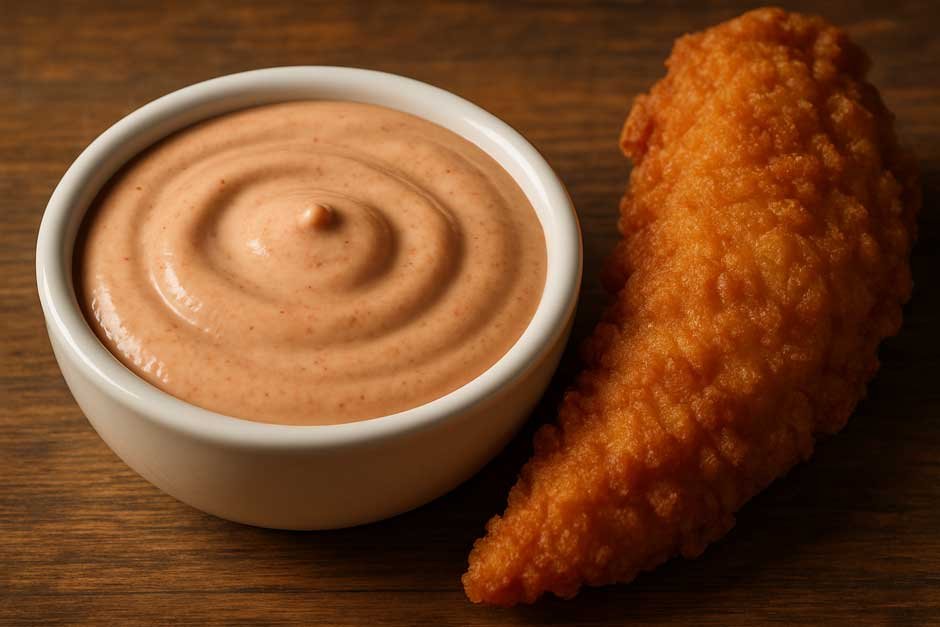
The Legend of Cane’s Sauce
The Signature Dip
You can’t talk about Raising Cane’s Chicken Fingers without immediately thinking of its famous dipping sauce.
Known simply as Cane’s Sauce, this creamy, tangy, and slightly spicy condiment has achieved a cult-like status among fast-food enthusiasts across the United States.
It’s more than just a side dish; it’s the essential partner to those signature chicken tenders.
The sauce was reportedly created by the restaurant’s founder, Todd Graves, and his business partner, Craig Silvey, during the early days of the first Raising Cane’s location.
Its unique flavor profile was designed to perfectly complement the hand-battered, fresh-fried chicken, creating a simple yet addictive pairing that has driven the chain’s massive success.
Unmasking the Core Ingredients
Simple Base, Complex Flavor
Despite its complex and deeply satisfying taste, the foundation of Cane’s Sauce is surprisingly straightforward.
The recipe is a masterful blend of common pantry staples, proving that sometimes, culinary genius is just about getting the precise combination and ratio of simple elements right.
The base of the sauce is a classic pairing of mayonnaise and ketchup. This provides the necessary creaminess along with a subtle sweetness and acidity.
The magic, however, comes from the addition of key savory and aromatic components that truly make it pop.
The essential flavor boosters include Worcestershire sauce, which adds a deep, umami richness, and a generous amount of freshly ground black pepper and garlic powder.
These ingredients work in harmony to elevate the simple base into the craveable, signature flavor that fans know and love.
The Art of the Copycat: A Step-by-Step Recipe
Gathering Your Components (Ingredients)
For those who wish to recreate this iconic dip at home, a reliable copycat recipe is the answer.
The following ingredients are typically used to achieve the closest possible match to the original Raising Cane’s Sauce:
- 1/2 cup Mayonnaise (full-fat is recommended for texture)
- 1/4 cup Ketchup
- 1 teaspoon Worcestershire Sauce
- 1/2 teaspoon Garlic Powder
- 1/2 teaspoon freshly ground Black Pepper
- 1/4 teaspoon Salt (optional, to taste)
The Mixing Process
The preparation is quick and requires minimal effort. In a medium-sized bowl, all the measured ingredients should be combined.
It is important to whisk or stir the mixture thoroughly until it is completely smooth and uniform in color.
Make sure that the spices are fully incorporated and there are no streaks of mayonnaise or ketchup remaining—a smooth blend is key.
The Crucial Waiting Period
This step is arguably the most critical part of achieving that authentic flavor. Once mixed, the sauce must be covered and refrigerated for a minimum of two to four hours.
Ideally, it should be left to chill overnight. This resting period allows the flavors from the Worcestershire sauce and spices to fully meld and deepen, transforming the simple mixture into the complex, signature Cane’s taste. Don’t skip this!
Achieving the Signature Flavor Profile
The Balance of Taste
The enduring appeal of Cane’s Sauce lies in its perfect balance. It manages to be neither overly sweet, nor too spicy or tangy, hitting a sweet spot that appeals to almost everyone.
The richness of the mayonnaise is cut by the acidity of the ketchup, while the Worcestershire sauce provides a savory depth that anchors the flavor.
The black pepper is a key element, offering a noticeable, coarse texture and a sharp, aromatic bite that distinguishes it from other dipping sauces on the market.
Serving Suggestions Beyond the Chicken Finger
Versatility in the Kitchen
While the sauce was designed for chicken fingers, its balanced flavor profile makes it incredibly versatile.
It can be used as a delicious accompaniment to a wide variety of foods, making it a great addition to your next backyard barbecue.
Consider using it as a spread on burgers and sandwiches, where it adds a creamy, zesty kick.
It also pairs wonderfully with french fries, onion rings, and even as a dressing for a simple coleslaw or potato salad.
Customizing Your Cane’s Sauce
Making It Your Own
The copycat recipe is an excellent starting point, but it can be easily adapted to suit individual preferences.
For those who prefer a bit more heat, a dash of hot sauce or a pinch of cayenne pepper can be added to the mix for a spicy variation.
Some enthusiasts also suggest adding a small amount of Creole or Cajun seasoning to introduce a subtle, regional complexity.
Experimenting with the ratios of garlic powder and black pepper can also help fine-tune the sauce to your exact liking.
Ultimately, the homemade version offers the freedom to adjust the ingredients until the perfect, personalized version of the famous Cane’s Sauce is achieved.
