Introduction: The Dual Burdens of War
Tim O’Brien’s The Things They Carried is not a conventional war novel, but a profound meditation on memory, truth, and the emotional baggage of conflict. It is a collection of interconnected stories that blurs the line between fact and fiction, offering a raw, intimate look at the lives of American soldiers in the Vietnam War.
The book’s central metaphor is the concept of “carrying,” which operates on two distinct but intertwined levels. The soldiers carry physical objects—necessities of war and personal talismans—but they also carry an invisible, far heavier load of emotional and psychological weight.
This dual burden defines their experience, shaping their actions and their very identities in the brutal landscape of Vietnam. The narrative suggests that the true weight of war is not measured in pounds, but in the intangible forces that haunt the human spirit.
The Weight of the Physical: Necessity and Superstition
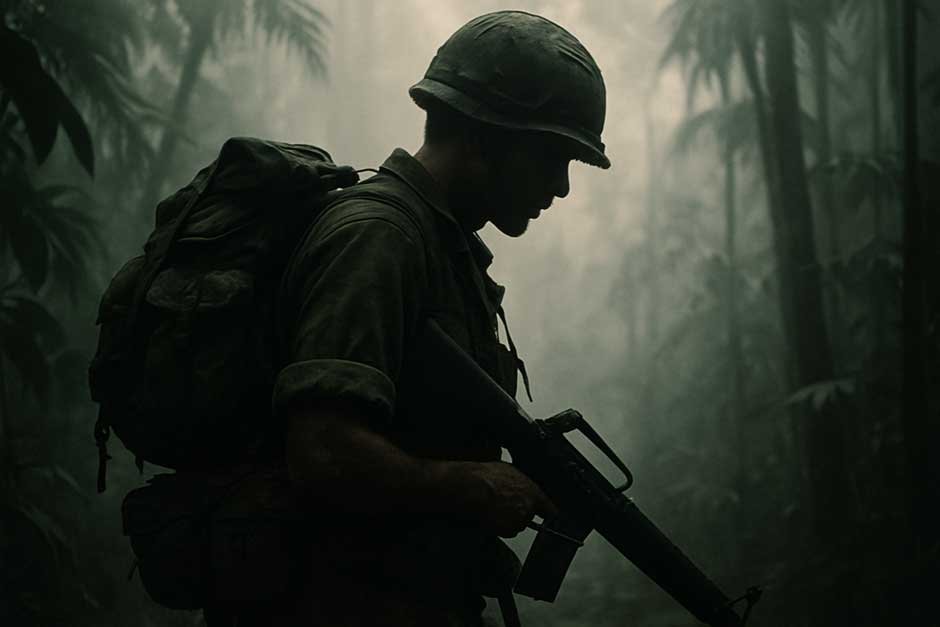
The opening story meticulously catalogs the physical items the men of Alpha Company carry. This inventory is a study in both military necessity and individual character.
Items like M-16 rifles, steel helmets, and rations are standard issue, representing the collective burden of their duty. Yet, the list quickly shifts to personal, often superstitious items that reveal the men beneath the uniforms.
Dave Jensen carries a toothbrush and dental floss, a meticulous obsession with hygiene in a filthy environment. Henry Dobbins carries extra rations and his girlfriend’s pantyhose, a bizarre yet comforting symbol of home and protection.
These physical objects are anchors to their former lives or desperate attempts to impose order on chaos. They are the tangible proof of their existence, and their weight is precisely calculated, a stark contrast to the immeasurable emotional burdens.
The Invisible Load: Guilt, Shame, and Longing
Far more debilitating than the physical weight is the psychological cargo the soldiers bear. This invisible load includes the fear of dying, the shame of showing that fear, and the crushing guilt over the deaths of comrades and civilians.
Lieutenant Jimmy Cross carries the memory of Martha, a college girl who does not love him, a longing that distracts him from his command. This distraction leads to the death of Ted Lavender, and the resulting guilt becomes his heaviest burden.
The men carry the shame of not being brave enough, or the deeper shame of being too brave and surviving when others did not. They carry the constant, gnawing fear that they might crack, that their moral compass might shatter under the pressure of combat.
This emotional weight is what truly defines their struggle, a burden that cannot be discarded or replaced, and one that follows them long after the war is over.
Story-Truth vs. Happening-Truth: The Power of Narrative
O’Brien introduces the crucial distinction between “happening-truth” and “story-truth.” Happening-truth is the factual, objective sequence of events, while story-truth is the emotional and moral reality of what happened.
The author, as a character named Tim O’Brien, frequently admits to fabricating or altering details in his stories. He does this not to deceive, but to convey a deeper, more resonant truth about the experience of war.
He argues that a true war story is often unbelievable, and that sometimes, a lie can get closer to the heart of the matter than a mere recitation of facts. The act of storytelling itself becomes a way to carry the past, to keep the dead alive, and to process the trauma.
The narrative suggests that story-truth is the only way to make the unbearable weight of the past manageable, transforming raw experience into something that can be shared and understood.
Lieutenant Cross and the Burden of Command
Lieutenant Jimmy Cross serves as a poignant example of the crushing responsibility of leadership. His initial burden is his unrequited love for Martha, which he allows to supersede his duties.
After Lavender’s death, Cross burns Martha’s letters and photographs, a symbolic act of shedding his personal weight to embrace his military role. This act is a desperate attempt to become the leader his men need, but the guilt remains.
His burden is the knowledge that he is responsible for the lives of his men, a weight that no amount of discipline can truly lighten. He carries the impossible task of maintaining order and morale in a situation that is inherently chaotic and demoralizing.
Cross’s story is a microcosm of the larger theme: the burden of command is the burden of moral consequence, a weight that can never be fully put down.
Mortality and the Loss of Innocence
The constant presence of death in Vietnam forces the soldiers to confront their own mortality and the swift, brutal loss of their innocence. The death of Curt Lemon, blown up by a booby-trapped mortar round, is a shocking, random event that underscores the fragility of life.
The men react to death in varied, often disturbing ways—from Rat Kiley’s excessive violence to the dark humor they use as a shield. Their innocence is not simply lost; it is violently stripped away by the sheer absurdity and horror of the war.
They carry the knowledge that they are capable of terrible things, both in the line of duty and in moments of moral failure. This loss of innocence is a permanent scar, a weight that fundamentally changes who they are.
Conclusion: Carrying the War Home
Ultimately, The Things They Carried reveals that the war does not end when the soldiers leave Vietnam. The final, most enduring burden is the necessity of carrying the war home, into their civilian lives.
The stories they tell, the memories they suppress, and the guilt they harbor become permanent fixtures of their existence. The book is O’Brien’s attempt to unpack this luggage, to lay out the items one by one for examination.
By sharing their burdens through narrative, the men—and O’Brien himself—seek a form of redemption and release. The act of carrying the story is the final, essential act of survival, ensuring that the weight of the past is acknowledged, if never fully lifted.
