Introduction: The Heart of Yucatán’s Culinary Heritage
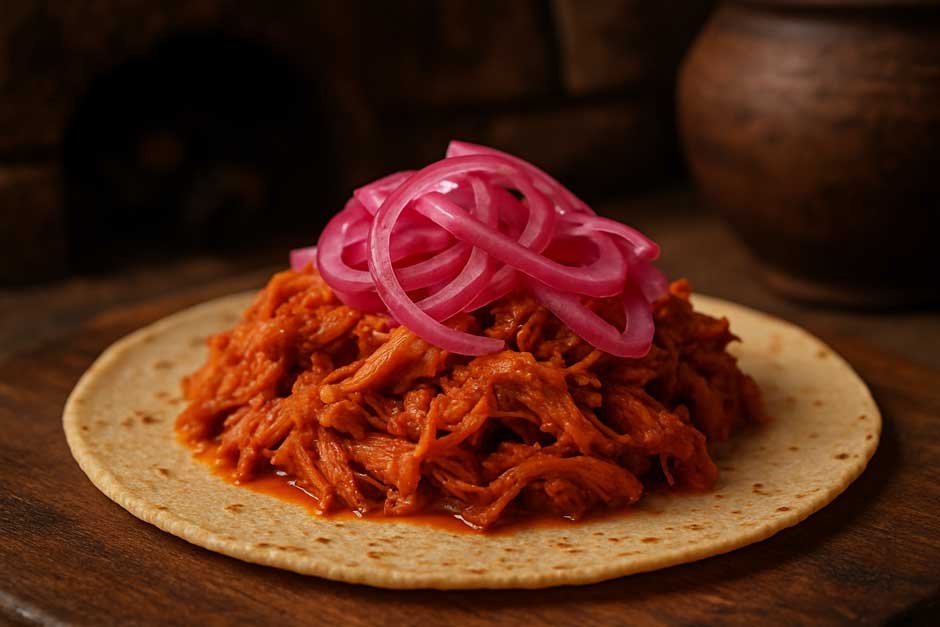
Cochinita en Pibil is more than just a dish; it’s the very soul of the Yucatán Peninsula’s vibrant culinary scene. This slow-roasted pork is famous for its deep, earthy flavors, incredibly tender texture, and that unmistakable bright orange color.
It’s a delicious marriage of ancient Mayan cooking and the ingredients the Spanish brought centuries ago. To truly appreciate this dish, you have to understand the centuries of tradition baked into every single bite.
It’s a taste of the past, a meal lovingly prepared for generations, often saved for special occasions and holidays. The cooking process is a ritual in itself, turning simple pork and spices into a complex, deeply satisfying meal.
The Roots of Flavor: A Mayan Legacy
From Wild Game to Pork: The Pre-Hispanic Pib
The concept of *pibil* predates the arrival of Europeans by centuries. In the Mayan language, *pib* refers to the earth oven, a pit dug into the ground and lined with hot stones. Before the Spanish conquest, the Mayans used this method to cook wild game such as venison, pheasant, or wild boar.
They would wrap the meat in banana leaves to seal in the moisture and flavor. This ancient technique of slow, underground cooking imparted a unique smokiness and tenderness that is still the hallmark of the dish today.
The original *pib* was a testament to the ingenuity of the Mayan people, utilizing the earth itself as a natural, efficient oven.
The Spanish Influence: The Arrival of the Pig
The dish we know today as cochinita pibil—literally “little pig cooked in the pib”—emerged after the Spanish conquistadors introduced domesticated pigs to the Americas. The Mayans quickly adapted their traditional cooking method to this new source of protein.
The substitution of pork for wild game marked a significant evolution, but the core technique remained sacred. This blending of cultures resulted in a dish that honors both the indigenous heritage of the Yucatán and the new ingredients brought from across the sea.
The Essential Ingredients: A Symphony of the Yucatán
Achiote Paste: The Heart of the Color and Taste
The defining characteristic of cochinita en pibil is its striking color and complex flavor, both of which come primarily from achiote paste. Achiote, or annatto, is derived from the seeds of the tropical achiote tree.
The paste is a blend of these seeds with various spices, including cumin, oregano, cloves, and allspice. It not only gives the pork its vibrant, deep orange-red color but also contributes a subtle, earthy, and slightly peppery flavor that is indispensable to the dish.
The Zesty Secret: Sour Orange Marinade
Another critical component is the marinade, which relies heavily on the juice of Seville oranges, a type of sour orange common in the Yucatán. This highly acidic juice acts as a natural tenderizer for the pork, breaking down the fibers over time.
The sourness of the orange, combined with the spices in the achiote, creates a zesty, tangy profile that cuts through the richness of the pork. If Seville oranges are hard to find, a mixture of sweet orange juice, lime juice, and white vinegar is often used to replicate the necessary acidity.
The Traditional Method: Cooking in the Pib
Wrapping in Banana Leaves
Before the pork is placed in the oven, it is meticulously wrapped in banana leaves. This step is crucial for both flavor and texture. The leaves impart a subtle, grassy aroma to the meat as it cooks, adding another layer of complexity.
More importantly, the banana leaves create a natural, sealed packet that traps all the moisture and steam. This ensures the pork remains incredibly tender and juicy throughout the long cooking process, preventing it from drying out.
The Underground Oven (Pib)
The most authentic preparation involves cooking the wrapped pork in the traditional *pib*. The pit is dug, a fire is built, and stones are heated until they are glowing hot. The pork packet is then placed on the stones, covered with more leaves and earth, and left to slow-roast for many hours.
This method allows the meat to cook at a low, consistent temperature, resulting in a deeply smoky flavor that cannot be fully replicated in a conventional oven. The long, slow cooking breaks down the connective tissues in the pork, making it truly fall-apart tender.
Modern Kitchen Adaptations: Bringing the Pib Home
Slow Cooker and Oven Techniques
While the traditional *pib* is impractical for most modern kitchens, the essence of cochinita pibil can still be captured using contemporary appliances. The most common methods involve using a slow cooker or a conventional oven.
A slow cooker excels at maintaining the low, moist heat necessary for tenderizing the pork. When using an oven, the pork is typically cooked in a Dutch oven or a covered roasting pan at a low temperature for several hours, simulating the environment of the underground pit.
Achieving the Smoky Flavor
One challenge in modern preparation is replicating the smoky flavor of the *pib*. Some cooks address this by adding a small amount of liquid smoke to the marinade, though this is a controversial addition among purists.
Alternatively, some recipes call for briefly smoking the pork shoulder before braising it, or using a grill to finish the cooking process. The goal is to introduce that characteristic earthy depth that defines the traditional dish.
Serving Suggestions: More Than Just a Taco
The Essential Accompaniment: Pickled Red Onions (Cebolla Encurtida)
Cochinita en Pibil is almost always served with *cebolla encurtida*, or pickled red onions. These onions are typically marinated in sour orange juice, habanero peppers, and a pinch of salt, giving them a vibrant pink color.
The bright, sharp acidity and slight heat of the pickled onions provide a necessary contrast to the rich, savory pork. This pairing is non-negotiable, as the onions cut through the fat and refresh the palate with every bite.
Traditional Pairings
The shredded pork is most commonly served on warm corn tortillas to make tacos, or on small rolls (*panuchos* or *tortas*) for a heartier meal. It is a versatile dish that can be enjoyed for breakfast, lunch, or dinner.
The simplicity of the accompaniments—usually just the pickled onions and perhaps a side of black beans—allows the complex flavor of the cochinita pibil itself to remain the star of the plate.
Conclusion: An Enduring Taste of History
Cochinita en Pibil stands as a powerful testament to the enduring culinary traditions of the Yucatán. It is a dish that tells a story of cultural exchange, ancient techniques, and a deep connection to the land.
From the earthy achiote to the zesty sour orange, every element contributes to a flavor profile that is uniquely Mexican and universally beloved. To partake in cochinita pibil is to savor a piece of history, slow-cooked to perfection.
