The Unspoken History of Salt to the Sea
Ruta Sepetys’s powerful novel, Salt to the Sea, transports the reader to the brutal final months of World War II. The setting is East Prussia in January 1945, a landscape consumed by the chaos of a collapsing front.
It is a story rooted in a historical event that, for decades, remained largely overlooked in Western narratives of the war.
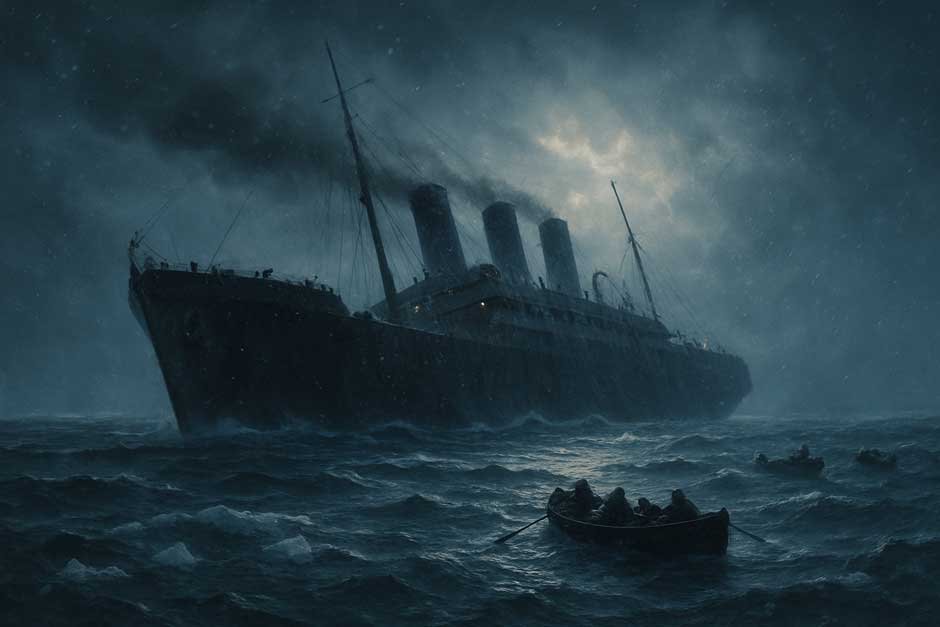
The central tragedy is the sinking of the Wilhelm Gustloff, a German transport ship carrying thousands of civilian refugees. When it was struck by a Soviet submarine, the resulting loss of life became the single greatest maritime disaster in history.
Sepetys takes on the monumental task of giving voice to the estimated 9,000 people who perished in the icy waters of the Baltic Sea.
Four Fates Intertwined: The Narrators’ Journey
The novel’s brilliance lies in its unique narrative structure, which weaves together the lives of four young people. Each character is given a distinct, short chapter, creating a mosaic of the refugee experience.
This approach ensures the story is never overwhelming, yet the cumulative emotional weight is immense. It forces the reader to see the war not as a grand strategic conflict, but as a series of intensely personal struggles.
Joana and Florian: The Nurse and the Fugitive
Joana is a Lithuanian nurse, haunted by a past decision that has left her burdened with guilt. She channels her energy into caring for the wounded and the lost, a quiet force of compassion in a world gone mad.
Florian, a Prussian art restorer, is on a secret mission to smuggle a priceless amber artifact. He is a man driven by revenge and a desperate need for redemption, his motives shrouded in mystery.
Their cautious alliance forms the emotional core of the group, a testament to the bonds that can form between strangers united by fear.
Emilia and Alfred: Innocence and Delusion
Emilia is a pregnant Polish teenager, a symbol of extreme vulnerability who finds unexpected resilience. Her journey is one of silent suffering and a fierce, protective hope for the future.
In stark contrast is Alfred, a German sailor working on the Wilhelm Gustloff. His chapters are filled with delusional letters to a fictional beloved, revealing a mind warped by Nazi propaganda and self-deception. He represents the chilling banality of complicity.
The Weight of Memory and Survival
The novel explores profound themes that transcend its historical setting. At its heart, Salt to the Sea is a meditation on memory and the obligation of the living to remember the dead.
It shows how community is forged in the crucible of crisis. Strangers from different nations and backgrounds must rely on one another, proving that shared humanity is stronger than the political divisions that created the war.
The characters are constantly struggling with the question of agency—how much control they have over their own fate when historical forces are so overwhelmingly destructive. Their small acts of defiance and kindness become monumental.
A Human Touch: Why the Story Resonates
Sepetys employs a writing style that is both concise and deeply poetic. The short, sharp chapters, often only a few pages long, maintain a relentless pace and heighten the sense of urgency.
This brevity prevents the narrative from becoming bogged down in historical detail, instead focusing on the raw, immediate emotions of the characters. The language is spare, yet every word carries significant emotional weight.
The result is a historical novel that feels intensely personal and immediate, making the distant tragedy of 1945 accessible to a modern audience. It is a masterclass in using fiction to illuminate forgotten history.
The Enduring Legacy of Salt to the Sea
Salt to the Sea is more than just a story of a shipwreck; it is a vital piece of historical recovery. It successfully pulls the Wilhelm Gustloff disaster out of the shadows of history.
The book’s lasting message is one of hope found in the darkest places. Even as the characters face unimaginable loss, their capacity for love, sacrifice, and the formation of new families endures.
It is a powerful reminder that the refugee experience is a timeless one, and that every casualty of war, regardless of nationality, deserves to have their story told and their memory honored. The sea may claim the bodies, but the survivors carry the salt of their memory.
