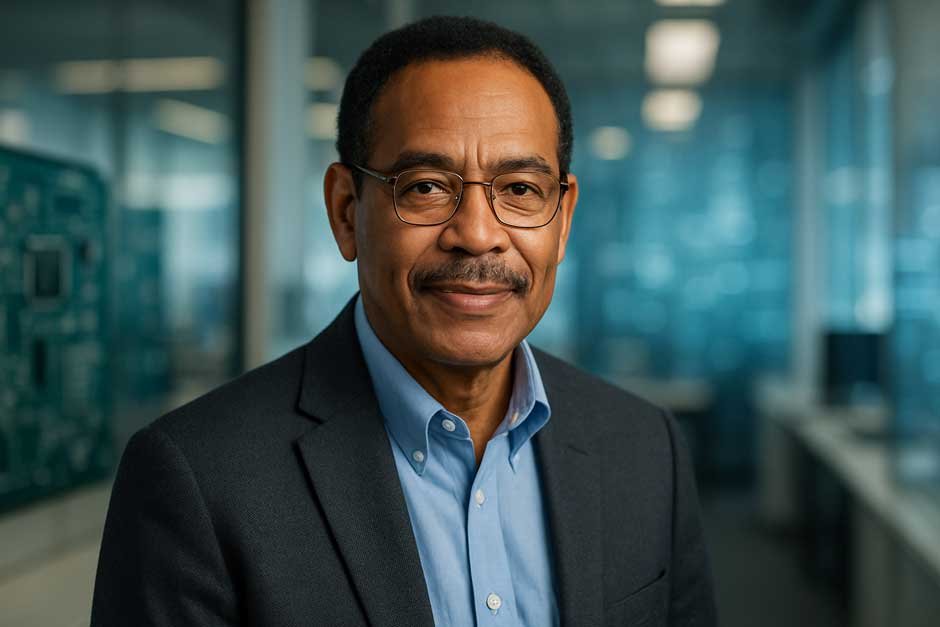
The Architect of Modern Computing
Mark Edward Dean is an American inventor and computer engineer whose work at IBM provided the essential foundation for the personal computer revolution. His contributions, though often out of the public spotlight, were critical in shifting computing from a specialized, industrial tool to the ubiquitous device we use every day.
Dean’s career is a powerful story of innovation, marked by a series of technological breakthroughs that continue to shape the digital world. He is a figure whose impact goes far beyond a single patent, embodying the spirit of relentless engineering that defined the late 20th century.
Early Life and the Spark of Innovation
Born in Jefferson City, Tennessee, in 1957, Dean showed a deep fascination with technology and invention from a very early age. His father, James Dean, who worked with electrical equipment, frequently took him along on work trips. This exposure provided the young Mark with an early, practical introduction to the field of engineering.
This early environment encouraged a hands-on approach to solving problems. One of his most telling childhood projects was building a tractor from scratch with his father, a clear precursor to his future as a groundbreaking inventor. By the time he reached middle school, Dean had already decided his path: he would become a computer engineer.
The Birth of the Personal Computer: The ISA Bus
Dean began his professional journey at IBM in 1980. His early efforts quickly led to one of his most significant and enduring contributions: the co-invention of the Industry Standard Architecture (ISA) bus. Working with his partner, Dennis Moeller, the ISA bus became the vital communication link.
This bus allowed peripheral devices—such as keyboards, printers, and external drives—to connect and communicate seamlessly with the computer’s central processing unit. This invention was a cornerstone of the original IBM Personal Computer, which debuted in 1981.
Dean holds three of the nine original PC patents, firmly establishing his role as a co-creator of the machine that fundamentally changed how the world interacts with technology. The ISA bus set a standard for expandability that fueled the explosive growth of the entire PC ecosystem.
Breaking the Speed Barrier: The Gigahertz Chip
Dean’s inventive drive extended far beyond the PC’s initial architecture. In 1999, he led an IBM design team to another monumental achievement: the development of the world’s first one-gigahertz microcomputer processor chip.
This breakthrough represented a massive leap in processing speed, effectively shattering the existing performance limits for microprocessors. The gigahertz chip dramatically increased the speed and power of computers, directly paving the way for the high-performance digital devices we rely on today.
A Legacy of Firsts: IBM Fellow and National Recognition
Dean’s exceptional talent was formally recognized throughout his distinguished career. In 1995, he made history by becoming the first African-American IBM Fellow, which is the company’s highest technical honor. This distinction acknowledged his sustained, world-class contributions to IBM’s core technology and innovation.
His achievements also earned him induction into the National Inventors Hall of Fame in 1997. Further cementing his status, he was elected to the National Academy of Engineering in 2001, one of the highest professional distinctions an engineer can receive.
From Corporate Leadership to Academia
Beyond his role as a hands-on inventor, Dean took on major leadership responsibilities within IBM. He served as the Vice President of Systems and Technology and later as the CTO for IBM Middle East and Africa, guiding the company’s technological strategy across diverse and critical regions.
Dean concluded his remarkable three-decade career at IBM when he retired in 2013. He then transitioned to a new role in academia, becoming the John Fisher Distinguished Professor in the Department of Electrical Engineering and Computer Science at the University of Tennessee. In this capacity, he continues to mentor and inspire the next generation of engineers and innovators.
Enduring Impact on the Digital World
The inventions of Mark Dean are not just historical footnotes; they are the essential, often-unseen infrastructure of modern digital life. From the color PC monitor to the fundamental architecture that allows a computer to connect to any number of devices, his work is deeply woven into the fabric of contemporary technology.
His career stands as a powerful testament to how foundational engineering can lead to global transformation. Dean’s legacy is that of a quiet revolutionary, whose technical brilliance made the personal computer accessible, powerful, and ultimately, an indispensable part of the modern world.
