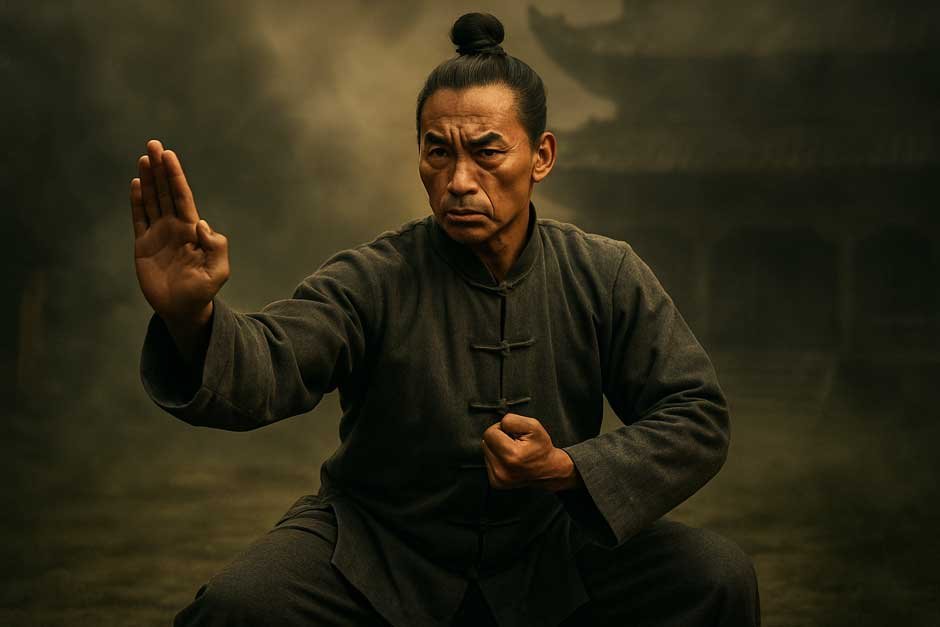
Introduction: More Than Just Fighting
What is the first image that comes to mind when you hear the phrase kung fu kung fu kung fu kung fu? For many, it is the image of gravity-defying movie heroes, the rapid-fire strikes of a master, or the stoic discipline of a Shaolin monk.
While cinema has immortalized the spectacular physical feats, the true essence of Kung Fu is far deeper than just fighting techniques. It is a profound cultural and philosophical tradition that has shaped Chinese history for millennia.
This ancient art is not merely a collection of movements; it is a lifelong pursuit of mastery, a discipline that connects the mind, body, and spirit in a continuous quest for self-improvement.
The True Meaning of Kung Fu
The term “Kung Fu” itself is often misunderstood in the West. In its original Chinese context (Gōng Fū, 功夫), it does not exclusively refer to martial arts.
Instead, it translates more accurately to “skill achieved through hard work and time.” It signifies any discipline or study that requires patience, energy, and dedication to achieve mastery.
A master chef, a skilled calligrapher, or a dedicated gardener can all be said to possess Gōng Fū in their respective fields. The martial arts are simply one of the most visible and physically demanding applications of this principle.
From Ancient Roots to Shaolin Temple
The origins of Chinese martial arts are ancient, with evidence of early forms of exercise and self-defense dating back to the Zhou dynasty and even earlier. These practices were often linked to Daoist exercises aimed at promoting health and longevity.
However, the history of organized Kung Fu is inextricably linked to the legendary Shaolin Temple in Henan province. It was here, around the 5th century AD, that martial arts began to be systematically developed and integrated with Buddhist philosophy.
The monks refined these techniques, creating a comprehensive system that served not only for self-defense but also as a form of moving meditation and physical conditioning. The Shaolin style became one of the earliest and most influential forms of organized Chinese martial arts.
Diverse Styles and the Five Animals
The vast landscape of Chinese martial arts has produced hundreds of distinct styles, often categorized by their geographical origin—Northern styles (known for long-range, sweeping movements and high kicks) and Southern styles (emphasizing short-range, powerful hand techniques).
A particularly iconic element is the concept of the Five Animal Styles: the Dragon, Tiger, Crane, Leopard, and Snake. Each animal embodies a different fighting philosophy and set of physical attributes.
The Tiger emphasizes strength and bone conditioning, while the Crane focuses on balance and evasive movements. These styles are not just imitations of animals but are distillations of their spirit and fighting characteristics.
The Philosophy of Harmony and Discipline
At its core, the practice of Kung Fu is a philosophical journey. It teaches practitioners that true strength comes from internal balance and discipline, not just physical aggression.
The art is deeply rooted in concepts of Qi (life energy) and the balance of Yin and Yang. Training often involves both external (Weijia) conditioning, such as striking and muscle development, and internal (Neijia) cultivation, focusing on breath control and mental focus.
This holistic approach ensures that the student develops not only a powerful body but also a calm, resilient mind, fostering respect for opponents and a deep sense of personal humility.
Kung Fu in the Modern World
Today, the practice of Kung Fu has spread far beyond the borders of China, becoming a global phenomenon. It is practiced by millions for its health benefits, its effectiveness in self-defense, and its spiritual rewards.
Its influence on popular culture, particularly through the golden age of martial arts cinema, has cemented its place in the global consciousness. Figures like Bruce Lee and Jackie Chan introduced the discipline to a worldwide audience, inspiring generations.
In the modern era, it continues to be a powerful tool for physical fitness, stress reduction, and the preservation of a rich cultural heritage. The discipline learned in the training hall translates directly into greater focus and perseverance in daily life.
Frequently Asked Questions (FAQ)
Q: Is Kung Fu the same as Wushu?
Wushu (武术) is the modern, standardized, and often performance-oriented term for Chinese martial arts, particularly those used in competitive sports and exhibitions. Kung Fu (功夫) is the broader, more traditional term referring to the skill and dedication required to master the art, though it is used interchangeably with Wushu in the West.
Q: How long does it take to master Kung Fu?
Mastery is a lifelong pursuit. The term Kung Fu itself implies “time spent” and “hard work.” While basic proficiency can be achieved in a few years, true mastery—the integration of the physical, mental, and spiritual aspects—requires continuous, dedicated practice over decades.
Q: What are the main benefits of practicing Kung Fu?
The benefits are comprehensive, including improved physical health (strength, flexibility, cardiovascular fitness), enhanced mental focus and discipline, stress reduction, and practical self-defense skills. It is a holistic system designed to improve the entire person.
