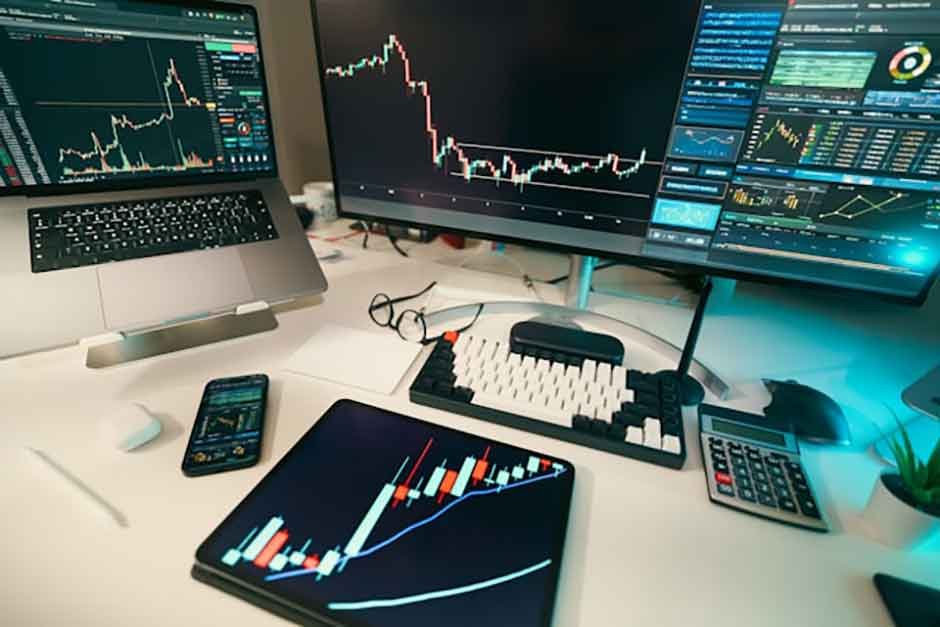
The digital revolution has completely transformed stock trading, turning what was once an exclusive Wall Street privilege into something anyone with an internet connection can pursue. Today’s aspiring traders have the opportunity to build genuine wealth right from their homes, using powerful technology and educational resources that institutional investors once kept to themselves. Getting started might seem overwhelming, but understanding the fundamentals and putting together the right toolkit is really where everything begins. This guide will walk you through everything you need to establish a rock-solid foundation for your home-based trading journey, from setting up an efficient workspace to developing strategies that can actually generate consistent returns.
Essential Equipment and Technology Setup
Creating an effective home trading environment starts with choosing hardware and software that won’t let you down when it matters most. Your computer needs enough processing power and RAM to handle multiple trading platforms running simultaneously without frustrating lag times, because even a few seconds of delay can mean the difference between catching or missing a profitable opportunity. Most successful traders suggest at least 16GB of RAM paired with a modern processor, along with dual monitors so you can track multiple markets and charts at the same time. A reliable high-speed internet connection is absolutely non-negotiable, it’s your lifeline to the markets, which is why having a backup connection through a mobile hotspot makes sense for those times when your primary connection decides to fail.
The trading software you choose dramatically impacts both your analytical capabilities and how quickly you can execute trades. Modern platforms offer advanced charting tools, real-time data feeds, customizable indicators, and one-click order execution that can genuinely make or break your trading performance. Look for platforms that include paper trading features, which let you practice strategies with virtual money before you risk actual capital, this is honestly one of the smartest ways to build confidence. Make sure your chosen platform also offers mobile accessibility, so you can monitor and manage positions when you’re away from your primary trading station.
Building Your Knowledge Foundation
Education is hands-down the most critical investment any aspiring trader can make, far more important than how much capital you start with. You’ll want to begin by mastering fundamental concepts like market structure, different order types, position sizing, and risk management principles that protect your capital when trades inevitably go against you. Spend time understanding both technical analysis, which examines price patterns and indicators, and fundamental analysis, which digs into company financials and the economic factors driving market movements. There’s an abundance of free and paid resources available online, from webinars and structured courses to trading simulators that give you hands-on experience without putting your money at risk.
Developing real expertise requires continuous learning and adaptation because markets are constantly evolving. Subscribe to financial news services, join active trading communities, and study the methodologies of successful traders who generously share their insights through books, podcasts, and social media. Pay particular attention to understanding market psychology and how emotional discipline separates traders who consistently profit from those who keep losing money. Many beginners seriously underestimate the psychological challenges that come with trading, like the temptation to overtrade, the urge to take revenge trades after losses, or the difficulty of sticking with proven strategies during drawdown periods.
Developing Your Trading Strategy
Every successful trader operates according to a clearly defined strategy that specifies exactly when to enter trades, when to exit them, how to size positions, and what risk parameters to follow. Your strategy needs to align with your personality, your available schedule, and your comfort level with risk, whether that means day trading with multiple positions daily, swing trading where you hold positions for days or weeks, or position trading with longer-term horizons spanning months. Backtest your potential strategies using historical data to evaluate how they would have performed across different market conditions, helping you identify strengths, weaknesses, and realistic win rates you can expect. Keep in mind that no strategy wins every single trade, so you should focus on systems that show positive results over many trades rather than chasing the mythical perfect approach that never loses.
Risk management forms the absolute cornerstone of any viable trading strategy, determining how much capital you’re willing to risk on individual trades and your overall portfolio exposure. Professional traders typically risk no more than one to two percent of their total account on any single trade, which ensures that even extended losing streaks can’t completely devastate their capital base. Establish clear stop-loss levels before you enter any position, and honor them no matter how much you hope a losing trade might suddenly reverse in your favor. Define profit targets based on realistic risk-reward ratios of at least 1: 2, meaning you’re targeting twice the profit compared to your potential loss on each trade. This disciplined approach actually allows you to maintain profitability even when your win rate drops below fifty percent. For traders who want to test their strategies in currency markets without risking substantial personal capital, Forex prop firms provide funded accounts that enable professionals to trade with firm capital while demonstrating consistent performance.
Managing Capital and Risk Effectively
Starting with an appropriate amount of capital prevents the pressure and poor decisions that inevitably come with trading money you genuinely can’t afford to lose. Financial experts typically recommend beginning with at least several thousand dollars, though you can certainly start smaller while you’re learning, just understand that tiny accounts limit your strategy options and make meaningful percentage gains harder to achieve. Never, ever trade with borrowed money, emergency funds, or capital that’s earmarked for essential expenses like your mortgage payment or your children’s education. The psychological burden of trading with what traders call “scared money” virtually guarantees you’ll make emotional decisions that override whatever rational strategy you’ve developed.
Diversification across different assets, sectors, and strategies helps reduce portfolio volatility and makes drawdowns less severe during challenging market periods. Avoid getting too concentrated in correlated positions that tend to move together, which can amplify both your gains and losses beyond comfortable levels. Regularly review your portfolio allocation and rebalance when certain positions grow to represent disproportionate percentages of your total capital, this discipline matters more than most beginners realize. Additionally, maintain detailed records for tax purposes since trading profits face specific reporting requirements that vary by jurisdiction and how frequently you trade.
Cultivating the Trader’s Mindset
Psychology often determines trading success even more than technical knowledge or how sophisticated your strategy happens to be. Developing the emotional discipline to follow your trading plan during both winning streaks and losing streaks is what separates professionals from amateurs who let fear and greed dictate their every decision. You need to accept that losses represent an unavoidable cost of doing business rather than personal failures, learn from your mistakes without dwelling on them in counterproductive ways. Successful traders maintain a certain detachment from individual trade outcomes, focusing instead on whether they executed their process correctly regardless of the actual results.
Establishing healthy routines supports consistent performance and prevents the burnout that’s surprisingly common among home, based traders. Set specific trading hours that provide adequate market exposure without encouraging you to overtrade out of boredom or compulsion, yes, overtrading is a real problem even for experienced traders. Take regular breaks during your trading sessions to maintain mental clarity and prevent the fatigue-induced errors that can cost you dearly. Physical exercise, proper nutrition, and getting sufficient sleep might sound basic, but they significantly impact your cognitive function and decision-making quality under pressure.
Conclusion
Building wealth through home-based stock trading offers tremendous potential for those genuinely willing to invest the time mastering necessary skills and developing disciplined approaches to market participation. Success requires combining proper technology setup, comprehensive education, proven strategies, rigorous risk management, and the psychological resilience to navigate the emotional challenges that are simply part of speculative trading. Start slowly with paper trading or small positions while you develop real confidence in your methodology, then gradually scale up as consistent profitability demonstrates you’ve got genuine edge rather than just beginner’s luck. Remember that trading is much more like a marathon than a sprint, sustainable wealth accumulation comes from patiently applying sound principles over months and years, not from overnight riches that rarely materialize anyway.
