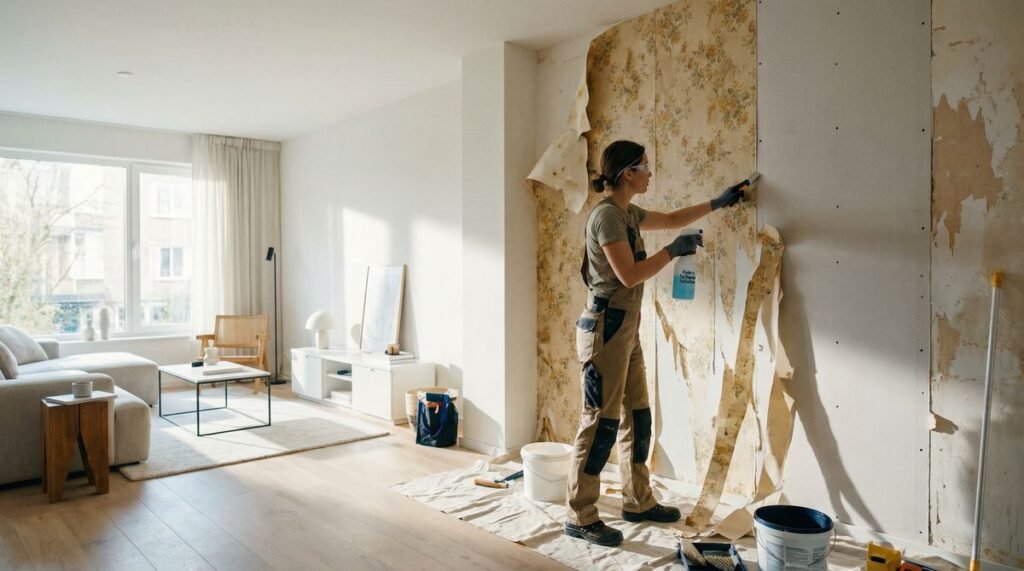
That dated wallpaper, once a source of pride, now feels like a relic from a bygone era. You envision a fresh, modern space, but the thought of removing the old wallpaper conjures images of torn drywall and endless frustration. What if you could achieve a flawless, damage-free removal? It’s not only possible, but with the right approach, it can be a surprisingly satisfying DIY project. This guide will walk you through the process, from initial preparation to the final, pristine finish, ensuring your walls are ready for their new look.
Preparing for Wallpaper Removal: The Keys to a Clean Slate
To prepare for wallpaper removal, KRS Charlottesville notes that you must first identify your wallpaper type, gather the necessary tools like a scorer and scraper, and protect your floors and furniture with drop cloths. This initial setup is crucial for a smooth and damage-free process.
Before you begin, it’s essential to understand what you’re working with. There are three main types of wallpaper: strippable, peel-and-stick, and traditional. Strippable wallpaper is the easiest to remove, often peeling off in large sheets without much effort. Peel-and-stick wallpaper is also relatively simple to remove, though it can sometimes leave behind a sticky residue. Traditional wallpaper, which is applied with an adhesive, is the most challenging to remove and will require a more intensive approach.
Once you’ve identified your wallpaper type, gather your tools. A basic wallpaper removal kit should include a scoring tool, a scraper, a bucket, sponges, and drop cloths. For more stubborn wallpaper, you may also need a wallpaper steamer or a chemical stripper. Protecting your workspace is a critical step that shouldn’t be overlooked. Cover your floors and any nearby furniture with drop cloths to protect them from water and debris. It’s also a good idea to turn off the power to the room and cover any electrical outlets with painter’s tape.
The Steamer Method: Your Best Bet for Stubborn Wallpaper
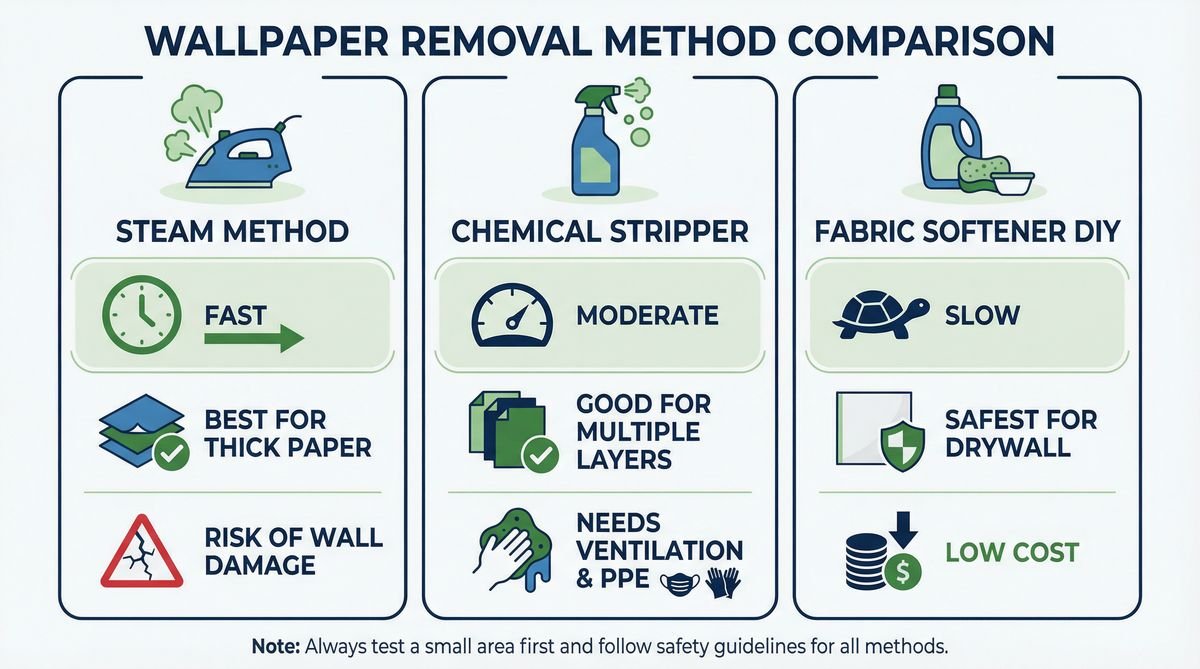
The steamer method is highly effective for stubborn wallpaper because the hot steam penetrates the paper and loosens the adhesive, making it easier to scrape off. It’s a chemical-free option that works on most types of wallpaper, minimizing the risk of wall damage when done correctly.
For those dealing with old, stubborn wallpaper, a wallpaper steamer can be a game-changer. This chemical-free method uses hot steam to soften the wallpaper and loosen the adhesive, making it much easier to remove. Start by filling the steamer with water and allowing it to heat up. Once it’s ready, hold the steamer plate against the wall for about 30 seconds, or until the wallpaper is saturated. Then, use a scraper to gently peel the wallpaper away from the wall. Work in small sections, and be patient. The key is to let the steam do the work.
While the steamer method is highly effective, it’s important to work safely. The steam is hot and can cause burns, so wear gloves and long sleeves. It’s also a good idea to wear safety glasses to protect your eyes. Keep the steamer moving to avoid oversaturating any one area, which could damage the drywall. With a little care and patience, the steamer method can help you achieve a clean, damage-free removal.
Chemical Wallpaper Strippers: When to Use Them and How
Chemical wallpaper strippers are a good option when a steamer isn’t available or practical. They work by dissolving the wallpaper adhesive, allowing for easier removal. Always choose a gel-based stripper to minimize drips and ensure proper ventilation to avoid inhaling fumes.
When a steamer isn’t an option, a chemical wallpaper stripper can be an effective alternative. These products are designed to dissolve the wallpaper adhesive, making it easier to scrape the paper off the wall. When choosing a chemical stripper, opt for a gel-based formula, which will cling to the wall better and minimize drips. Before you begin, make sure the room is well-ventilated by opening windows and using a fan. It’s also a good idea to wear gloves and safety glasses to protect your skin and eyes.
To use a chemical stripper, apply it to the wallpaper with a paintbrush or roller, making sure to cover the entire surface. Let the stripper sit for the recommended amount of time, then use a scraper to remove the wallpaper. As with the steamer method, work in small sections and be patient. If you encounter a particularly stubborn area, you may need to apply a second coat of stripper. Once you’ve removed all the wallpaper, be sure to clean the walls thoroughly with a mixture of warm water and dish soap to remove any residual chemicals.
DIY Wallpaper Removal Solutions: A Budget-Friendly Approach
For a budget-friendly option, you can create a DIY wallpaper removal solution using common household items like vinegar or fabric softener mixed with hot water. These solutions can be effective on less stubborn wallpapers and are a great alternative to chemical strippers.
If you’re looking for a more budget-friendly and eco-friendly option, you can create your own wallpaper removal solution using common household items. A mixture of equal parts white vinegar and hot water is a popular choice, as is a solution of one part fabric softener to three parts hot water. Both of these solutions work by softening the wallpaper and loosening the adhesive, making it easier to remove.
To use a DIY solution, mix the ingredients in a spray bottle and apply it to the wallpaper, making sure to saturate the entire surface. Let the solution sit for about 15 minutes, then use a scraper to remove the wallpaper. As with the other methods, work in small sections and be patient. While DIY solutions can be effective, they may not be as powerful as a steamer or a chemical stripper, so they’re best suited for less stubborn wallpaper.
Post-Removal Cleanup: Achieving a Perfect Finish
After removing the wallpaper, it’s essential to clean the walls thoroughly to remove any residual adhesive. A mixture of warm water and dish soap is usually sufficient. This step ensures a smooth surface for priming and painting, preventing any imperfections in your final finish.
Once you’ve removed all the wallpaper, you’re on the home stretch. The final step is to clean the walls thoroughly to remove any leftover adhesive. A simple mixture of warm water and dish soap is usually all you need. Use a sponge to wash the walls, then rinse them with clean water. Be sure to let the walls dry completely before you move on to the next step.
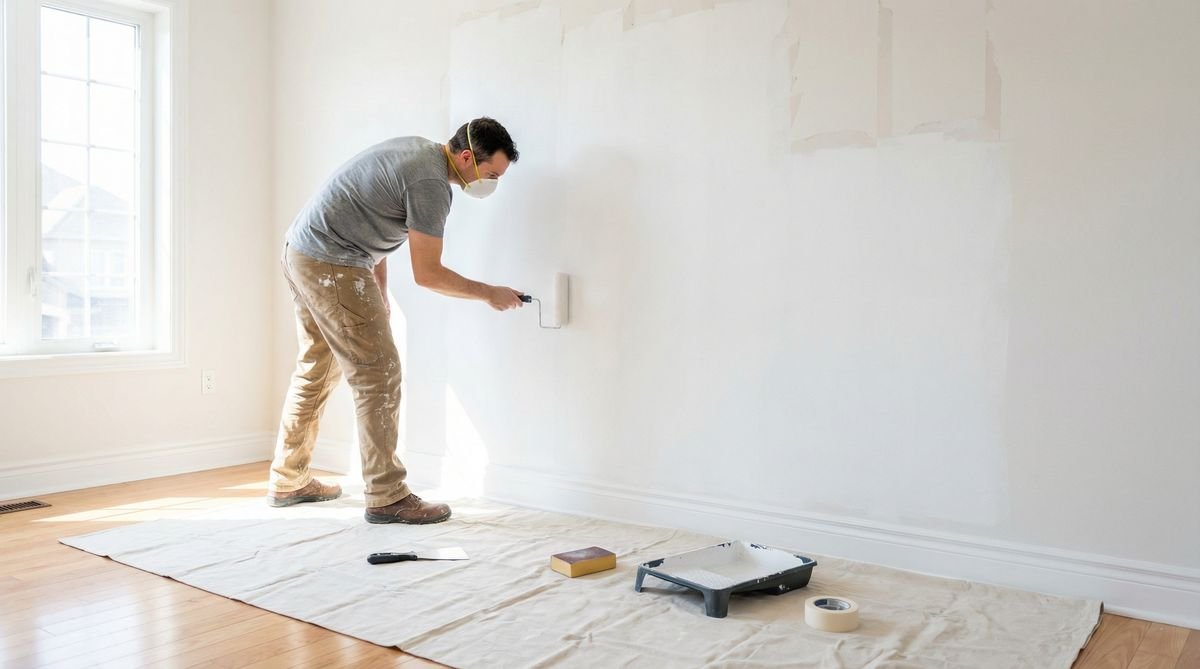
If you notice any nicks or gouges in the drywall, now is the time to repair them. Use a putty knife to apply a thin layer of spackling compound to the damaged areas. Once the spackling is dry, sand it smooth with a fine-grit sandpaper. Finally, apply a coat of primer to the walls. This will create a smooth, even surface for your new paint or wallpaper, ensuring a professional-looking finish.
Frequently Asked Questions (FAQ)
How do you remove wallpaper without damaging drywall?
The key to removing wallpaper without damaging drywall is to be patient and use the right tools. A wallpaper steamer is often the best option, as it loosens the adhesive without oversaturating the drywall. It’s also important to use a scraper with rounded corners to avoid gouging the wall.
Can you paint over wallpaper?
While it’s possible to paint over wallpaper, it’s generally not recommended. Paint can highlight any imperfections in the wallpaper, and it can make it more difficult to remove the wallpaper in the future. For the best results, it’s always best to remove the old wallpaper before you paint.
What is the best tool to remove wallpaper?
For most types of wallpaper, a wallpaper steamer is the most effective tool. It’s a chemical-free option that can save you a lot of time and effort. For less stubborn wallpaper, a simple scoring tool and scraper may be all you need.
How long does it take to remove wallpaper?
The amount of time it takes to remove wallpaper will depend on the size of the room, the type of wallpaper, and the method you’re using. A small room with strippable wallpaper might only take a few hours, while a large room with traditional wallpaper could take a full day or more.
Can you remove wallpaper with a heat gun?
While a heat gun can be used to remove wallpaper, it’s not the best option. A heat gun can easily damage the drywall, and it can also be a fire hazard. A wallpaper steamer is a much safer and more effective choice.
