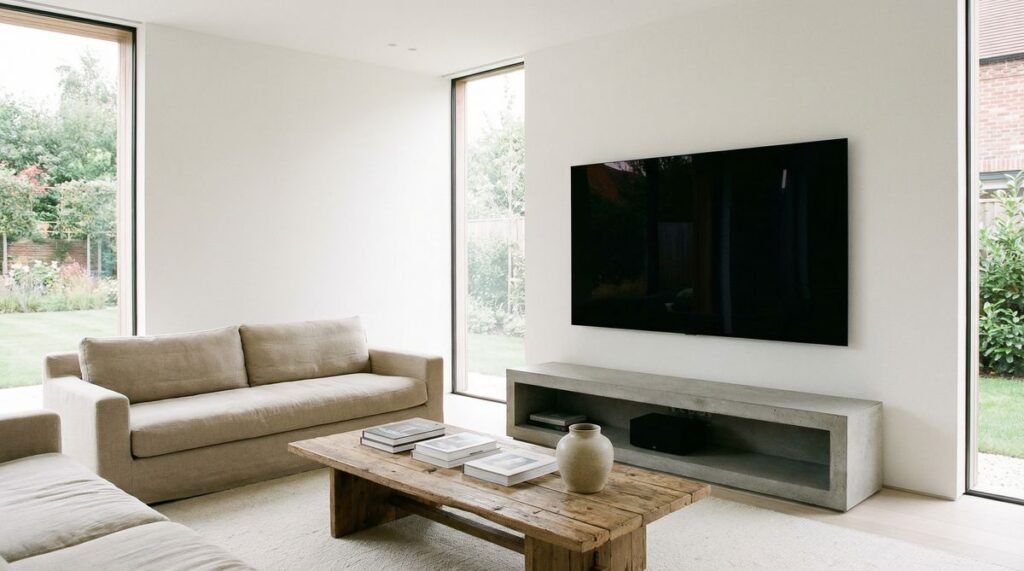
A wall-mounted television offers a sleek, modern aesthetic, but unsightly cables can detract from its appeal. Effective cable management is crucial for a safer, more organized, and visually harmonious environment. This guide explores various methods to discreetly hide TV cables, ensuring your wall-mounted display remains the focal point it was intended to be.
The Imperative of Cable Management: Beyond Aesthetics
Effective cable management for wall-mounted TVs extends beyond mere visual appeal, significantly enhancing safety, organization, and the longevity of your electronic equipment. According to WMI Federal Way Company, by concealing cables, you mitigate tripping hazards, prevent damage to wires, and reduce dust accumulation, contributing to a cleaner, safer, and more streamlined home environment.
Proper cable management is a foundational element of home safety and organization. Exposed cables present a significant tripping hazard, especially in homes with children and pets. A neatly managed system eliminates these dangers. Organized cables are also less prone to damage, extending the lifespan of your HDMI, power, and audio-visual cords. This proactive approach simplifies troubleshooting and upgrades, as clearly routed cables are easier to identify and access. Beyond safety and longevity, a clutter-free entertainment area contributes to a more serene viewing experience, allowing your wall-mounted display to shine without visual distractions.
Safety First: Understanding Electrical Codes and Best Practices
Running electrical cables inside walls requires strict adherence to local electrical codes and safety best practices to prevent fire hazards and ensure compliance. Low-voltage cables like HDMI and optical can typically be routed through walls with appropriate fire-rated pass-through plates, but high-voltage power cords often necessitate specialized in-wall power kits or the installation of new outlets by a qualified electrician.
Before any in-wall cable management, understand and comply with local electrical codes. These regulations prevent electrical fires. Low-voltage cables (HDMI, Ethernet, optical audio) can be safely run inside walls using specialized cable pass-through plates. However, standard power cords (high-voltage) should never be simply dropped behind drywall due to significant fire risk. For power cables, use a recessed in-wall power kit or have a new electrical outlet installed directly behind the TV by a licensed electrician. Consult a professional or your local building department if unsure about specific requirements. Proper planning and adherence to these guidelines are crucial for a safe installation.
Preserving Your Home’s Integrity: When to DIY vs. Hire a Pro
Deciding between a DIY cable concealment project and hiring a professional hinges on the complexity of the task, your comfort with tools, and the desired permanence of the solution. Simple on-wall covers are ideal for DIY, while in-wall routing, especially involving electrical work or structural modifications, often warrants professional expertise to ensure safety and preserve home integrity.
The decision to DIY or hire a professional depends on the scope and your skill set. For straightforward solutions like adhesive cord covers or decorative cable sleeves, a DIY approach is often sufficient. These require minimal tools and are quick to complete. However, projects involving cutting into drywall, navigating studs, or dealing with electrical wiring for in-wall power solutions increase in complexity. Incorrect installation can lead to structural damage or electrical hazards. If you lack experience with carpentry or electrical work, hiring a qualified professional—such as an electrician or AV installer—is highly recommended. Professionals ensure the job is done safely, efficiently, and to a high standard, preserving your home’s integrity.
Diverse Solutions for Every Home and Skill Level
A spectrum of cable concealment methods exists, ranging from simple cosmetic fixes to integrated in-wall systems, each suited to different aesthetic preferences, budgets, and DIY capabilities. Options include adhesive cord covers, decorative sleeves, strategic furniture placement, and advanced in-wall routing kits, offering solutions for every wall-mounted TV setup.
The quest for a clean, cable-free wall-mounted TV setup has led to numerous ingenious solutions. The choice balances aesthetics, permanence, budget, and DIY comfort. From quick fixes to comprehensive systems, there’s a cable management strategy for virtually every scenario. Understanding these options empowers you to select the most appropriate solution, transforming a cluttered space into a sleek, modern entertainment hub.
In-Wall Cable Routing: The Seamless, Permanent Approach
In-wall cable routing offers the most aesthetically pleasing and permanent solution for hiding TV cables, creating a truly wireless look by running wires directly through the wall cavity. This method typically involves installing specialized cable pass-through plates or in-wall power kits, requiring careful planning and some DIY skill or professional installation to ensure safety and compliance.
For the ultimate minimalist aesthetic, in-wall cable routing is ideal. This method involves creating discreet entry and exit points in your drywall and running all cables (power, HDMI, optical, Ethernet) through the wall cavity. The result is a completely wire-free appearance. You’ll use either simple cable pass-through grommets for low-voltage wires or sophisticated in-wall power kits for electrical outlets. The process requires a stud finder, drywall saw, and patience. While a DIY project for the handy homeowner, be aware of electrical codes and avoid drilling into studs or existing wiring. For maximum safety and a flawless finish, professional installation is often recommended. This permanent solution enhances aesthetics and protects cables.
On-Wall Cable Concealment: Stylish and Accessible Options
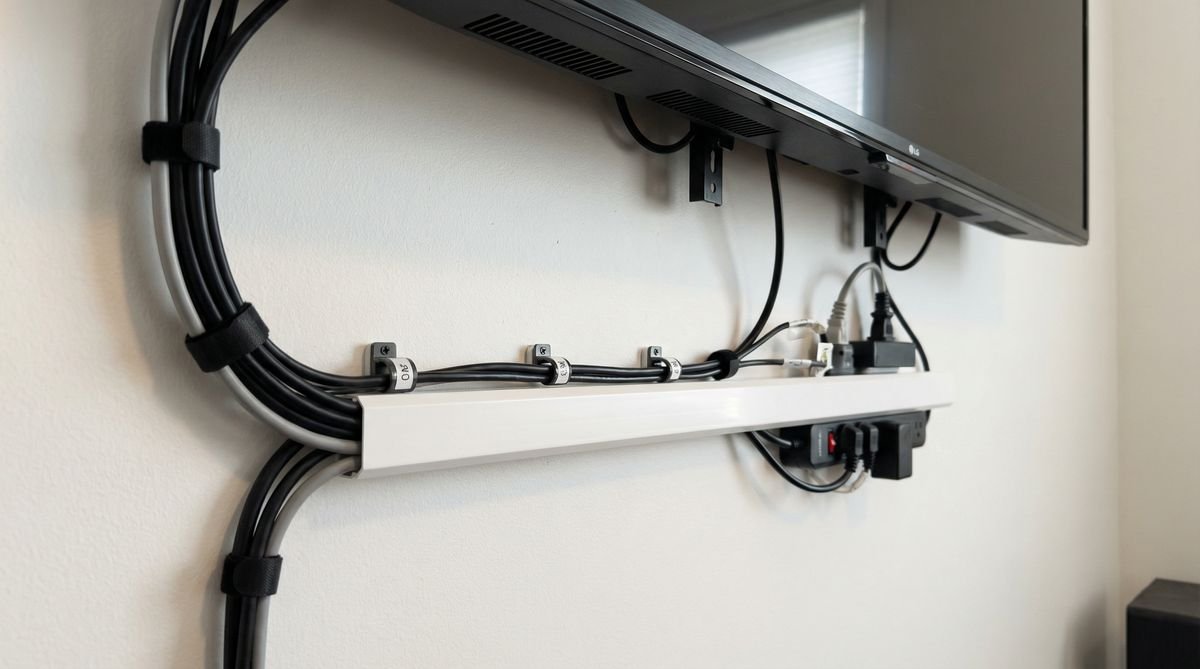
On-wall cable concealment provides a less invasive and more flexible alternative to in-wall routing, utilizing decorative covers, raceways, or sleeves that adhere to the wall surface. These solutions effectively hide cables while allowing for easy access and modification, making them ideal for renters or those preferring a simpler, reversible installation.
When in-wall routing isn’t feasible, on-wall cable concealment is a practical alternative. This approach houses cables within decorative channels or sleeves mounted directly onto the wall. These solutions come in various materials, colors, and profiles, many paintable to match your wall. Options range from slim, adhesive-backed raceways to decorative fabric sleeves. Advantages include ease of installation, minimal wall impact, and easy access for modifications. This makes them popular for renters or those preferring non-permanent solutions. Modern on-wall concealers are aesthetically pleasing and effective at taming cable clutter.
Creative Camouflage: Integrating Cables with Decor and Furniture
Beyond dedicated cable management products, creative camouflage involves strategically utilizing existing furniture, decorative elements, and clever placement to obscure TV cables from view. This method offers a budget-friendly and non-invasive way to achieve a cleaner look, blending functionality with interior design without requiring any modifications to walls or extensive installations.
Sometimes, the most effective cable management solutions are the simplest and most integrated with your home decor. Creative camouflage involves arranging your space to naturally hide cables without specialized kits or drilling. Strategically positioning furniture (media console, bookshelf, large potted plant) beneath or adjacent to your TV can block trailing wires. Decorative baskets or storage boxes can hide power strips and excess cable length. Routing cables along baseboards, behind curtains, or using decorative wall art can also be effective. This method appeals to budget-conscious individuals, renters, or those preferring a less technical approach. The key is creative thinking to make cables disappear into your well-designed space.
Choosing Your Ideal Cable Hiding Strategy
Selecting the optimal cable hiding strategy requires a careful assessment of several factors, including your budget, DIY comfort level, the permanence desired, and the specific types of cables needing concealment. A thoughtful evaluation ensures the chosen method aligns with both your aesthetic goals and practical requirements for a tidy and safe entertainment area.
Choosing the right cable management solution requires evaluating your specific needs and constraints. Consider your budget: simple on-wall solutions are generally more affordable. Your DIY comfort level is crucial; are you comfortable with power tools or prefer a no-fuss approach? The desired permanence is another factor; renters need temporary options, while homeowners might prefer integrated, long-term fixes. Finally, consider the types and number of cables to hide, influencing the required capacity. Weighing these factors leads to an informed decision for an organized and functional wall-mounted TV setup.
Assessing Your Needs: Factors to Consider for Optimal Results
Achieving optimal cable management for a wall-mounted TV necessitates considering the wall material, the number and type of cables, proximity to power outlets, and future accessibility needs. These factors collectively guide the selection of appropriate tools and techniques, ensuring a safe, aesthetically pleasing, and functional installation.
Before committing to a method, assess your unique situation. Wall material (drywall, plaster, brick, concrete) dictates the feasibility of in-wall routing. The number and type of cables influence concealment system capacity. Power outlet location is critical for in-wall power. Consider future needs: will you add devices or need frequent access? Easily accessible on-wall solutions or well-designed in-wall access points are then suitable. Ignoring these factors can lead to frustration or hazards. A careful pre-assessment ensures an effective, practical, and sustainable solution.
Cost, Effort, and Permanence: A Comparative Analysis of Methods
Cable management solutions vary significantly in terms of cost, installation effort, and permanence, offering a spectrum of choices from budget-friendly, temporary fixes to more involved, integrated systems. Understanding these trade-offs is key to selecting a method that aligns with individual preferences and long-term home improvement goals.
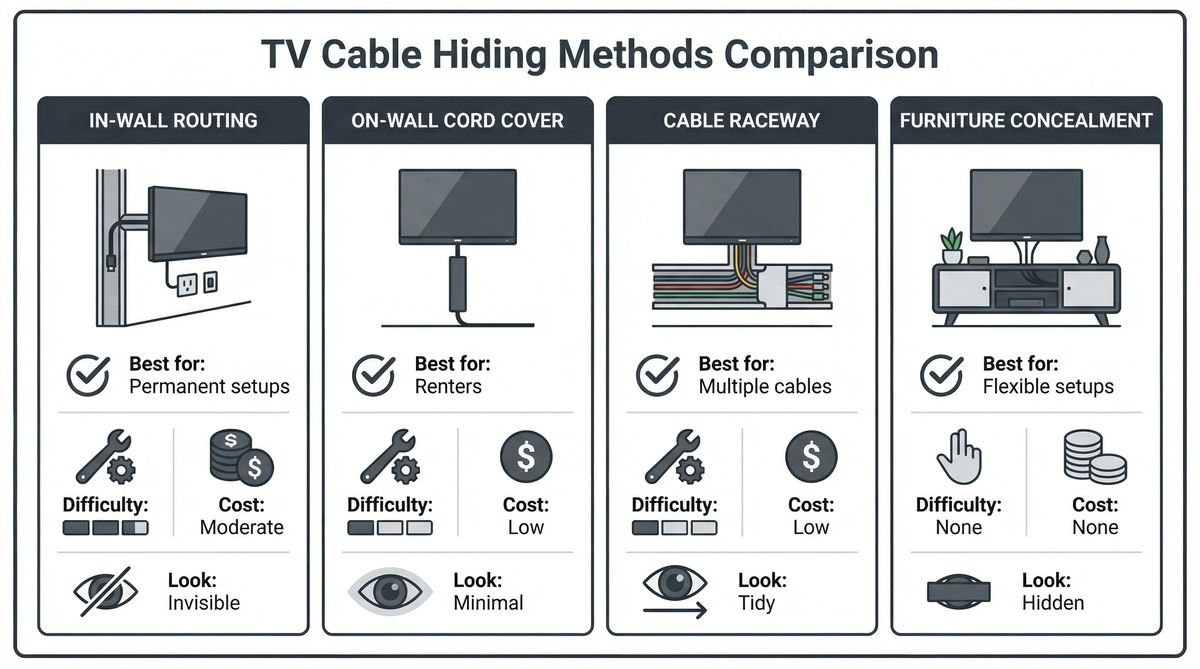
| Method | Cost | Effort | Permanence | Best For | Pros | Cons |
|---|---|---|---|---|---|---|
| Adhesive Cord Covers | Low | Low | Low (removable) | Renters, quick fixes | Easy to install, paintable, no wall damage | May not blend perfectly, limited capacity |
| Decorative Cable Sleeves/Wraps | Low | Low | Low (removable) | Minimalists, small cable bundles | Aesthetically pleasing, flexible, reusable | Limited capacity, may still be visible |
| Strategic Furniture/Decor | Low | Low | Low (rearrangeable) | Budget-conscious, non-invasive | No installation, blends with existing decor | Effectiveness depends on furniture placement |
| In-Wall Cable Pass-Through (Low Voltage) | Medium | Medium | High (semi-permanent) | Homeowners, clean look | Completely hidden cables, professional finish | Requires cutting drywall, potential for DIY errors |
| In-Wall Power Kits (High Voltage) | Medium-High | High | High (permanent) | Homeowners, ultimate clean look | Fully integrated power, eliminates visible cords | Requires electrical work, often professional installation |
Frequently Asked Questions About Hiding TV Cables
Is it safe to run power cables inside the wall?
Running standard power cables directly inside walls is generally unsafe and against electrical codes due to fire risks. Instead, use UL-listed in-wall power kits specifically designed for this purpose, or have a new electrical outlet installed behind the TV by a licensed electrician to ensure safety and compliance.
It is generally not safe, nor compliant with most electrical codes, to run standard power cords inside walls. These cords are not designed for in-wall use and pose a significant fire hazard. The safe way is to use a UL-listed in-wall power kit, which includes fire-rated components. Alternatively, a licensed electrician can install a new electrical outlet behind your TV, ensuring all wiring meets codes. Always prioritize safety and compliance.
What tools are essential for in-wall cable management?
Essential tools for in-wall cable management typically include a stud finder to locate safe drilling areas, a drywall saw for creating openings, fish tape for guiding cables through the wall cavity, and appropriate cable pass-through plates or in-wall power kits for a clean and compliant finish.
For successful in-wall cable management, a stud finder is crucial for locating safe drilling areas. A drywall saw creates entry and exit holes. Fish tape is invaluable for pulling cables through the wall. You’ll also need cable pass-through plates (grommets) for low-voltage cables, or a UL-listed in-wall power kit for power cords. Basic hand tools like a screwdriver, level, and measuring tape are also necessary. These tools streamline the process and help achieve a professional result.
Can I effectively hide TV cables without drilling into walls?
Yes, you can effectively hide TV cables without drilling into walls using several non-invasive methods, including adhesive cord covers, decorative cable sleeves, strategic placement of furniture or decor, and routing cables along baseboards or behind curtains. These solutions are ideal for renters or those seeking reversible options.
Absolutely. Drilling into walls is not always necessary. Effective and aesthetically pleasing solutions exist that require no wall modifications. Adhesive cord covers, often paintable, provide a discreet channel. Decorative cable sleeves bundle cables neatly. Strategic furniture placement (media console, bookshelf) can naturally obscure cables. Routing cables along baseboards, behind curtains, or using wall art can also camouflage wires. These non-invasive methods are advantageous for renters, preventing wall damage and offering flexibility.
How do I maintain access to cables once they are concealed?
Maintaining access to concealed cables is crucial for future upgrades or troubleshooting, and can be achieved through thoughtful planning, such as using larger cable pass-through plates, accessible raceways, or strategically placed in-wall access points that allow for easy retrieval and addition of wires.
Ensuring future access to concealed cables is critical. For in-wall solutions, use larger cable pass-through plates or specialized in-wall boxes with removable covers for easy access. For on-wall raceways, choose systems with hinged covers. When using furniture or decor, ensure items can be easily moved. Even with permanent in-wall solutions, leaving slack in cables is good practice. Thoughtful planning saves time and effort, ensuring your cable management system remains functional and adaptable.
What are the best cable hiding solutions for renters?
Renters should prioritize non-invasive and easily reversible cable hiding solutions that do not damage walls or require permanent alterations. Excellent options include adhesive cord covers, decorative cable sleeves, strategic furniture placement, and wireless technology, all of which offer effective concealment without violating lease agreements.
For renters, choose non-invasive and easily reversible solutions. Drilling or permanent alterations are generally not an option. Adhesive cord covers, removable without marks, are effective. Decorative cable sleeves bundle cables neatly. Strategic furniture placement (media consoles, bookshelves, plants) can naturally obscure cables. Wireless streaming devices and Bluetooth accessories reduce physical cables. These temporary, non-damaging methods allow renters to enjoy a clean, organized entertainment space while adhering to lease agreements.
Conclusion: Enjoying a Clutter-Free Viewing Experience
Achieving a clean, cable-free setup for your wall-mounted TV is an investment in aesthetics and functionality. By understanding the diverse solutions—from in-wall routing to decorative camouflage—homeowners and renters can transform their entertainment spaces. Prioritizing safety, electrical codes, and thoughtful planning ensures a successful outcome. Embrace effective cable management for a sleek, modern, and clutter-free viewing experience.
References
- [1] National Electrical Code (NEC)
- [2] Underwriters Laboratories (UL)
