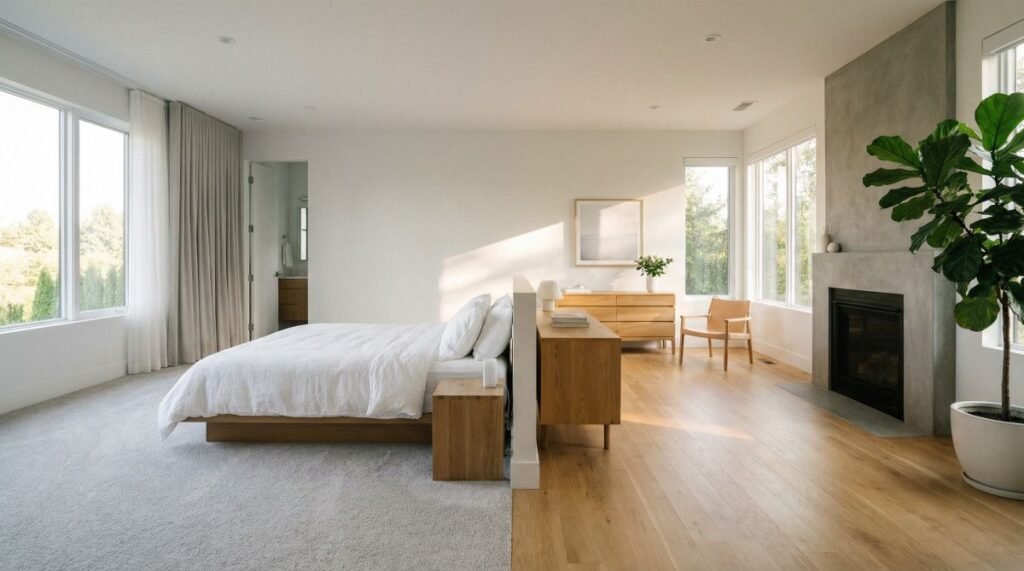
Hardwood flooring is generally considered the better long-term investment for bedrooms due to its superior durability, higher resale value, and hypoallergenic properties. While carpet offers unmatched underfoot comfort and sound insulation at a lower initial cost, hardwood provides a cleaner, more sophisticated aesthetic that can last for decades with proper maintenance and care, points out Del Mar Property Management.
Comfort and Thermal Insulation in the Bedroom
Carpet provides superior thermal insulation and physical comfort in bedrooms by trapping warm air within its fibers and offering a soft, cushioned surface. This material is significantly warmer to the touch than hardwood, making it an ideal choice for cold climates where maintaining a cozy and temperate sleeping environment is a priority.
Carpet remains the preferred choice for homeowners prioritizing physical comfort and warmth in their sleeping quarters. The soft fibers provide a cushioned surface that is gentle on joints and significantly warmer to the touch during cold winter mornings compared to hard surfaces. This thermal insulation helps maintain a consistent room temperature, potentially reducing heating costs in colder climates while creating a cozy atmosphere.
Hardwood floors are naturally cooler and firmer, which some sleepers find less inviting in a bedroom setting. However, the addition of high-quality area rugs can bridge the gap between the two materials, providing localized warmth and softness where it is needed most, such as beside the bed. This hybrid approach allows for the aesthetic beauty of wood without sacrificing the tactile comfort associated with traditional carpeting.
The choice of underlayment also plays a critical role in the thermal performance of both materials. For hardwood, specialized insulating underlayments can be installed to provide a slight thermal break from the subfloor, reducing the cold sensation during winter months. Carpet naturally includes a padding layer that traps air, creating a significant barrier against heat loss. This makes carpet an exceptionally efficient choice for bedrooms located above unheated spaces like garages or crawlspaces, where floor temperatures can drop significantly.
| Feature | Carpet Performance | Hardwood Performance |
|---|---|---|
| Underfoot Feel | Soft and cushioned | Firm and solid |
| Surface Temperature | Warm and insulating | Cool to the touch |
| Sound Dampening | Excellent absorption | Reflective and noisy |
Long-Term Durability and Maintenance Requirements
Hardwood flooring offers exceptional long-term durability, often lasting for several decades or even a century with proper care and occasional refinishing. While carpet requires replacement every ten to fifteen years due to fiber wear and staining, hardwood remains a permanent structural feature that can be restored to its original condition multiple times over its lifespan.
Hardwood flooring is the clear winner regarding longevity, often lasting 50 to 100 years when maintained correctly. Unlike carpet, which typically requires replacement every 10 to 15 years due to wear, staining, and fiber degradation, hardwood can be sanded and refinished multiple times to restore its original luster. This makes hardwood a more sustainable and cost-effective choice over the entire lifespan of a residential property.
Maintenance for hardwood involves simple sweeping and occasional damp mopping with specialized cleaners to prevent scratches and water damage. Carpet requires frequent vacuuming and professional deep cleaning at least once a year to remove deeply embedded dirt and oils. While carpet can hide small amounts of dust, it eventually becomes a reservoir for grime that is difficult to fully extract without industrial equipment.
The long-term appearance of these materials depends on traffic patterns. Hardwood is susceptible to surface scratches, but these can often be buffed out. Carpet suffers from crushing and matting in high-traffic areas. Once the fibers are permanently flattened, the carpet loses its aesthetic appeal and comfort, necessitating a full replacement to maintain a uniform look.
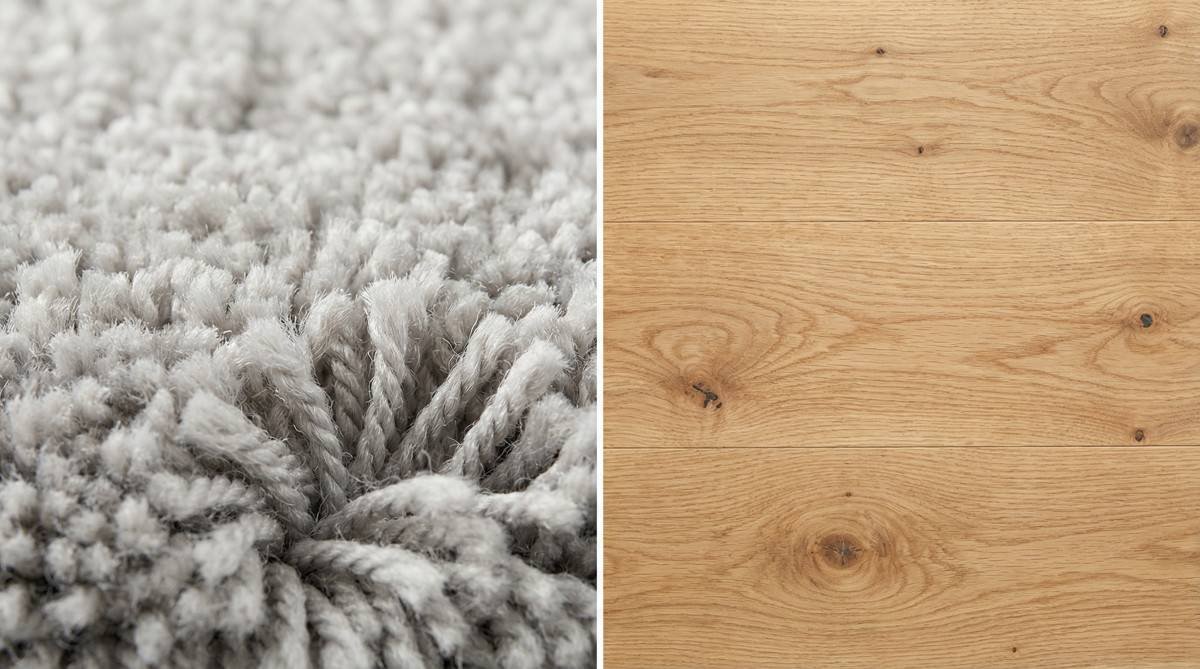
Spills and accidents are handled differently by each material, with hardwood offering a non-porous surface that is easier to wipe clean immediately. Carpet fibers absorb liquids quickly, leading to potential permanent staining and odors if not treated instantly with appropriate chemical cleaners. For households with pets or young children, the wipe-clean nature of hardwood often outweighs the initial softness of a carpeted bedroom floor.
Health Impacts and Indoor Air Quality
Hardwood flooring is the superior choice for maintaining high indoor air quality because its non-porous surface does not harbor common allergens like dust mites, pollen, or pet dander. Unlike carpet, which traps microscopic particles deep within its fibers, hardwood allows for easy and complete removal of irritants, providing a healthier environment for allergy sufferers.
Hardwood flooring is significantly better for indoor air quality because it does not trap allergens like dust mites, pet dander, or pollen. The smooth surface allows for easy removal of these particles, making it the recommended choice for individuals suffering from asthma or seasonal allergies. In contrast, carpet fibers act as a filter that captures and holds microscopic irritants, which can be released back into the air during movement.
While some modern carpets are treated with antimicrobial coatings, they still require more intensive cleaning to maintain a healthy environment. Volatile organic compounds are also a concern with new carpet installations, as the adhesives and synthetic fibers can off-gas for several weeks. Hardwood finished with low-VOC sealants provides a more natural and chemically inert flooring solution for sensitive individuals seeking a toxin-free sleeping environment.
Humidity levels in the bedroom also interact differently with each material. Hardwood is a natural product that expands and contracts with changes in moisture, which can lead to gaps or creaking if the indoor climate is not controlled. Carpet is generally more stable in varying humidity but can become a breeding ground for mold and mildew if it becomes damp and is not dried quickly. Maintaining a consistent indoor humidity level between thirty and fifty percent is recommended for both flooring types to ensure their longevity and prevent health-related issues.
| Allergen Type | Carpet Impact | Hardwood Impact |
|---|---|---|
| Dust Mites | High retention | Zero retention |
| Pet Dander | Traps in fibers | Stays on surface |
| Mold Growth | Possible in padding | Rare if kept dry |
Resale Value and Investment Return
Hardwood flooring significantly enhances a home’s resale value and marketability, often yielding a higher return on investment than carpet. Most prospective homebuyers prefer hardwood for its perceived luxury and longevity, viewing it as a permanent upgrade that justifies a higher purchase price and reduces the need for immediate post-purchase renovations or flooring replacements.
Hardwood flooring consistently provides a higher return on investment and is a major selling point for prospective homebuyers. Real estate data indicates that homes with hardwood throughout, including bedrooms, sell faster and for higher prices than those with wall-to-wall carpeting. Many buyers view carpet as a future expense, assuming they will need to replace it for hygiene or aesthetic reasons upon moving in.
Carpet is often seen as a temporary flooring solution that loses value the moment it is installed. While high-end wool carpeting can be an exception, most synthetic options do not contribute significantly to a home’s equity. Homeowners planning to sell within the next decade should consider hardwood as a strategic upgrade that enhances the overall marketability and perceived luxury of the master suite and secondary bedrooms.
The psychological impact of flooring on potential buyers is significant. A bedroom with pristine hardwood floors often feels cleaner and more modern, creating a positive first impression during home tours. By installing hardwood before listing, sellers can present a move-in-ready space that justifies a premium asking price in a competitive real estate market.
Cost Analysis of Installation and Materials
Carpet is the more affordable flooring option for initial installation, typically costing between three and seven dollars per square foot including labor and padding. While hardwood requires a larger upfront investment of eight to fifteen dollars per square foot, its long lifespan often results in a lower total cost of ownership over several decades.
Carpet is the more budget-friendly option for immediate installation, with total costs typically ranging from three to seven dollars per square foot including padding and labor. This makes it an attractive choice for large-scale renovations or for homeowners on a strict budget. However, the need for periodic replacement means the total cost of ownership over thirty years can actually exceed that of a single hardwood installation.
Hardwood installation requires a larger upfront investment, usually costing between eight and fifteen dollars per square foot depending on the wood species and labor complexity. While the initial price is higher, the lack of replacement costs and the added home value often result in a lower net cost over time. Homeowners should weigh their current liquid budget against long-term financial goals when deciding between these two popular bedroom flooring materials.
- Measure the total square footage of the bedroom including closets.
- Obtain quotes for both material costs and professional installation labor.
- Factor in the cost of removal and disposal of existing flooring materials.
- Compare the expected lifespan of each product against your planned duration of stay.
- Calculate the long-term maintenance and cleaning expenses for both options.
Frequently Asked Questions
Is it better to have carpet or hardwood in bedrooms?
Hardwood is generally better for long-term value and health, while carpet is superior for immediate comfort and noise reduction. The best choice depends on whether you prioritize a soft feel underfoot or a durable, easy-to-clean surface that increases your home’s overall market value over time.
Does hardwood in bedrooms increase home value?
Yes, hardwood flooring in bedrooms significantly increases home value and appeal to potential buyers. Most real estate experts agree that hardwood is a preferred feature that can lead to a higher selling price and a faster closing process compared to homes with older or standard carpeting.
Is carpet or hardwood better for allergies in the bedroom?
Hardwood is the superior choice for allergy sufferers because it does not trap dust, pollen, or pet dander. Carpet fibers and padding can harbor millions of microscopic allergens that are difficult to remove completely, even with regular vacuuming, potentially aggravating respiratory issues during sleep.
How much more expensive is hardwood than carpet?
Hardwood typically costs two to three times more than carpet for initial installation and materials. While carpet averages three to seven dollars per square foot, hardwood can range from eight to fifteen dollars, though it lasts much longer and does not require frequent replacement like carpet does.
Can you put area rugs over hardwood in a bedroom?
Yes, placing area rugs over hardwood is a popular way to get the benefits of both materials. This allows you to enjoy the durability and cleanliness of wood while adding softness and warmth exactly where you step out of bed, providing a versatile and stylish flooring solution.
Choosing between carpet and hardwood for a bedroom involves balancing immediate comfort against long-term practical benefits. Hardwood offers a timeless look, exceptional durability, and a healthier environment for those with allergies. Carpet provides a quiet, warm, and soft sanctuary that many find essential for a relaxing sleep space. By considering your budget, health needs, and how long you plan to live in your home, you can select the flooring that best suits your lifestyle and aesthetic preferences.
