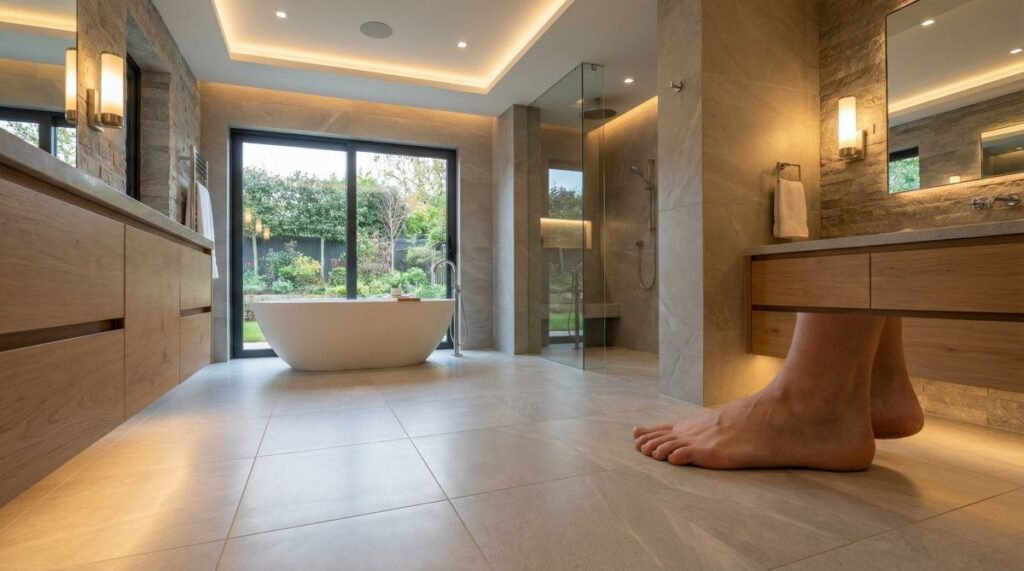
Heated floors are generally worth the cost for homeowners seeking enhanced comfort, improved energy efficiency, and increased property value in specific areas like bathrooms or kitchens. While installation costs range from $10 to $20 per square foot, the long-term benefits of consistent warmth and reduced allergen circulation often outweigh the initial investment compared with traditional forced-air systems, says Real Property Management Raleigh.
Installation Cost Comparison Between Heated and Regular Floors
Installing heated floors typically costs between $10 and $20 per square foot for electric systems, while hydronic systems can range from $15 to $30 per square foot depending on complexity. In contrast, regular flooring installation without heating elements usually costs between $5 and $12 per square foot, making radiant heat a significant upfront investment for most residential projects.
The primary price difference stems from the specialized materials and labor required for radiant systems. Electric floor heating involves laying thin heating mats or cables beneath the finished floor surface, which is relatively straightforward for renovations. Hydronic systems require a boiler and a network of water pipes, making them more suitable for new construction where the subfloor can be designed to accommodate the extra height and weight. This distinction is crucial for budgeting, as the labor for hydronic systems often involves plumbing expertise that standard flooring contractors may not possess.
Regular floors only require the cost of the material and standard underlayment. When choosing between the two, homeowners must consider whether the added comfort justifies a 50% to 100% increase in initial labor and material expenses. Most experts recommend focusing on high-traffic areas where bare feet are common, such as master bathrooms or basement living areas, to maximize the perceived value of the upgrade. In these specific zones, the investment feels more immediate and impactful than in a guest bedroom or formal dining room.
Furthermore, the type of flooring material chosen for the top layer significantly influences the total installation price. Tile and stone are the most common choices for radiant heat because they conduct and store thermal energy efficiently. However, these materials also require more labor-intensive preparation, such as the application of a thin-set mortar and grout, which adds to the overall project timeline. Regular flooring projects using laminate or luxury vinyl plank can often be completed in a single day, whereas a heated tile floor may take several days to cure properly before it can be walked upon.
Homeowners should also account for the cost of a dedicated electrical circuit or a boiler upgrade when planning for radiant heat. Unlike regular floors, which have no impact on the home’s mechanical systems, heated floors place an additional load on the electrical panel or plumbing network. If the existing infrastructure is outdated, the cost of upgrading the service panel can add several hundred dollars to the final bill. This hidden expense is often overlooked during the initial quoting phase but is essential for a safe and functional installation.
| System Type | Installation Cost (per sq. ft.) | Primary Material | Best Use Case |
|---|---|---|---|
| Electric Radiant | $10 – $20 | Heating Mats / Cables | Remodels / Bathrooms |
| Hydronic Radiant | $15 – $30 | PEX Tubing / Boiler | New Construction / Whole House |
| Regular Flooring | $5 – $12 | Standard Underlayment | General Living Areas |
Energy Efficiency and Monthly Operating Expenses
Radiant floor heating is approximately 20% to 30% more energy-efficient than traditional forced-air systems because it eliminates heat loss through ductwork and provides more uniform warmth. Monthly operating costs for a standard bathroom typically range from $15 to $30, depending on local electricity rates and how often the system is programmed to run during peak hours.
Forced-air systems often result in significant energy waste as hot air rises quickly to the ceiling, leaving the floor level cold. Radiant heat warms objects and people directly from the ground up, allowing residents to maintain a lower thermostat setting while feeling equally comfortable. This “bottom-up” heating approach ensures that heat stays where it is needed most, reducing the overall workload on the primary heating unit. Because the heat is concentrated in the lower half of the room, there is less thermal stratification, which is the scientific term for the uneven temperature layers found in homes with traditional furnaces.
Operating costs vary significantly based on the insulation quality of the home. A well-insulated room with a dedicated radiant thermostat can be programmed to warm up just before use, further reducing electricity consumption. While regular floors have zero direct operating costs, they contribute to higher overall heating bills because the primary HVAC system must work harder to compensate for the lack of thermal mass at the floor level. In a home with regular floors, the thermostat is often set higher to combat the “drafty” feeling caused by cold surfaces, leading to increased wear and tear on the furnace over time.
The efficiency of radiant heat is also tied to the concept of thermal mass. Materials like concrete, tile, and stone act as a battery for heat, absorbing energy and releasing it slowly over several hours. This means that even after the heating system is turned off, the floor remains warm to the touch. Regular floors do not have this capability and lose their temperature almost immediately once the ambient air cools down. This thermal stability is a major reason why radiant heat is considered a superior choice for energy-conscious homeowners in colder climates.
Additionally, the use of smart thermostats specifically designed for radiant systems can optimize energy usage by learning the heating patterns of the home. These devices can predict how long it will take for a floor to reach the desired temperature and adjust the start time accordingly. This level of precision is not possible with regular floors, where the heating is reactive rather than proactive. By investing in a smart control system, homeowners can ensure they are only paying for the heat they actually use, maximizing the “worth” of the entire installation.
| Heating Method | Efficiency Rating | Monthly Cost (100 sq. ft.) | Heat Distribution |
|---|---|---|---|
| Radiant Floor | High (90%+) | $15 – $30 | Uniform / Ground-up |
| Forced Air | Medium (70-80%) | $40 – $60 (Proportional) | Uneven / Ceiling-down |
| Baseboard Heat | Low (60-70%) | $50 – $80 | Localized / Convection |
Comfort and Lifestyle Benefits of Radiant Heating
The lifestyle benefits of heated floors include silent operation, improved indoor air quality, and the elimination of cold spots common in traditional homes. By removing the need for noisy blowers and dust-trapping vents, radiant systems create a healthier environment for individuals with allergies or respiratory sensitivities while providing a luxurious feel that regular flooring cannot replicate.
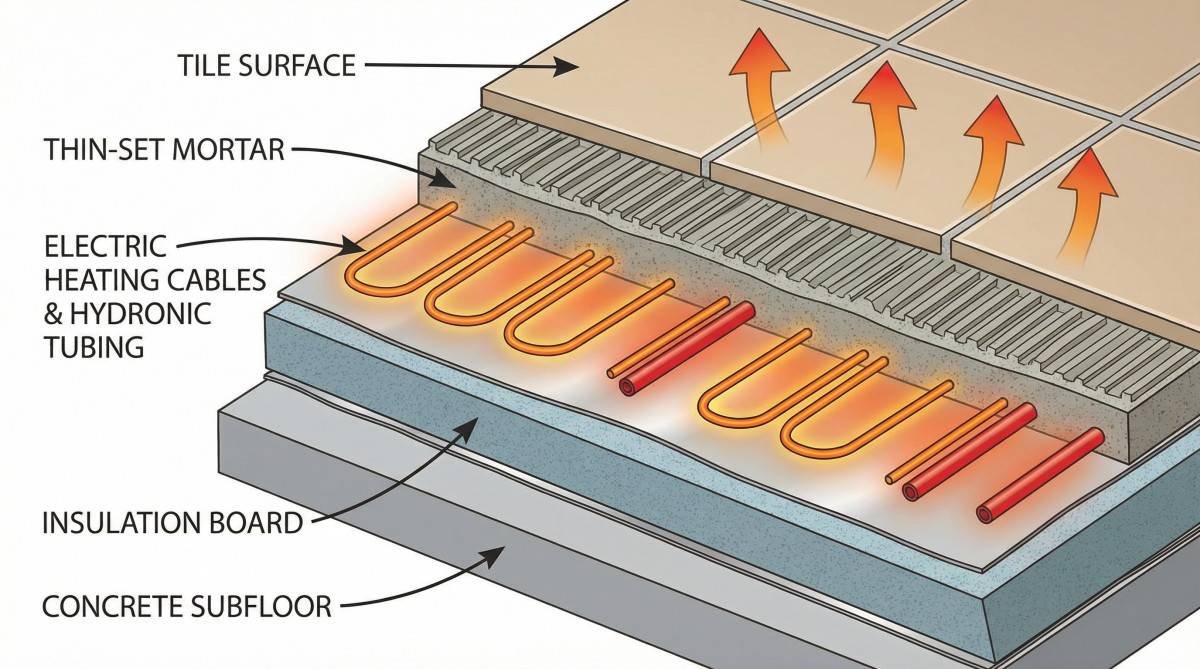
Walking on a warm floor during winter months significantly enhances the daily living experience. Regular floors, especially those made of tile, stone, or laminate, can feel uncomfortably cold to the touch, often requiring the use of rugs or slippers. Radiant heat transforms these surfaces into thermal masses that radiate gentle warmth throughout the room, creating a cozy atmosphere that feels premium and intentional.
Beyond physical warmth, the silence of a radiant system is a major advantage for modern open-concept homes. Traditional HVAC systems often create “whooshing” sounds and clicking noises as ducts expand and contract. Heated floors operate with zero noise, making them ideal for bedrooms and home offices where a quiet environment is essential for rest or productivity. This subtle improvement in home ambiance is a key factor in the “worth” equation for many buyers.
Impact on Real Estate Resale Value and ROI
Heated floors typically offer a high return on investment in luxury markets and cold climates, where they are viewed as a premium feature by prospective buyers. While they may not provide a dollar-for-dollar increase in home value, they significantly improve marketability and can lead to faster sales by distinguishing a property from competitors with standard flooring options.
Real estate professionals often highlight radiant heating in listing descriptions to signal quality and attention to detail. In upscale neighborhoods, heated bathroom floors have become an expected standard rather than a luxury add-on. For homeowners planning to sell within five to ten years, the installation of a heated floor can be a strategic move to ensure the property remains competitive in a crowded market.
The perceived value of radiant heat often exceeds its actual cost. Buyers are frequently willing to pay a premium for a home that offers superior comfort and lower utility bills. Even if the direct ROI is not 100%, the combination of personal enjoyment during residency and the added “wow factor” during showings makes heated floors a sound financial decision for many property owners.
Frequently Asked Questions
Are heated floors worth it in a bathroom?
Heated floors are highly recommended for bathrooms because tile and stone surfaces naturally feel cold. Since bathrooms are typically smaller spaces, the installation cost is relatively low, while the daily comfort benefit of stepping onto a warm floor after a shower is substantial for most homeowners.
Do heated floors increase home value?
Radiant floor heating increases home value by improving the property’s luxury appeal and energy efficiency ratings. While the exact increase varies by location, it serves as a powerful selling point that can justify a higher asking price and attract more competitive offers from discerning buyers.
Can you put heated floors under hardwood?
Heated floors can be installed under hardwood, but it requires careful selection of wood species and moisture content to prevent warping. Engineered hardwood is often the preferred choice for radiant systems because its layered construction provides better stability under temperature fluctuations compared to solid wood planks.
How much does it cost to run heated floors monthly?
Running an electric heated floor in a typical 50-square-foot bathroom costs approximately $10 to $20 per month if used for several hours a day. Using a programmable thermostat to lower the temperature when the room is not in use can further reduce these expenses, making it a very affordable luxury.
Do heated floors require a lot of maintenance?
Electric radiant floors require virtually no maintenance once installed, as there are no moving parts or filters to replace. Hydronic systems may require occasional boiler servicing, but the floor-level components are designed to last for decades without intervention, offering a significant advantage over traditional HVAC systems.
Choosing between a heated floor and a regular floor involves balancing immediate budget constraints with long-term lifestyle goals. While the initial cost of radiant heat is higher, the combination of superior comfort, energy savings, and enhanced resale value makes it a compelling choice for modern home improvements. For those prioritizing a high-quality living environment, the investment in a warm floor provides lasting satisfaction that standard flooring simply cannot match.
