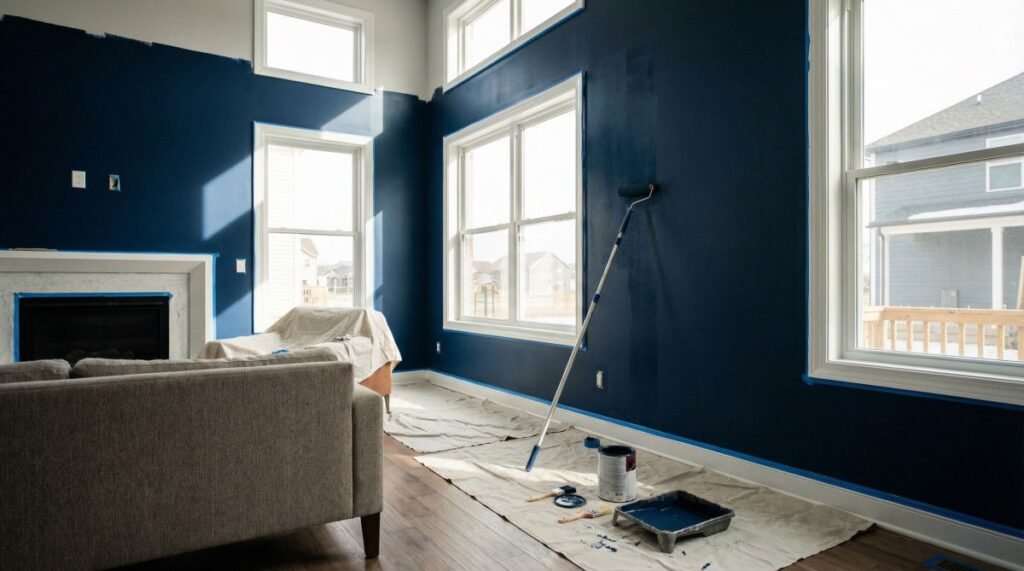
Most interior walls require two coats of paint to achieve a professional, durable, and uniform finish. While a single coat may appear sufficient in some refresh scenarios, a second application ensures full color depth, hides underlying imperfections, and provides the necessary film thickness for long-term wear resistance and easy cleaning, notes RealtyWerx Property Management.
Standard Paint Coat Requirements for Interior Walls
A standard interior painting project typically demands two full coats of high-quality latex or acrylic paint to reach the manufacturer’s intended color and sheen. This two-coat rule applies to most residential surfaces, including previously painted drywall, plaster, and wood trim, as it allows the pigments to build a solid, opaque layer that resists fading and mechanical damage over time.
Applying two coats is not merely about aesthetics; it is a technical requirement for the paint’s chemical properties to function correctly. The first coat acts as a foundational layer that bonds to the surface, while the second coat provides the final texture and protective barrier. Skipping the second coat often leads to “holidays” or thin spots that become visible under different lighting conditions or after the paint has fully cured.
The following table outlines the typical number of coats required based on the specific surface type and its current condition.
| Surface Type | Condition | Recommended Coats |
|---|---|---|
| Previously Painted Drywall | Good (Same Color) | 1 to 2 Coats |
| New Drywall | Unfinished | 1 Primer + 2 Coats |
| Bare Wood Trim | Unfinished | 1 Primer + 2 Coats |
| Masonry or Brick | Porous | 1 Masonry Primer + 2 to 3 Coats |
Managing Color Transitions and Dark Pigments
Drastic color transitions, such as painting a light shade over a dark wall or using deep, saturated pigments like red or navy, often require three or more coats for complete coverage. Darker colors contain more tinting base and less titanium dioxide, which reduces their natural hiding power and necessitates additional layers to achieve a uniform, streak-free appearance across the entire surface.
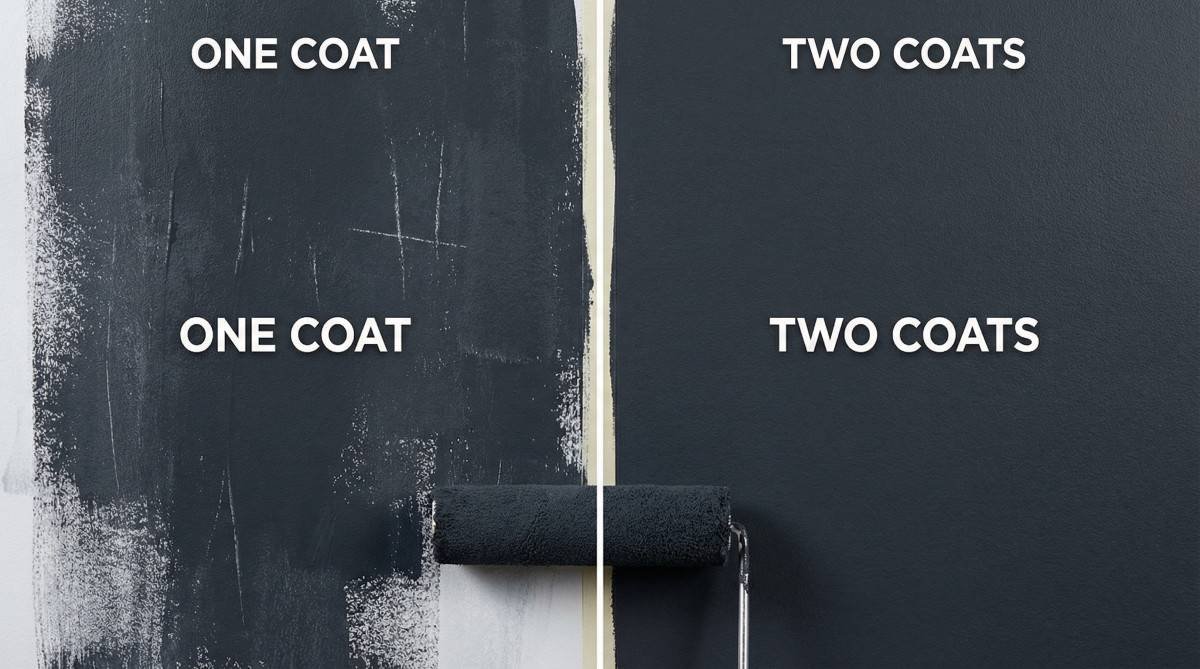
When transitioning from a very dark color to a light one, the underlying pigment can “bleed” through standard paint layers. In these cases, using a high-hide white primer can reduce the number of finish coats needed. Without a primer, you might find yourself applying four or five coats of light paint before the dark original color is fully obscured, which is both time-consuming and expensive.
Deep-tone colors like vibrant reds, oranges, and yellows are notoriously difficult to apply because they are naturally more transparent. Professional painters often use a “gray-tinted” primer under these specific hues to provide a neutral base that enhances the final color’s vibrancy and reduces the total number of topcoats required to reach full opacity.
The Impact of Primer on Total Coat Count
Using a dedicated primer significantly reduces the number of finish coats required by sealing porous surfaces and providing a uniform base for the paint to adhere to. Primer is essential for new drywall, bare wood, or repaired areas, as these materials absorb paint unevenly, which would otherwise lead to a blotchy and inconsistent final appearance if only topcoats were used.
While many modern products are marketed as “paint and primer in one,” these are actually high-build paints that work best on previously painted surfaces in good condition. For challenging projects, such as painting over glossy oil-based finishes or covering smoke and water stains, a specialized primer is still the most effective way to ensure the final two coats of paint look their best and last for years.
The table below compares the effectiveness of using a primer versus multiple coats of standard paint in various common home improvement scenarios.
| Scenario | Primer Used? | Total Layers Needed | Result Quality |
|---|---|---|---|
| New Drywall | Yes | 3 (1 Primer, 2 Paint) | Excellent / Uniform |
| New Drywall | No | 4+ (Paint only) | Poor / Blotchy |
| Stained Surface | Yes (Stain-blocking) | 3 (1 Primer, 2 Paint) | Excellent / No Bleed |
| Stained Surface | No | 5+ (Paint only) | Failure / Stain Bleed |
Technical Factors Influencing Paint Coverage
The method of application, the quality of the tools used, and the environmental conditions during the project all play a critical role in how many coats of paint a wall will ultimately need. High-quality rollers with the correct nap thickness for the wall’s texture will hold more paint and distribute it more evenly than cheap, low-density alternatives, often reducing the need for corrective touch-ups.
Environmental factors such as humidity and temperature also affect the paint’s “open time” and how it levels out on the wall. In very dry conditions, paint may dry too quickly, leading to visible lap marks that require an extra coat to hide. Conversely, high humidity can extend drying times significantly, meaning you must wait longer between coats to prevent the second layer from pulling up the first, partially dried layer.
Paint quality is perhaps the most significant factor in coverage. Premium paints contain higher concentrations of solids and pigments, allowing them to cover more surface area with fewer layers. While a budget paint might require three coats to achieve the same look as two coats of a premium product, the higher-end option often saves both time and labor costs in the long run.
Frequently Asked Questions
Can I apply a second coat after 1 hour?
Most latex paints require at least two to four hours of drying time before a second coat can be safely applied. Applying paint too soon can cause the first layer to bubble, peel, or smear, as it has not yet formed a stable bond with the wall surface. Always check the specific manufacturer’s instructions on the paint can for the recommended recoat window.
Is one-coat paint actually effective?
One-coat paints are effective for refreshing a room with the same or a very similar color, but they rarely provide perfect coverage when making a significant color change. These products are thicker and contain more solids, but for a truly professional and durable finish that stands up to scrubbing and daily wear, two coats are still the industry standard.
Does the paint sheen affect how many coats I need?
Higher sheens, such as semi-gloss or high-gloss, often require more careful application and sometimes an extra coat to ensure a perfectly uniform reflection. Matte and flat finishes are more forgiving and can sometimes achieve a solid look in fewer passes, but they lack the durability and moisture resistance provided by the multiple layers of a glossier finish.
What happens if I only apply one coat of paint?
Applying only one coat of paint often results in an uneven finish known as “flashing,” where some areas appear glossier or darker than others. Additionally, a single thin layer is much more susceptible to scuffs, scratches, and fading. Over time, the lack of proper film thickness will make the wall harder to clean without damaging the paint surface.
How many coats of paint are needed for a ceiling?
Ceilings generally require one to two coats of specialized ceiling paint, which is formulated to be extra flat and high-hiding. If the ceiling is in good condition and you are using a high-quality white ceiling paint over an existing white surface, one thick, even coat is often sufficient because ceilings experience no physical contact or wear.
Achieving a flawless finish on your walls depends on patience and adherence to the two-coat standard. By properly preparing the surface with primer when necessary and choosing high-quality materials, you ensure a vibrant color and a durable surface that will maintain its appearance for years. Taking the time to apply that second layer is the most reliable way to transform a DIY project into a professional-grade home improvement.
