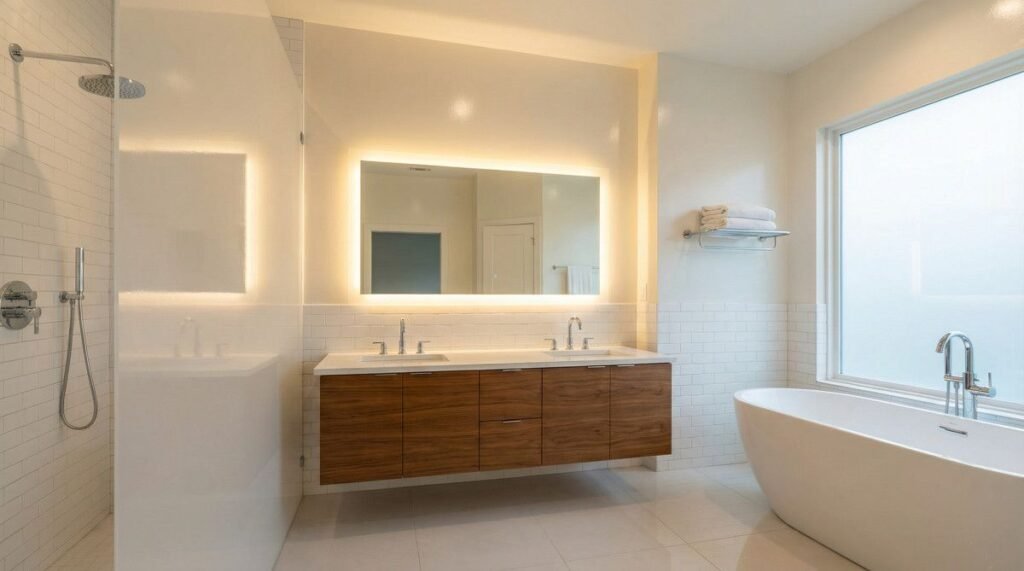
The best paint finish for bathroom walls is usually semi-gloss or satin because both options provide a durable, moisture-resistant barrier that helps prevent water absorption and inhibit mold growth. While traditional flat finishes absorb humidity and stain easily, semi-gloss and satin sheens allow condensation to bead off the surface and withstand frequent scrubbing without losing their protective qualities, says Skyline Delaware County.
Comparing Semi-Gloss and Satin Finishes
Semi-gloss and satin are the primary recommendations for high-moisture environments because they balance aesthetic appeal with the practical necessity of water resistance and easy maintenance. Semi-gloss offers a higher shine and superior durability against steam, while satin provides a softer, more velvety appearance that hides minor wall imperfections more effectively than glossier alternatives.
Choosing between these two depends largely on the ventilation quality and the desired look of the space. A bathroom with poor airflow benefits significantly from the extra protection of semi-gloss, whereas a well-ventilated master bath might look more sophisticated with a satin finish. Both options create a non-porous surface that stands up to the unique challenges of bathroom humidity.
| Feature | Satin Finish | Semi-Gloss Finish |
|---|---|---|
| Sheen Level | Medium-Low (Velvety) | Medium-High (Shiny) |
| Moisture Resistance | High | Very High |
| Durability | Good | Excellent |
| Ease of Cleaning | Easy | Very Easy |
| Hiding Imperfections | Moderate | Low |
Homeowners often prefer satin for its ability to provide a modern look without the harsh reflections sometimes associated with high-gloss paints. However, for children’s bathrooms or high-traffic guest baths, the added resilience of semi-gloss is often the more practical choice for long-term performance.
The Rise of Specialty Matte Bathroom Paints
Specialty matte bathroom paints use advanced acrylic technology to provide a flat appearance while maintaining the moisture resistance typically found only in high-gloss finishes. These premium products are specifically engineered with antimicrobial agents to prevent mildew and are formulated to resist the water spotting and surfactant leaching that usually plague standard flat paints in humid rooms.
While standard matte paint is generally avoided in bathrooms, these specialized versions offer a solution for those who dislike shiny walls. They are particularly useful in large bathrooms where light reflections from glossier paints might be distracting or highlight uneven drywall patches. The higher cost of these specialty paints is often justified by their unique combination of a designer look and functional durability.
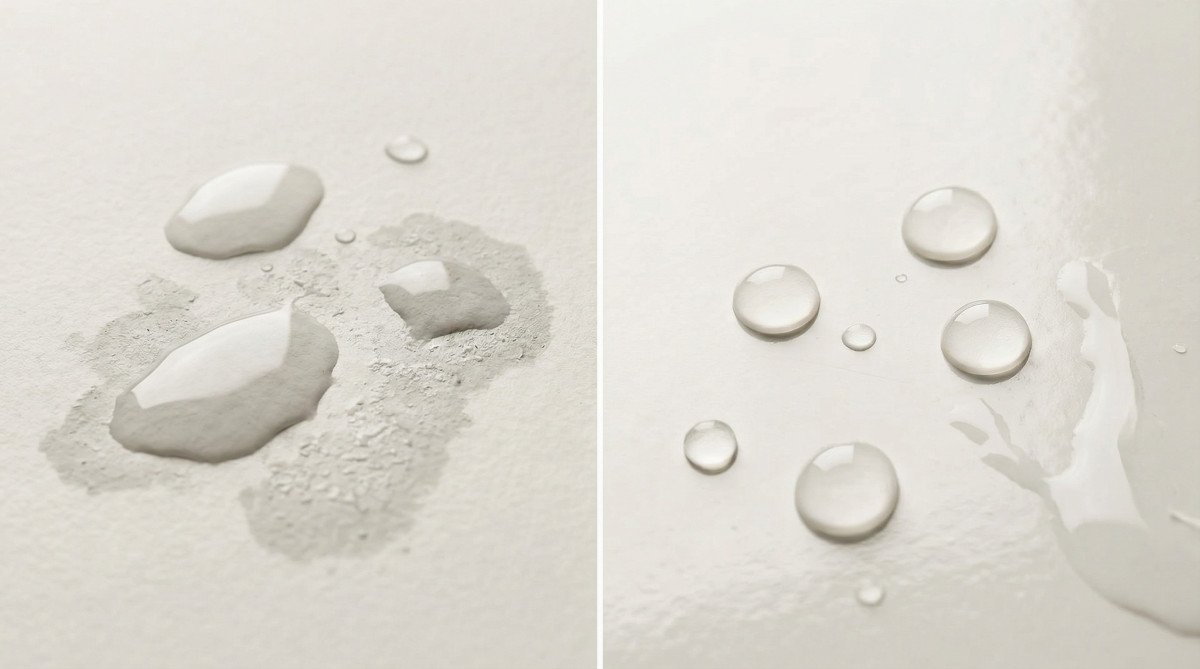
When selecting a specialty matte product, it is essential to verify that the label explicitly states it is designed for bathrooms or high-moisture areas. These formulations often include higher concentrations of resins and binders that create a tighter paint film. This dense structure prevents steam from penetrating the drywall, which is the leading cause of paint peeling and bubbling over time.
Why Flat and Eggshell Finishes Often Fail in Bathrooms
Flat and eggshell finishes often fail in bathrooms because their porous structure allows moisture to penetrate the paint film, leading to peeling, bubbling, and the growth of mold or mildew. These lower-sheen paints lack the resin density required to repel water, causing them to absorb steam and develop unsightly water stains or “snail trails” from condensation runoff.
The lack of durability in these finishes also makes them difficult to clean without damaging the paint itself. Scrubbing a flat or eggshell surface often results in “burnishing,” where the friction creates a permanent shiny spot on the wall. In a bathroom environment where soap scum and hairspray residue are common, the inability to wash the walls effectively leads to a premature need for repainting.
| Finish Type | Bathroom Suitability | Primary Risk Factor |
|---|---|---|
| Flat / Matte | Not Recommended | High moisture absorption and mold growth |
| Eggshell | Low | Water spotting and poor scrubbability |
| Satin | High | None (if properly ventilated) |
| Semi-Gloss | Ideal | Highlights wall texture and flaws |
Using these finishes in a bathroom typically results in a shorter lifespan for the paint job. Within a few months, the constant cycle of heating and cooling, combined with high humidity, can cause the paint to lose its bond with the primer. This leads to the characteristic flaking often seen in older bathrooms that were not painted with moisture-resistant sheens.
Choosing the Right Finish for Bathroom Ceilings and Trim
The right finish for bathroom ceilings is typically a satin or specialized ceiling paint, while trim and baseboards should always be finished with semi-gloss or high-gloss for maximum protection. Ceilings are the most vulnerable surfaces to rising steam, requiring a finish that can handle constant moisture without dripping or developing mildew spots over the shower area.
For trim, doors, and baseboards, a higher gloss level is preferred because these surfaces endure the most physical contact and cleaning. A semi-gloss finish on the trim provides a nice visual contrast against satin walls while ensuring that the areas most prone to collecting dust and moisture are the easiest to wipe down. This tiered approach to sheens ensures every surface is optimized for its specific role.
- Assess the ventilation and light levels in the bathroom to determine the best sheen for the walls.
- Select a semi-gloss or high-gloss paint for all trim, baseboards, and doors to ensure durability.
- Choose a satin or specialty moisture-resistant paint for the ceiling to prevent steam damage.
- Ensure all selected paints include antimicrobial additives to inhibit the growth of mold and mildew.
Consistency in sheen across different surfaces can make a small bathroom feel larger, but functional needs should always take priority. If the bathroom lacks an exhaust fan, moving up one level in gloss for all surfaces is a wise precaution. This extra layer of protection helps compensate for the increased time moisture spends sitting on the surfaces after a hot shower.
Preparation and Application for Maximum Durability
Maximum durability in a bathroom paint job requires thorough cleaning with a degreaser and the application of a high-quality moisture-blocking primer before the final finish is applied. Even the best semi-gloss paint will fail if it is applied over existing mildew or soap scum, as these contaminants prevent the new paint from forming a proper bond with the wall.
Proper drying time is equally critical in bathroom environments. Most manufacturers recommend waiting at least 24 to 48 hours before using the shower to allow the paint to cure fully. If the paint is exposed to high humidity too early, it can lead to surfactant leaching, which appears as sticky, brown or clear streaks on the walls that are difficult to remove once they set.
Applying two thin coats of paint is always superior to one thick coat, especially in humid rooms. Thin coats dry more evenly and create a harder, more resilient finish. Using a high-quality synthetic brush and a short-nap roller will help achieve a smooth surface that minimizes the areas where moisture can collect. Taking these extra steps during application ensures the bathroom remains fresh and vibrant for years.
Frequently Asked Questions
Can I use eggshell finish in a bathroom?
Eggshell finish can be used in half-baths or powder rooms where moisture levels are low, but it is generally not recommended for full bathrooms with showers. The porous nature of eggshell paint allows steam to penetrate the surface, which often leads to water staining and potential mold issues over time.
Is satin or semi-gloss better for bathroom walls?
Semi-gloss is technically better for moisture resistance and cleaning, making it ideal for small or poorly ventilated bathrooms. However, satin is often preferred for its aesthetic balance, offering sufficient water protection while providing a smoother, less reflective look that hides wall imperfections better than semi-gloss.
What is the best paint finish for a bathroom ceiling?
A satin finish is the best choice for a bathroom ceiling because it provides a necessary moisture barrier without being as reflective as semi-gloss. Since steam rises directly to the ceiling, using a finish with some sheen prevents the paint from absorbing water and peeling away from the drywall.
How do I prevent mold on my bathroom walls?
Preventing mold requires using a paint with antimicrobial additives and ensuring the room has proper ventilation. Choosing a semi-gloss or satin finish creates a hard, non-porous surface that is difficult for mold spores to grip, while running an exhaust fan during and after showers removes the excess humidity they need to grow.
Do I need special bathroom paint?
While you do not strictly need “bathroom-specific” paint, using a high-quality 100% acrylic latex paint in a satin or semi-gloss finish is essential. Specialty bathroom paints often include extra mildewcides and better moisture-blocking properties, which can be a worthwhile investment for rooms with poor airflow or high usage.
Selecting the right paint finish is the most critical decision in any bathroom renovation project. By prioritizing moisture resistance and durability through the use of satin or semi-gloss sheens, homeowners can ensure their walls remain beautiful and free from mold. Proper preparation and the right choice of materials will result in a professional finish that stands up to the daily rigors of a high-humidity environment.
