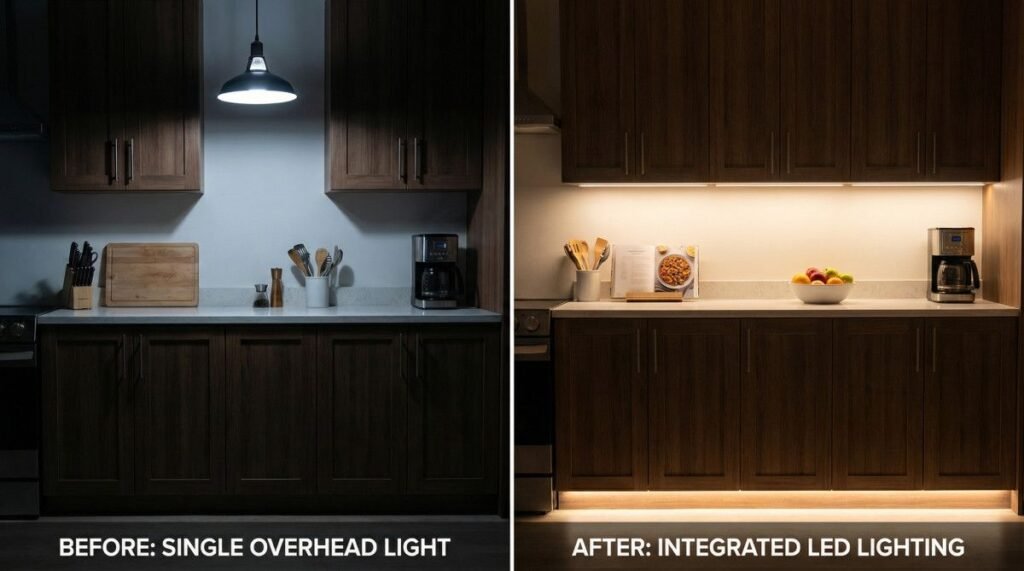
Selecting the right kitchen lighting for low ceilings requires prioritizing fixtures that maximize vertical clearance while still providing layered illumination. Homeowners should focus on flush-mount units, recessed cans, and targeted task lighting to keep the room open and functional without the visual clutter of oversized hanging fixtures. By balancing ambient, task, and accent layers, notes Jersey City Property Management, you can turn a compact kitchen into a bright and welcoming space that feels taller than it is.
Understanding Ceiling Height Standards for Kitchens
Standard kitchen ceilings typically measure 8 feet in height, while anything below this mark is considered low and requires specialized lighting strategies to maintain safety and aesthetics. For these spaces, the primary goal is to keep the bottom of any light fixture at least 7 feet above the floor to prevent physical obstructions and visual crowding. Understanding these dimensions allows for the selection of low-profile hardware that provides necessary lumens without compromising the perceived volume of the room.
When planning your layout, it is essential to categorize your ceiling height to determine which fixture types are most appropriate. The following table outlines the recommended lighting categories based on common residential ceiling heights found in modern and older homes.
| Ceiling Height | Classification | Recommended Fixture Types |
|---|---|---|
| Under 8 Feet | Very Low | Recessed, Ultra-Thin Flush Mount, LED Strips |
| 8 Feet | Standard Low | Flush Mount, Semi-Flush (under 12″), Track Lighting |
| 9 Feet + | Standard/High | Pendants, Chandeliers, Large Semi-Flush |
For ceilings under 8 feet, every inch of vertical space is a premium asset. Choosing fixtures with a depth of 4 inches or less ensures that the light source remains close to the mounting surface, which helps the ceiling appear higher by reducing the “drop” effect. This approach also minimizes the risk of taller individuals or moving objects coming into contact with the hardware during daily kitchen activities.
Best Fixture Types for Low Clearance Areas
The most effective fixtures for low-clearance kitchens are recessed lighting and flush mount units because they integrate directly into or sit tight against the ceiling plane. Recessed “can” or “canless” lights are the gold standard for low ceilings as they occupy zero vertical room space while providing powerful, directed ambient light. Flush mount fixtures offer a decorative alternative, sitting within 1 to 4 inches of the ceiling to provide a wide spread of light without the bulk of a traditional pendant.
While recessed lights are highly functional, many homeowners prefer the aesthetic touch of a surface-mounted fixture. Modern designs have evolved to offer high-output LEDs in extremely slim profiles that mimic the look of more expensive architectural lighting. The table below compares the three most popular low-profile options based on their installation requirements and light distribution characteristics.
| Fixture Type | Profile Depth | Primary Benefit | Best Use Case |
|---|---|---|---|
| Recessed LED | 0 Inches | Zero footprint, modern look | General ambient lighting |
| Flush Mount | 1-4 Inches | Decorative, easy install | Central kitchen area |
| Semi-Flush | 4-10 Inches | Airflow, style variety | Over breakfast nooks |
If you choose semi-flush mounts, ensure the total drop does not exceed 10 inches to maintain the 7-foot clearance rule in a standard 8-foot room. These fixtures are particularly useful in kitchens with slightly more headroom, as they allow a small amount of light to reflect off the ceiling. This upward light bounce softens the overall ambiance and can make the ceiling feel less oppressive than a completely flat light source.
Implementing Layered Lighting Strategies
Layered lighting is the practice of combining ambient, task, and accent light sources to create a balanced environment that functions well for both cooking and socializing. In low-ceiling kitchens, this strategy is vital because relying on a single overhead source often creates harsh shadows and makes the room feel smaller. By adding under-cabinet LEDs and wall-mounted sconces, you shift the visual focus away from the low ceiling and toward the functional work surfaces.
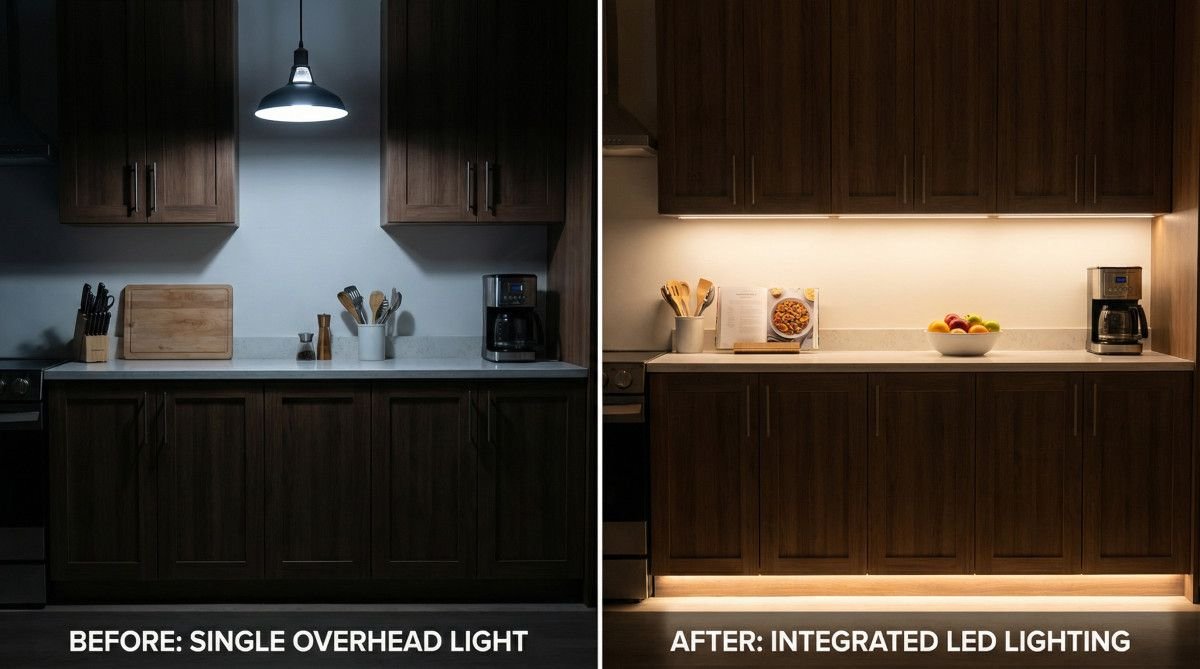
To implement a successful layered plan, follow these sequential steps to ensure full coverage without over-complicating the electrical layout:
- Install recessed or flush mount lights as the primary ambient layer to provide general visibility.
- Add high-output LED strips under upper cabinets to illuminate countertops for safe food preparation.
- Place puck lights inside glass-front cabinets to create depth and serve as an accent layer.
- Consider toe-kick lighting at the base of floor cabinets to provide a soft glow for nighttime navigation.
This multi-level approach ensures that light is distributed evenly throughout the vertical plane of the room. When the walls and work surfaces are well-lit, the eye is naturally drawn to the horizontal elements of the kitchen rather than the proximity of the ceiling. This optical illusion is one of the most effective ways to make a cramped kitchen feel significantly more spacious and professionally designed.
Optimizing Light Color and Brightness
The color temperature and brightness of your bulbs significantly impact how a low-ceiling kitchen is perceived, with cooler, brighter lights generally making a space feel larger. For most kitchens, a color temperature between 3000K and 4000K is ideal, as it provides a clean, white light that enhances visibility without feeling overly clinical. Brightness should be calculated based on the square footage, aiming for approximately 70 to 80 lumens per square foot in work zones.
Choosing the right bulb technology is just as important as the fixture itself. LEDs are the preferred choice for low ceilings because they are compact, produce very little heat, and are available in various “slim” formats. The following table provides a quick reference for matching color temperatures with the desired atmosphere in your kitchen space.
| Color Temp (K) | Light Appearance | Atmospheric Effect |
|---|---|---|
| 2700K – 3000K | Warm White | Cozy, traditional, relaxing |
| 3500K – 4100K | Cool White | Clean, modern, energetic |
| 5000K – 6500K | Daylight | Crisp, high-contrast, clinical |
Using dimmable bulbs and switches is a highly recommended upgrade for low-ceiling environments. Dimmers allow you to adjust the intensity of the light based on the time of day or the task at hand, preventing the “interrogation room” feel that can occur when a small space is over-lit. This flexibility is essential for kitchens that serve as both a high-activity cooking zone and a relaxed dining area in the evening.
Frequently Asked Questions
Can I use pendant lights with an 8-foot ceiling?
Pendant lights can be used with 8-foot ceilings if they are hung over a permanent surface like a kitchen island or dining table where people will not walk under them. In these cases, the bottom of the pendant should sit 30 to 36 inches above the countertop to provide focused task lighting without obstructing views. Avoid hanging pendants in high-traffic walkways where they would interfere with head clearance.
How many recessed lights do I need for a small kitchen?
A general rule for recessed lighting is to space the fixtures approximately every 3 to 4 feet to ensure even coverage across the entire ceiling. For a standard small kitchen, this usually results in a grid of 4 to 6 lights, depending on the room’s specific dimensions and the presence of other light sources. Always place lights over the edges of countertops to prevent your body from casting shadows on your workspace.
What is the difference between flush and semi-flush mounts?
Flush mount fixtures are installed directly against the ceiling with no gap, making them the most space-efficient option for very low clearances. Semi-flush mount fixtures have a small stem or gap between the ceiling and the light housing, typically ranging from 2 to 8 inches. Semi-flush units are often preferred for their ability to provide both downward and upward light, which can help soften the room’s overall appearance.
Does light fixture color affect the feeling of ceiling height?
Light fixtures that match the color of the ceiling, such as white fixtures on a white ceiling, tend to blend in and make the ceiling feel higher and less cluttered. Conversely, high-contrast fixtures like black or dark bronze can draw the eye upward and emphasize the ceiling’s proximity. If your goal is to maximize the sense of space, choose low-profile fixtures in finishes that complement your ceiling paint.
Are track lights good for low ceilings?
Track lighting is a versatile option for low ceilings because it allows you to aim multiple light heads at different areas from a single electrical box. However, it is important to choose “low-profile” tracks that do not hang too far down into the room. Track lighting is particularly effective for illuminating long countertops or highlighting specific architectural features without the need for multiple ceiling cutouts.
Final Considerations for Low Ceiling Lighting
Successful kitchen lighting for low ceilings is achieved by selecting fixtures that prioritize vertical clearance while providing high-quality, layered illumination. By utilizing recessed LEDs, slim flush mounts, and strategic under-cabinet lighting, you can create a workspace that is both safe and visually expansive. Remember to maintain the 7-foot clearance rule for walkways and use dimmers to control the ambiance, ensuring your kitchen remains a bright and functional heart of the home regardless of its height.
