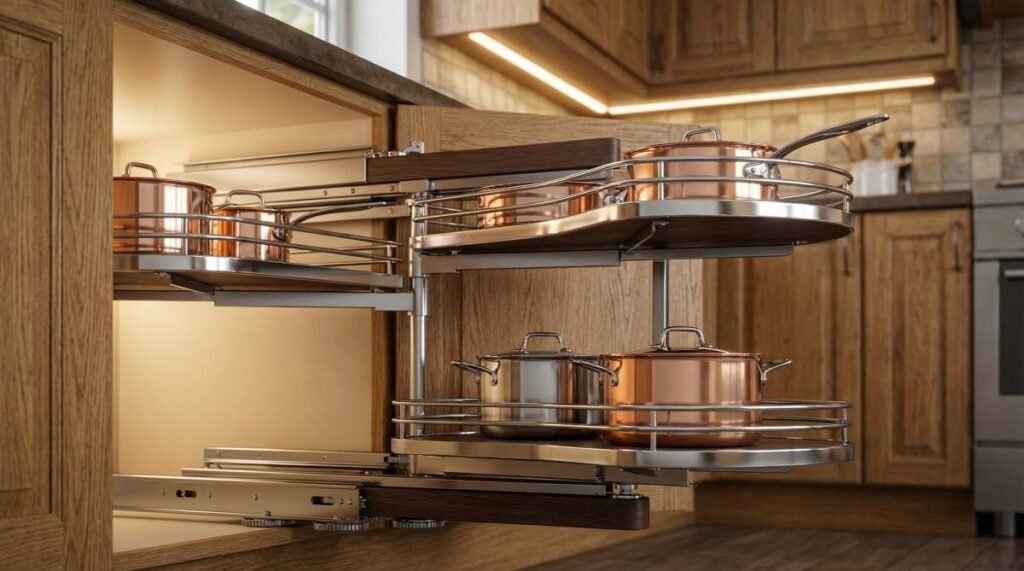
Maximizing storage in a small kitchen requires a strategic mix of vertical expansion, specialized cabinetry hardware, and the elimination of underused dead zones. By prioritizing high-frequency items and making use of overlooked areas like cabinet ends and toe kicks, homeowners can significantly increase functional capacity without expanding the room’s footprint or compromising essential workspace, shares UTZ Property Management specialists.
Effective organization starts with a thorough assessment of current inventory and the implementation of systems that bring items to the user rather than requiring deep reaching. Modern solutions such as full-extension drawers and tiered organizers ensure every square inch of available space serves a practical purpose in the daily culinary workflow.
Utilizing Vertical Space with Floor-to-Ceiling Cabinetry
Vertical storage is the most effective way to increase capacity in a small kitchen by capturing the unused area between standard upper cabinets and the ceiling. Extending cabinetry to the full height of the room provides dedicated space for seasonal items and specialized appliances while creating a seamless, high-end aesthetic that draws the eye upward to make the room feel larger.
Standard kitchen designs often leave a gap of 12 to 18 inches above upper cabinets, which typically serves only as a collection point for dust. Replacing these with 42-inch or stacked cabinets allows for the storage of large platters, holiday sets, and rarely used gadgets. This approach not only adds significant volume but also eliminates visual clutter by providing a closed-door home for items that would otherwise occupy valuable counter space.
When planning vertical storage, it is essential to consider accessibility for different types of items. Lower shelves should hold daily essentials, while the highest reaches are reserved for lightweight or infrequently used goods. Incorporating a library-style rolling ladder or keeping a sturdy, slim-profile step stool nearby ensures that these high-altitude storage zones remain practical and safe for regular use.
| Storage Type | Typical Height | Best Use Case | Accessibility Level |
|---|---|---|---|
| Standard Upper Cabinets | 30-36 inches | Daily glassware, plates, spices | High |
| Full-Height Cabinets | 42-54 inches | Mixing bowls, small appliances | Medium |
| Stacked To-Ceiling Units | 12-18 inches (extra) | Seasonal decor, large stockpots | Low |
Transforming Corner Cabinets and Dead Zones
Corner cabinets are frequently the most inefficient areas in a kitchen, often becoming “dead zones” where items are lost in deep, dark recesses. Modern hardware solutions like lazy Susans, kidney-shaped pull-outs, and blind corner swing-out systems transform these awkward angles into high-functioning storage hubs that provide full visibility and easy access to every stored item.
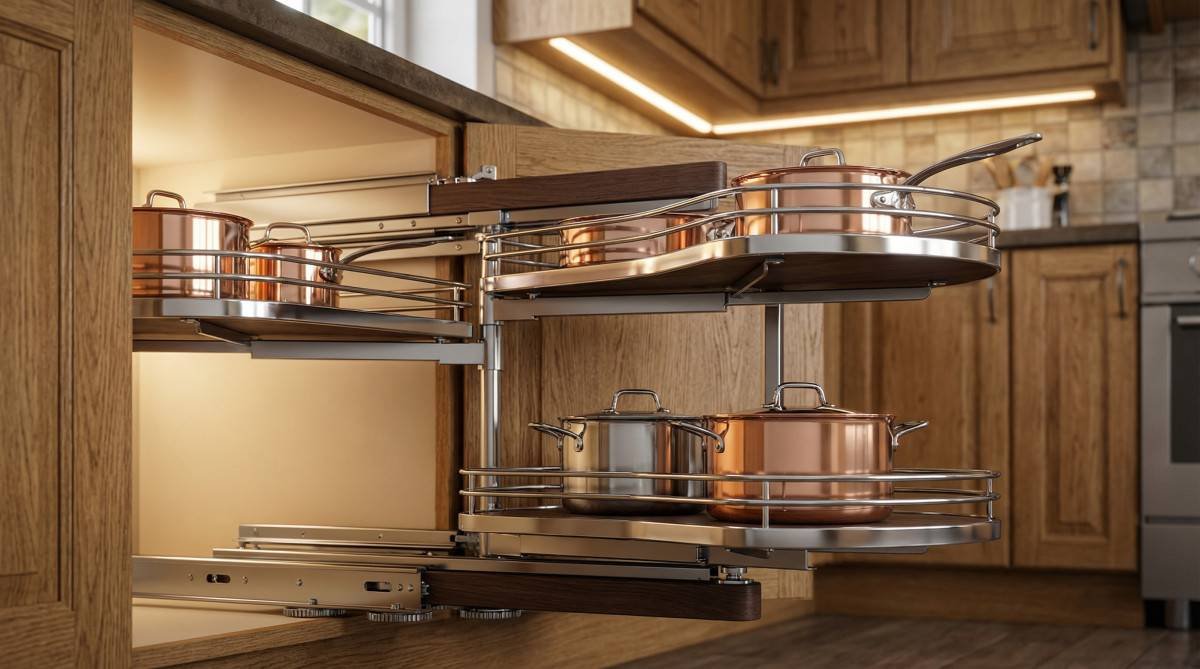
The traditional “Lazy Susan” remains a popular choice for its simplicity and effectiveness in rotating items to the front. However, for those seeking maximum space utilization, “Magic Corner” or “LeMans” pull-outs are superior. These systems use a series of interconnected shelves that glide out of the cabinet when the door is opened, bringing the entire contents of the corner into the light without requiring the user to kneel or reach blindly.
Beyond the corners, other dead zones like the narrow gaps between appliances or at the end of cabinet runs can be reclaimed. Slim pull-out spice racks or towel bars can be installed in spaces as narrow as three inches. Even the toe-kick area at the base of lower cabinets can be converted into shallow drawers for storing flat items like baking sheets, pizza stones, or step stools, further maximizing the kitchen’s utility.
| Corner Solution | Mechanism Type | Space Efficiency | Ideal Contents |
|---|---|---|---|
| Lazy Susan | Rotating Trays | Moderate | Spices, small cans, jars |
| Blind Corner Pull-out | Swing-out Shelves | High | Pots, pans, mixing bowls |
| Diagonal Cabinet | Standard Shelving | Low | Large appliances, bulky items |
Optimizing Lower Cabinets with Deep Pull-Out Drawers
Replacing traditional lower cabinet doors and fixed shelves with deep pull-out drawers is a transformative upgrade for small kitchen ergonomics and storage density. Drawers allow for 100 percent utilization of the cabinet’s depth and provide a top-down view of all contents, eliminating the need to remove front items to reach those stored in the back.
Deep drawers are particularly effective for heavy items like cast iron skillets, Dutch ovens, and stacks of dinnerware. High-quality drawer slides with soft-close technology can support significant weight while maintaining smooth operation. By using adjustable dividers or peg systems within these drawers, homeowners can customize the interior layout to prevent items from shifting and to keep lids neatly paired with their respective pots.
The shift from doors to drawers also improves the overall workflow by reducing the physical strain of bending and reaching. In a small kitchen where floor space is limited, the ability to quickly pull out a drawer and find exactly what is needed saves time and reduces frustration. This modification is often cited by professional organizers as the single most impactful change for improving kitchen functionality.
Creative Storage Solutions for Kitchens Without a Pantry
Kitchens lacking a dedicated walk-in pantry require creative alternatives to house dry goods and bulk supplies without overwhelming the primary cabinetry. Utilizing the sides of refrigerators, installing over-the-door organizers, or incorporating a slim rolling pantry cart can provide significant supplemental storage for pantry staples in a very small footprint.
A popular solution is the “hidden” rolling pantry, which fits into the narrow gap between the refrigerator and the wall. These units are typically only 4 to 6 inches wide but can hold dozens of cans, jars, and spice containers. For those with available wall space, a shallow wall-mounted rack or a pegboard system can turn an empty vertical surface into a highly organized “open pantry” for frequently used ingredients and tools.
Over-the-door organizers are another underutilized resource, especially on the back of a pantry-style cabinet door or a door leading to a basement or laundry room. These racks can hold everything from snacks and spices to cleaning supplies, keeping them accessible but out of sight. When combined with clear, airtight containers for bulk goods, these strategies create a highly efficient food storage system that rivals the capacity of much larger kitchens.
- Install a slim rolling cart in the gap next to the refrigerator for canned goods.
- Mount a pegboard on an empty wall to hang pots, pans, and frequently used utensils.
- Use the back of the kitchen door for a multi-tiered wire rack organizer.
- Convert a single tall cabinet into a dedicated pantry with pull-out wire baskets.
Maximizing the Efficiency of the Under-Sink Area
The area under the kitchen sink is notoriously difficult to organize due to plumbing fixtures, garbage disposals, and filtration systems. However, with specialized expandable organizers and pull-out bins, this damp and awkward space can become a primary storage zone for cleaning supplies, trash management, and dishwashing essentials.
Expandable under-sink organizers are designed to fit around pipes, providing two levels of shelving that can be adjusted in width and height. Utilizing clear plastic bins on these shelves allows for easy categorization of sponges, detergents, and brushes. For trash and recycling, a cabinet-mounted pull-out system is far more space-efficient than freestanding bins, keeping waste out of sight and freeing up valuable floor space in a tight kitchen.
To further enhance this area, consider mounting small adhesive hooks or racks on the inside of the cabinet doors. These are perfect for holding dish gloves, spray bottles, or rolls of trash bags. By treating the under-sink cabinet as a multi-dimensional storage project rather than a catch-all for clutter, homeowners can reclaim several cubic feet of functional space that is often completely wasted.
| Under-Sink Tool | Function | Benefit |
|---|---|---|
| Expandable Racks | Adjustable Shelving | Fits around complex plumbing |
| Pull-out Trash Bins | Waste Management | Saves floor space, hides odors |
| Door-Mounted Hooks | Small Item Hanging | Utilizes vertical door surface |
| Clear Stackable Bins | Categorization | Improves visibility and access |
Strategic Use of Open Shelving and Magnetic Racks
Open shelving and magnetic storage solutions offer a way to increase storage capacity while maintaining an airy, open feel in a small kitchen. By replacing some upper cabinets with floating shelves or utilizing magnetic strips for knives and metal spice tins, homeowners can keep essential items within arm’s reach without the visual bulk of traditional cabinetry.
Magnetic knife strips are a classic space-saver, removing the need for a bulky knife block on the countertop. Similarly, magnetic spice containers can be attached to the side of a refrigerator or a dedicated metal plate on the backsplash, freeing up drawer and cabinet space. These solutions not only save room but also add a professional, chef-inspired aesthetic to the kitchen environment.
Floating shelves should be used strategically to avoid a cluttered appearance. They are ideal for items used daily, such as coffee mugs, dinner plates, or frequently used cookbooks. By keeping these items visible and accessible, the kitchen feels more functional and lived-in. When paired with a consistent color palette or attractive glassware, open shelving serves as both a storage solution and a design element that enhances the overall character of the home.
Frequently Asked Questions
How can I get more storage in a small kitchen?
Increasing storage in a small kitchen is best achieved by utilizing vertical space with floor-to-ceiling cabinets and replacing lower cabinet shelves with deep pull-out drawers. Additionally, reclaiming dead zones like corners with specialized hardware and using the backs of doors for organizers can significantly expand your available capacity without a full remodel.
How do you maximize space in a small kitchen with no pantry?
For kitchens without a pantry, utilize slim rolling carts that fit into narrow gaps next to appliances and install over-the-door racks for dry goods. Wall-mounted pegboards and magnetic strips also provide excellent alternative storage for items that would typically occupy pantry shelves, keeping your essentials organized and accessible.
How do you organize a small kitchen with very little cabinet space?
When cabinet space is extremely limited, prioritize open shelving for daily essentials and use magnetic backsplash strips for knives and spices. Incorporating multi-functional furniture, such as a small kitchen island with built-in shelving or a rolling cart, provides both extra prep surface and additional storage for bulky items.
What is the best layout for a small kitchen to maximize storage?
The galley layout is often considered the most efficient for small kitchens as it provides two parallel runs of cabinetry, maximizing both counter and storage space within a compact footprint. L-shaped layouts are also highly effective, especially when paired with smart corner storage solutions like LeMans pull-outs to eliminate dead zones.
Are open shelves better than cabinets for small kitchens?
Open shelves can make a small kitchen feel larger and more open by reducing visual bulk, but they require more frequent cleaning and organization. A combination of closed cabinetry for less attractive items and open shelving for daily-use pieces often provides the best balance of aesthetics and practical storage.
Conclusion
Maximizing storage in a small kitchen is a multifaceted challenge that rewards careful planning and the use of modern organizational technology. By looking upward to the ceiling, into the depths of corners, and even at the base of cabinets, homeowners can discover significant hidden potential in their existing space. Implementing these strategies creates a kitchen that is not only more organized but also more enjoyable to use, proving that even the smallest culinary spaces can offer big functionality.
