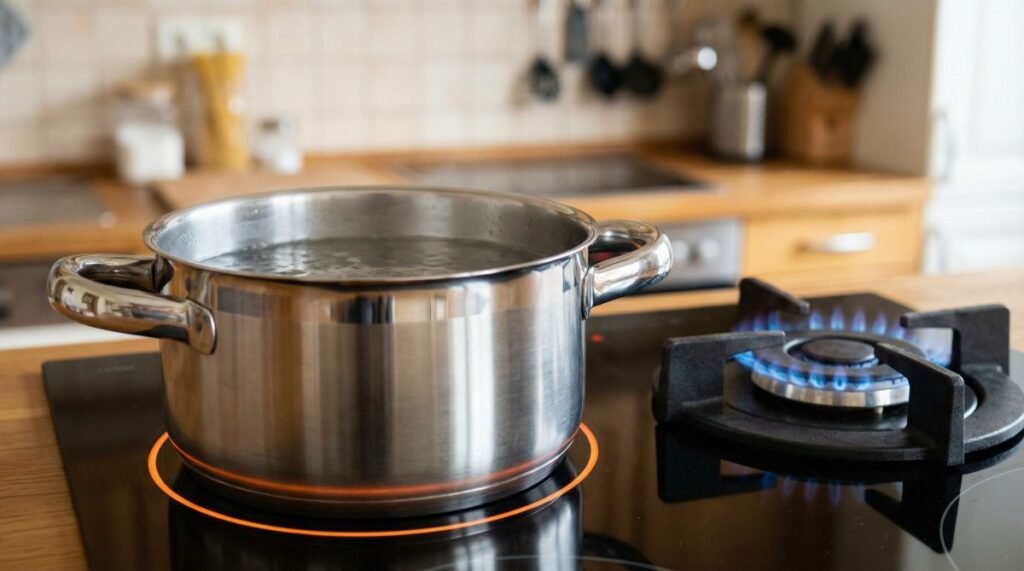
According to Newark Management Company, induction stoves are generally better for cooking because they offer superior energy efficiency, faster heating, and more precise temperature control. Gas stoves still appeal to cooks who prefer an open flame for techniques like charring, but induction technology transfers about 90 percent of energy directly to the cookware, compared with only 40 to 55 percent for gas models.
The choice between induction and gas often depends on a cook’s specific needs regarding speed, safety, and existing cookware. Induction provides a cooler kitchen environment and easier cleanup, whereas gas remains a reliable option for those who prefer visual flame feedback and compatibility with all types of pots and pans.
Speed and Efficiency: Why Induction Leads the Race
Induction cooktops are significantly faster and more energy-efficient than gas stoves because they use electromagnetism to heat the pan directly rather than the air around it. This process allows induction to boil water nearly twice as fast as gas, with approximately 90 percent of the energy consumed going straight into the food being cooked.
In contrast, gas stoves lose a substantial amount of heat to the surrounding kitchen environment, making them less efficient for daily tasks. The thermal efficiency of gas typically hovers around 40 percent, meaning more than half of the energy paid for is wasted as ambient heat. This difference is particularly noticeable during long cooking sessions or in smaller kitchens where heat buildup can become uncomfortable.
| Feature | Induction Stove | Gas Stove |
|---|---|---|
| Energy Efficiency | ~90% | ~40-55% |
| Boil Time (6 Quarts) | ~8-10 Minutes | ~15-20 Minutes |
| Heat Loss | Minimal | Significant |
Beyond simple boiling, the efficiency of induction translates to lower utility bills over time, although the initial purchase price may be higher. The rapid response of induction also means that when you turn the heat down, the temperature drop is nearly instantaneous, mimicking the responsiveness that chefs have traditionally loved about gas flames without the associated energy waste.
Precision and Control: The Chef’s Perspective on Heat
Induction offers unparalleled precision and control by allowing users to set exact temperatures or power levels that remain consistent throughout the cooking process. This level of accuracy is ideal for delicate tasks like melting chocolate or simmering thick sauces without the risk of scorching, which can be difficult to manage on a fluctuating gas flame.
Gas stoves provide a visual indicator of heat through the size of the flame, which many traditional cooks find intuitive for adjusting temperatures on the fly. However, gas burners can be affected by drafts and may not always provide a perfectly even heat distribution across the bottom of the pan, leading to potential hot spots that require constant monitoring.
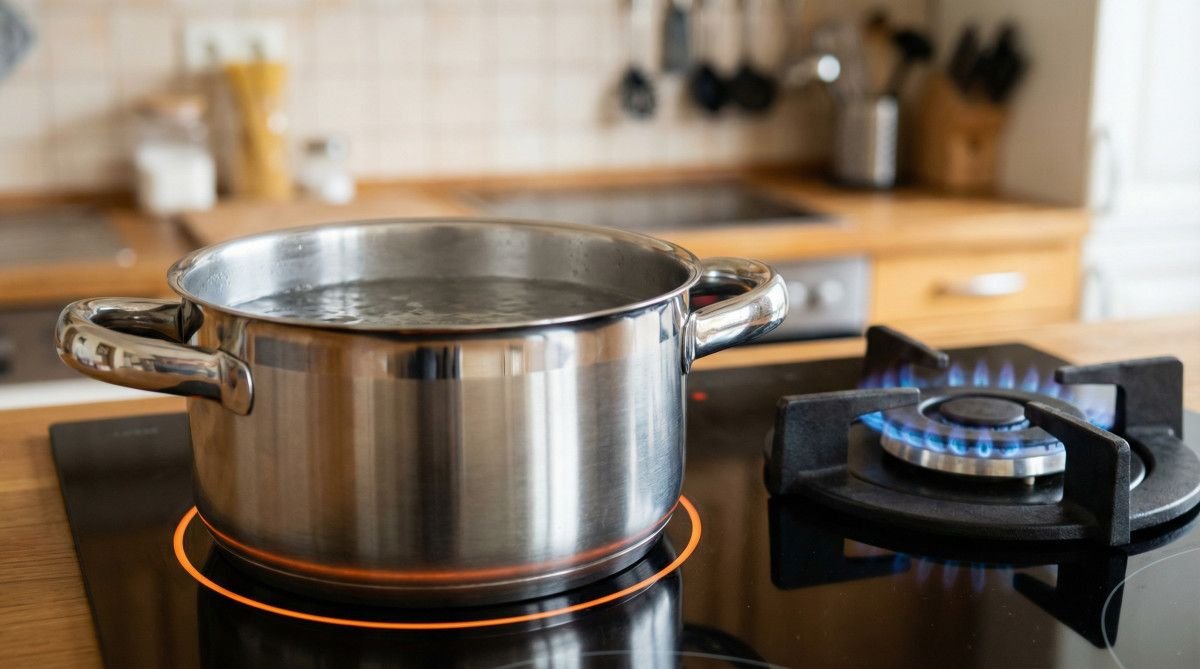
Professional chefs are increasingly adopting induction for its ability to maintain a cooler workspace and provide repeatable results. While gas is still favored for specific techniques like wok tossing or charring peppers directly over a flame, the steady and predictable nature of induction is winning over many culinary experts who prioritize consistency and technical accuracy in their recipes.
The transition from gas to induction does require a slight adjustment in technique, as the pan heats up much faster than expected. Cooks must have their ingredients prepped and ready before turning on the heat, as there is very little “warm-up” time compared to the gradual heating of a gas burner and its heavy iron grates.
Health and Safety: Indoor Air Quality and Burn Risks
Induction stoves are safer and healthier for home environments because they do not emit harmful combustion byproducts like nitrogen dioxide or carbon monoxide into the indoor air. Furthermore, the surface of an induction cooktop stays relatively cool to the touch, significantly reducing the risk of accidental burns for children and pets in the kitchen.
Gas stoves have come under scrutiny recently due to studies linking their emissions to increased risks of respiratory issues, including childhood asthma. Because gas relies on burning fossil fuels, it requires robust ventilation to ensure that pollutants are properly exhausted from the home, a requirement that is often overlooked in older or poorly designed kitchen spaces.
| Safety Aspect | Induction Stove | Gas Stove |
|---|---|---|
| Surface Temperature | Cool to Warm | Very Hot |
| Air Pollutants | None (Electric) | NO2, CO, Particulates |
| Fire Hazard | Very Low | Moderate (Open Flame) |
In addition to air quality benefits, induction eliminates the risk of gas leaks, which can be a serious safety concern in residential buildings. The automatic shut-off features found on most induction models ensure that the heat source is deactivated as soon as the pan is removed, providing peace of mind for busy homeowners who may occasionally forget to turn off the stove.
Cookware and Compatibility: What You Need to Know
Induction stoves require specific magnetic cookware, such as cast iron or magnetic stainless steel, to function because the technology relies on an electromagnetic circuit between the burner and the pan. Gas stoves are compatible with virtually any type of cookware, including copper, aluminum, and ceramic, making them a more flexible choice for those with diverse pot and pan collections.
If you are switching to induction, you can easily test your existing cookware by seeing if a magnet sticks firmly to the bottom of each piece. If the magnet slides off or only has a weak attraction, the pan will not work on an induction surface and will need to be replaced with a compatible alternative labeled as induction-ready.
While the need for new cookware is often cited as a downside of induction, many modern high-quality sets are already designed to be induction-compatible. Investing in a few key pieces of cast iron or tri-ply stainless steel can provide a lifetime of excellent performance on both induction and gas surfaces, ensuring that your kitchen remains versatile regardless of the technology you choose.
It is also worth noting that induction-compatible pans tend to be heavier and more durable, which contributes to better heat retention and more even cooking results. For those who already own a significant amount of high-end cast iron or magnetic steel, the transition to induction is seamless and requires no additional investment in kitchen tools.
Installation and Long-Term Costs: Making the Investment
Induction stoves typically have a higher upfront purchase price and may require electrical upgrades to a 240-volt circuit, but they offer lower long-term operating costs through superior energy efficiency. Gas stoves are often cheaper to buy initially, but their installation can be expensive if a gas line is not already present in the kitchen area.
The total cost of ownership for an induction stove can be offset by potential energy savings and the reduced need for heavy-duty ventilation systems. In many regions, local governments and utility companies offer rebates or incentives for homeowners who switch from gas to electric or induction appliances as part of broader electrification and sustainability initiatives.
| Cost Factor | Induction Stove | Gas Stove |
|---|---|---|
| Average Unit Price | $1,000 – $3,500 | $600 – $2,500 |
| Installation Needs | 240V Electric Outlet | Gas Line + 120V Outlet |
| Operating Cost | Lower (Efficient) | Variable (Gas Prices) |
Maintenance costs for induction are generally lower because the smooth glass surface is much easier to clean than the complex grates and burners of a gas stove. Spills do not bake onto the induction surface because it remains relatively cool, allowing for a quick wipe-down with a damp cloth after cooking is complete, which saves time and reduces the need for harsh chemical cleaners.
Frequently Asked Questions
Do professional chefs use induction or gas?
Many professional chefs still prefer gas for its visual flame and compatibility with traditional techniques, but induction is rapidly gaining popularity in high-end kitchens. Chefs appreciate induction for its precision, speed, and the fact that it keeps the kitchen much cooler during intense service hours.
Is induction cooking healthier than gas?
Yes, induction cooking is considered healthier because it does not produce indoor air pollutants like nitrogen dioxide, which are common byproducts of gas combustion. Using induction can improve overall indoor air quality and reduce the risk of respiratory issues for residents.
Can I use my old pans on an induction stove?
You can use your old pans on an induction stove only if they are made of magnetic materials like cast iron or certain types of stainless steel. A simple way to check is to see if a kitchen magnet sticks to the bottom of the pan; if it does, the pan is compatible.
What are the main downsides of induction stoves?
The primary downsides of induction stoves include a higher initial purchase price, the potential need for electrical upgrades, and the requirement for magnetic cookware. Some users also find the humming sound produced at high power levels to be a minor annoyance compared to the silent operation of gas.
Does induction boil water faster than gas?
Induction boils water significantly faster than gas because it transfers energy directly to the pan with minimal heat loss. In most tests, an induction cooktop can boil a large pot of water in about half the time it takes for a standard gas burner to achieve the same result.
Is it hard to switch from gas to induction?
Switching from gas to induction is relatively straightforward but may require hiring an electrician to install a 240-volt outlet if one is not available. Once installed, the main adjustment is learning the faster heating speeds and ensuring your cookware is compatible with the new technology.
Choosing between induction and gas ultimately comes down to prioritizing either modern efficiency or traditional versatility. Induction offers a safer, faster, and more precise cooking experience that aligns with contemporary health and environmental standards. Meanwhile, gas remains a beloved choice for those who value the tactile experience of an open flame and the ability to use any cookware in their collection.
