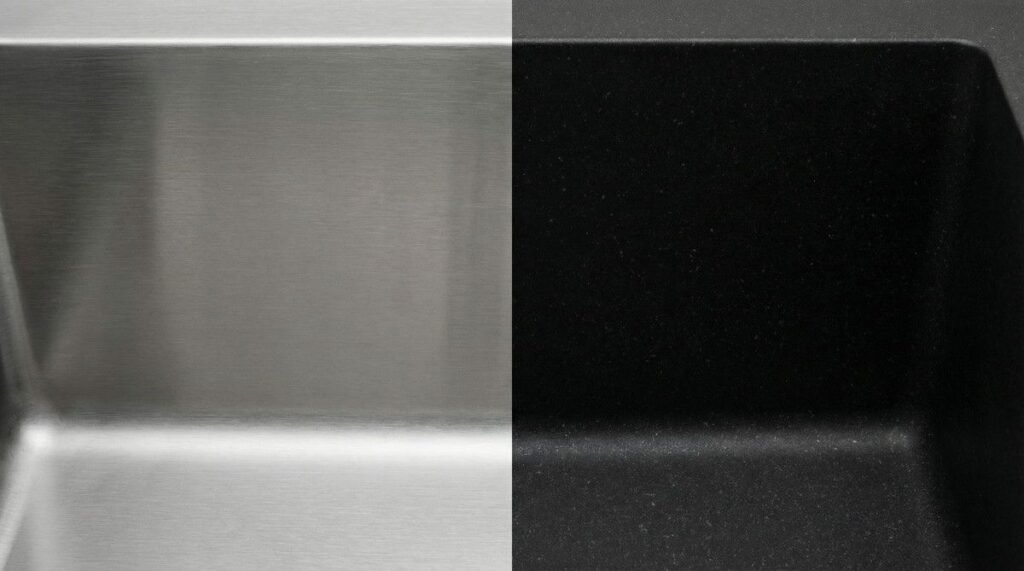
Stainless steel sinks offer excellent durability and heat resistance at an accessible price point, while composite sinks provide stronger scratch resistance and quieter performance with a more premium look. Choosing between them, explains Torrance Property Management, depends largely on your priorities for maintenance, budget, and the overall design direction of your kitchen renovation.
Modern homeowners often struggle to decide between the industrial reliability of metal and the stone-like elegance of composite materials. Both options have evolved significantly, with advanced sound-dampening technology for steel and improved resin binders for composite. Understanding the technical differences in gauge, composition, and long-term wear is essential for making an informed investment in your home.
Durability and Longevity of Sink Materials
Stainless steel sinks are virtually indestructible in terms of cracking or chipping, making them ideal for heavy-duty kitchen environments where large pots are common. Composite sinks, while extremely hard and scratch-resistant, can occasionally chip or crack if a heavy object is dropped with significant force on a corner or edge during installation or use.
| Feature | Stainless Steel (16-Gauge) | Granite Composite |
|---|---|---|
| Impact Resistance | Excellent (Dents but won’t crack) | Good (Can chip or crack under extreme force) |
| Scratch Resistance | Moderate (Develops patina over time) | Excellent (Highly resistant to surface marks) |
| Heat Tolerance | Up to 500 degrees Fahrenheit | Up to 530 degrees Fahrenheit |
| Expected Lifespan | 20 to 30 years | 15 to 25 years |
The thickness of stainless steel, measured in gauge, directly impacts its resistance to denting and vibration. A lower gauge number indicates thicker steel, with 16-gauge being the industry standard for high-end residential kitchens. Thinner 20-gauge or 22-gauge models are more prone to flexing and loud echoing when water hits the surface, which can detract from the user experience.
Composite sinks are engineered from approximately 80 percent crushed stone and 20 percent acrylic resin. This dense composition makes them incredibly resilient against the daily rigors of sharp knives and heavy cookware. However, the rigidity that provides scratch resistance also makes the material less forgiving than steel, meaning dropped glassware is more likely to shatter upon impact with a composite surface.
Maintenance and Cleaning Requirements
Stainless steel is non-porous and naturally hygienic, requiring only basic soap and water for daily sanitization, though it shows water spots and fingerprints easily. Composite sinks are also non-porous but can suffer from surface staining if colorful liquids like red wine or coffee are left to sit, especially on lighter-colored matte finishes.
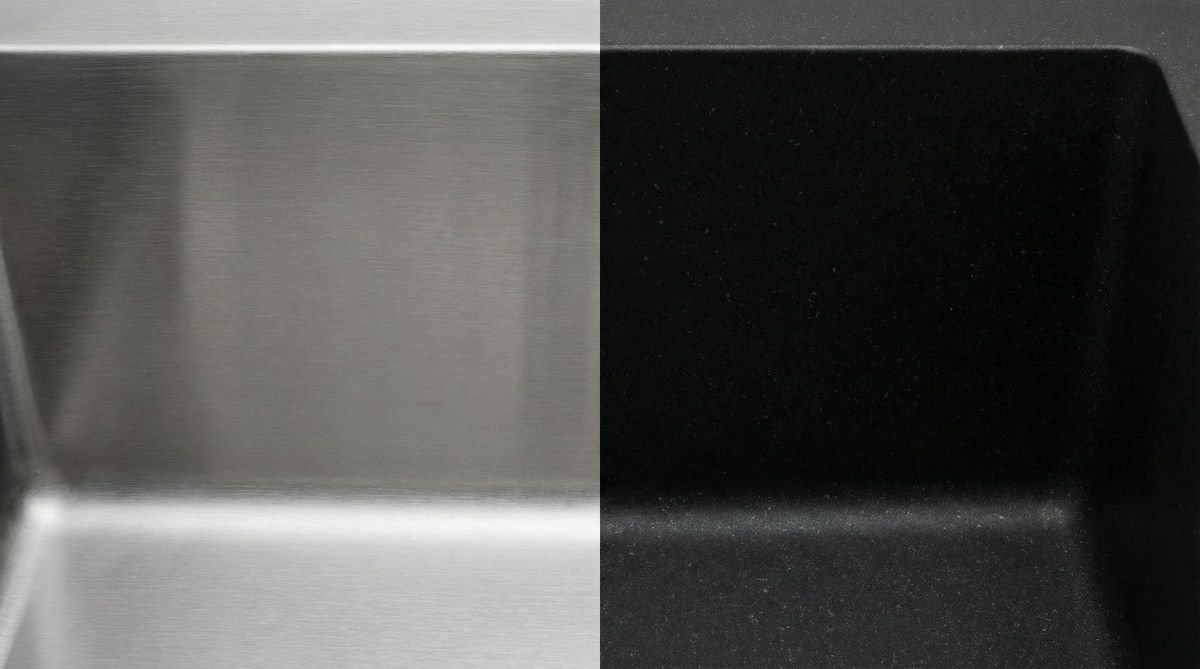
To maintain the luster of a stainless steel sink, regular drying after use is recommended to prevent mineral buildup from hard water. Over time, the inevitable micro-scratches on steel will blend into a uniform patina, which many homeowners find acceptable. Using a bottom grid can significantly reduce the frequency of these scratches by keeping cookware from direct contact with the sink floor.
Composite sinks require gentle cleaners and should never be treated with harsh chemicals or abrasive pads that can dull the resin finish. While they hide water spots much better than steel, they may require occasional deep cleaning with a specialized stone cleaner to remove stubborn residues. Darker composite colors are generally more forgiving than white or cream options when it comes to visible staining.
Noise Reduction and Acoustic Performance
Composite sinks are naturally sound-absorbent due to their density and stone-like composition, providing a quiet kitchen environment even during heavy dishwashing. Stainless steel sinks are inherently resonant and require high-quality sound-dampening pads or spray coatings on the underside to minimize the “clanging” noise associated with metal basins.
| Acoustic Factor | Stainless Steel (Standard) | Composite (Granite/Quartz) |
|---|---|---|
| Water Impact Noise | High (Metallic ringing) | Very Low (Dull thud) |
| Garbage Disposal Vibration | Moderate to High | Low (Material absorbs vibration) |
| Sound Dampening Needed | Yes (Pads or coating) | No (Inherent property) |
Homeowners who prioritize a peaceful kitchen atmosphere often prefer composite materials for their ability to muffle the sound of running water and clashing silverware. This acoustic benefit is particularly noticeable in open-concept living areas where kitchen noise can easily travel to adjacent rooms. The solid nature of composite eliminates the “tinny” feel often associated with budget-friendly steel options.
If choosing stainless steel, it is vital to look for models that feature full-coverage sound-deadening pads rather than small, localized stickers. These pads, combined with a thicker gauge of steel, can bring the acoustic performance of a metal sink much closer to that of a composite model. However, even the best-insulated steel sink will rarely match the natural silence of a stone-resin blend.
Aesthetic Versatility and Design Integration
Stainless steel offers a timeless, professional look that complements stainless appliances and works well in modern, industrial, or transitional kitchen designs. Composite sinks provide a broader palette of colors and textures, allowing for a seamless match with stone countertops or a bold contrast that serves as a focal point.
The neutral silver tone of stainless steel is incredibly versatile, making it a safe choice for resale value and long-term design changes. It reflects light, which can help brighten a kitchen workspace. However, the limited color options mean it cannot provide the integrated, monolithic look that a color-matched composite sink can achieve when paired with similar quartz or granite countertops.
Composite sinks come in shades ranging from deep onyx and chocolate brown to soft greys and crisp whites. This variety allows designers to create a cohesive aesthetic where the sink disappears into the counter or stands out as a statement piece. The matte finish of most composite sinks also offers a tactile, organic feel that contrasts sharply with the reflective, clinical surface of polished or brushed steel.
Cost Analysis and Installation Considerations
Stainless steel sinks are generally more cost-effective and easier to install due to their lightweight nature, making them compatible with almost any cabinetry and countertop material. Composite sinks are significantly heavier and more expensive, often requiring reinforced cabinetry and professional installation to ensure the weight is properly supported over time.
| Investment Factor | Stainless Steel | Composite |
|---|---|---|
| Average Unit Cost | $200 – $600 | $400 – $1,000 |
| Installation Complexity | Low (Lightweight) | Moderate to High (Heavy) |
| Cabinet Support Required | Standard | May need reinforcement |
| Shipping/Handling Risk | Low (Won’t break) | Moderate (Brittle if dropped) |
Budget-conscious renovations often lean toward stainless steel because of the wide range of affordable options that still offer high performance. The ease of handling also reduces labor costs during the installation phase. For DIY enthusiasts, a stainless steel drop-in sink is one of the most straightforward upgrades available for a kitchen refresh.
Investing in a composite sink requires a higher upfront commitment for both the product and the labor. Because these sinks are heavy and can be brittle before they are fully supported, professional handling is strongly advised. When planning an undermount installation with a composite sink, it is crucial to verify that the countertop material and the cabinet structure can handle the combined weight of the sink and a full basin of water.
Frequently Asked Questions
Which sink is easier to clean: stainless steel or composite?
Stainless steel is generally easier to sanitize and maintain for daily use because it is completely non-porous and resistant to chemical damage. While composite sinks hide water spots better, they require more careful selection of cleaning products to avoid staining or dulling the resin finish over time.
Can I use abrasive cleaners on my sink?
Abrasive cleaners should be avoided for both materials as they can cause permanent damage to the surface finish. On stainless steel, abrasives create visible scratches that disrupt the grain, while on composite sinks, they can wear down the protective resin and leave the material more susceptible to future staining.
Do composite sinks crack easily?
Composite sinks are highly durable and do not crack under normal kitchen use, but they are more brittle than metal. A severe impact from a heavy cast-iron pot or improper handling during installation can lead to cracks or chips, which are difficult and sometimes impossible to repair invisibly.
Are stainless steel sinks still in style?
Stainless steel remains the most popular choice for kitchen sinks due to its timeless appeal and functional reliability. It continues to be a staple in professional-grade kitchens and modern residential designs because it coordinates perfectly with the prevailing trend of stainless steel appliances and hardware.
Is one type of sink better for hard water areas?
Composite sinks are often preferred in hard water areas because their matte, textured surfaces hide white mineral deposits much better than reflective stainless steel. However, if the mineral buildup is not cleaned regularly, it can become more difficult to remove from the textured surface of a composite sink than from smooth steel.
Final Verdict on Sink Selection
Choosing between stainless steel and composite requires balancing the need for a quiet, stylish workspace against the desire for a low-maintenance, indestructible basin. Stainless steel remains the workhorse of the kitchen, offering a hygienic and affordable solution that fits almost any design. Composite sinks represent a premium upgrade for those who value acoustic comfort and a customized, high-end look that integrates seamlessly with modern stone surfaces. Both materials provide excellent long-term value when selected in high-quality configurations and maintained according to manufacturer guidelines.
