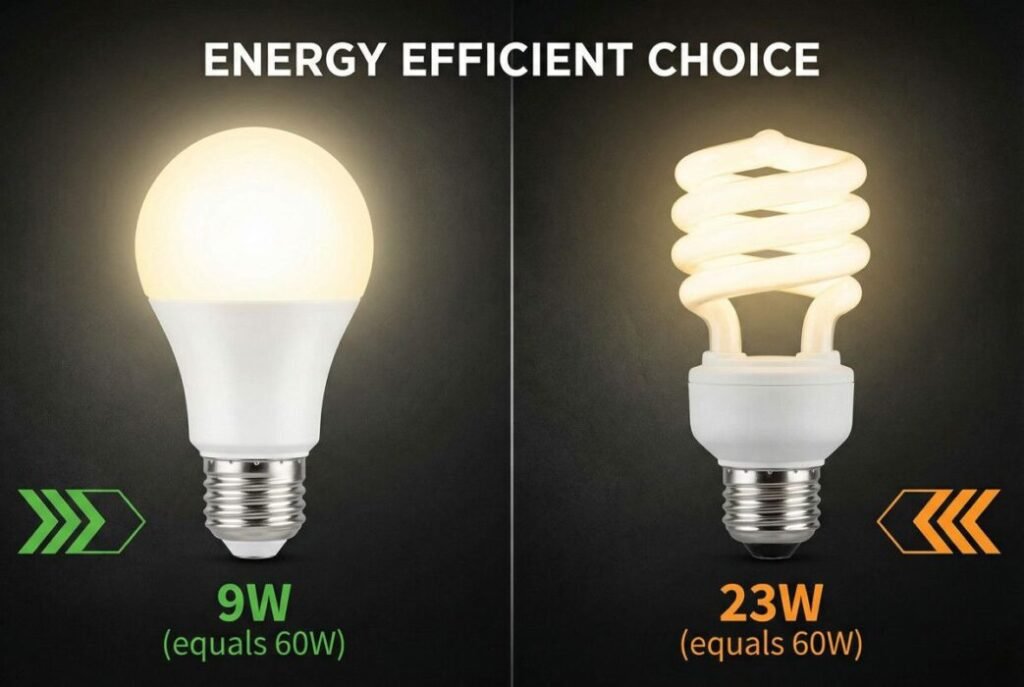
LED (Light Emitting Diode) bulbs consistently outperform CFL (Compact Fluorescent Lamp) bulbs in energy efficiency, consuming significantly less wattage to produce comparable light output, leading to greater long-term energy savings for homeowners.
Energy Efficiency: LED vs. CFL
LED bulbs are the most energy-efficient lighting option available for residential use, converting a higher percentage of electricity into light and emitting very little heat says Kyle Management. In contrast, CFLs, while more efficient than incandescent bulbs, still release a substantial amount of energy as heat, making them less efficient than LEDs.
According to the U.S. Department of Energy (2023), LED lighting uses at least 75% less energy and lasts 25 times longer than incandescent lighting. While CFLs also offer energy savings over incandescents, typically using about 75% less energy, they are generally less efficient than LEDs.
| Feature | LED Bulbs | CFL Bulbs |
|---|---|---|
| Energy Consumption | Very low (up to 75% less than CFLs) | Low (75% less than incandescent) |
| Heat Emission | Very low | Moderate (about 80% of energy as heat) |
| Efficiency Rating | Superior | Good |
Lifespan and Durability
LED bulbs boast a significantly longer operational lifespan and greater durability compared to CFLs, reducing the frequency of replacements and associated maintenance efforts. This extended life is due to their solid-state design, which lacks fragile components like filaments or glass tubes.
The Environmental Protection Agency (2022) states that LED bulbs can last 25,000 to 50,000 hours or even more, far exceeding the 8,000 to 10,000 hours typically offered by CFLs. This longevity translates to fewer bulb changes and less waste over time.
Environmental Impact and Safety
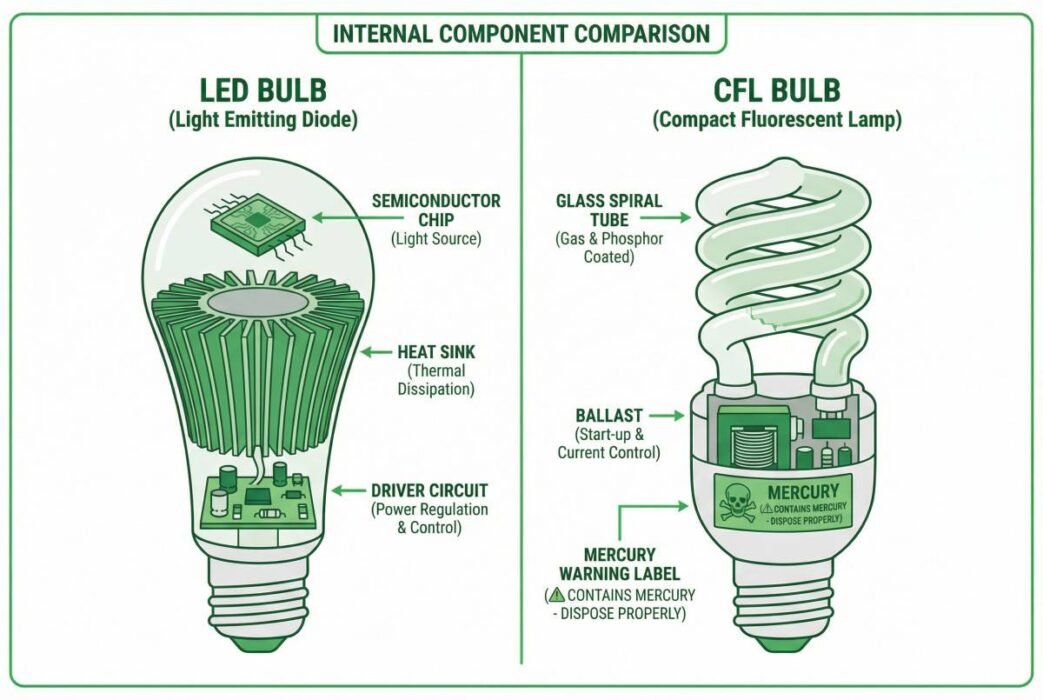
LED bulbs have a lower environmental impact due to their superior energy efficiency and the absence of mercury, a hazardous substance found in CFLs. The disposal of CFLs requires special handling to prevent mercury release into the environment.
According to the National Electrical Manufacturers Association (2021), LEDs do not contain mercury, making them a safer and more environmentally friendly option. Proper recycling is crucial for CFLs to mitigate the risks associated with their mercury content.
Cost Analysis and Savings
While LED bulbs typically have a higher initial purchase price, their extended lifespan and significantly lower energy consumption result in substantial long-term cost savings for homeowners. The payback period for the initial investment in LEDs is often relatively short.
Consumer Reports (2024) indicates that despite a higher upfront cost, the energy savings and longer life of LED bulbs make them more economical over their operational lifetime compared to CFLs, leading to lower overall ownership costs.
Choosing the Right Bulb for Your Home
Selecting the appropriate lighting for your home involves considering factors such as desired brightness, color temperature, and fixture compatibility. For general illumination in frequently used areas, LEDs are often the superior choice due to their efficiency and longevity.
For task lighting or accent lighting, both LED and CFL options are available, but LEDs offer more versatility in beam control and dimming capabilities. Always check the bulb wattage and base type to ensure compatibility with your existing fixtures.
Installation and Maintenance Tips
Installing LED and CFL bulbs is generally straightforward, similar to traditional incandescent bulbs. However, some LED bulbs designed for specific applications, like recessed lighting, may require particular fixtures or drivers. For CFLs, it’s important to handle them carefully to avoid breakage and to allow a brief warm-up period for full brightness.
Maintenance for both types of bulbs is minimal, primarily involving occasional dusting. When a CFL bulb reaches the end of its life, it should be recycled at designated facilities due to its mercury content. LEDs do not require special disposal and can often be recycled with other electronics.
FAQ Section
Q1: Are LED bulbs worth the higher upfront cost?
Yes, LED bulbs are generally worth the higher upfront cost due to their significantly longer lifespan and superior energy efficiency, which lead to substantial savings on electricity bills and replacement costs over time.
Q2: Do CFL bulbs contain mercury?
Yes, CFL bulbs contain a small amount of mercury, which is essential for their operation. This is why proper disposal and recycling are crucial to prevent environmental contamination.
Q3: How do I dispose of CFL bulbs safely?
CFL bulbs should be disposed of safely at local recycling centers or hazardous waste collection sites. Many retailers also offer in-store recycling programs for used CFLs.
Q4: Can LED bulbs be used with dimmer switches?
Many LED bulbs are designed to be compatible with dimmer switches, but it is important to check the product packaging for dimmable compatibility. Using non-dimmable LEDs with a dimmer can cause flickering or damage the bulb.
Q5: What is the average lifespan of an LED bulb?
The average lifespan of an LED bulb ranges from 25,000 to 50,000 hours, significantly longer than traditional incandescent or CFL bulbs. This extended life contributes to their overall cost-effectiveness.
Conclusion
When evaluating LED and CFL bulbs for home lighting, LEDs emerge as the superior choice in terms of energy efficiency, longevity, and environmental considerations. While CFLs offer an improvement over incandescent technology, the advancements in LED lighting provide greater long-term savings and a reduced ecological footprint.
Homeowners making lighting decisions can confidently choose LED technology for a more sustainable and cost-effective illumination solution. This transition not only benefits household budgets but also contributes to broader energy conservation efforts within the real estate and home improvement sectors.
