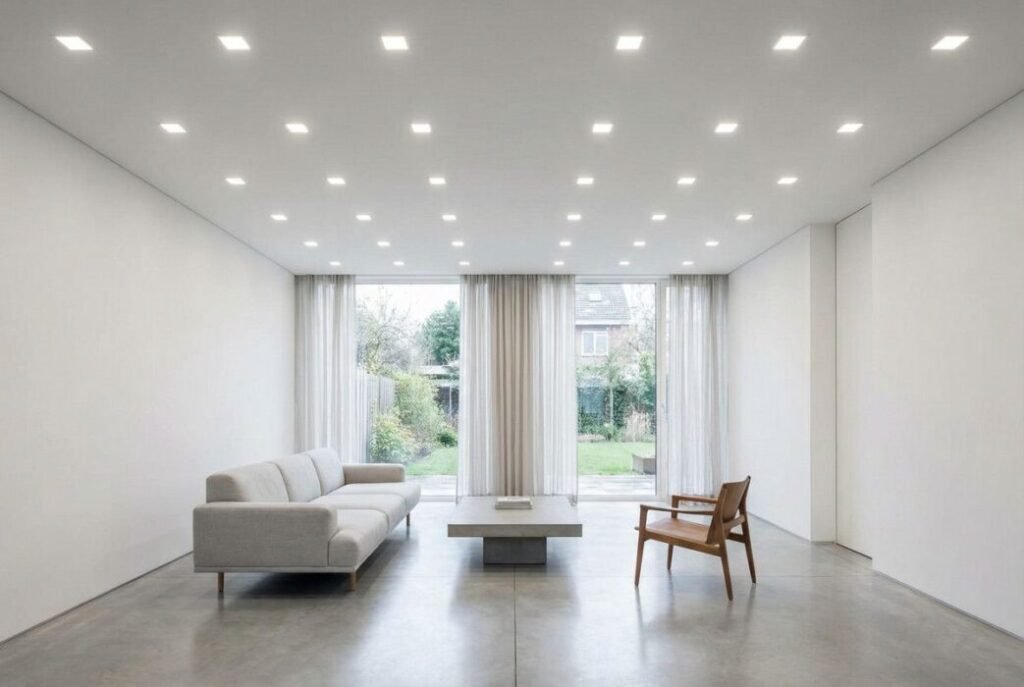
Recessed lighting, when strategically implemented, can significantly enhance the perceived size of a room by minimizing visual clutter and distributing light evenly across the space says California Realty Group team. This technique creates an illusion of openness and height, making smaller areas feel more expansive and inviting. By integrating light sources seamlessly into the ceiling, recessed fixtures eliminate bulky traditional lighting elements that can otherwise draw attention and make a room feel cramped.
The Illusion of Space: How Recessed Lighting Works
Recessed lighting creates an illusion of spaciousness by providing uniform illumination and eliminating harsh shadows. By washing walls and ceilings with light, these fixtures visually push boundaries outwards and upwards, expanding the perceived dimensions of a space. This method subtly tricks the eye into perceiving greater depth and breadth, transforming a compact area into one that feels considerably larger.
Lighting can alter the perceived size of a room by up to 30%, according to the Lighting Research Center (2023) [1]. This measurable effect is largely due to how light interacts with surfaces and corners. When light is evenly distributed, it prevents dark spots that can visually shrink a room. Furthermore, directing light towards walls can make them appear to recede, adding to the sense of increased width. Similarly, illuminating the ceiling can draw the eye upward, creating the impression of greater vertical space.
Strategic Placement for Maximum Impact
Optimal placement of recessed lighting is crucial for maximizing its effect on perceived room size. Focusing on even distribution and strategic illumination of key surfaces, homeowners can create a cohesive lighting scheme. Adhering to specific spacing guidelines and employing techniques like wall washing enhances depth and breadth, ensuring each fixture contributes to a unified visual expansion.
For effective illumination, recessed lights are often spaced approximately 4 to 6 feet apart, ensuring consistent light coverage across the room [1]. This spacing helps to eliminate dark corners that can make a room feel smaller. In living rooms, a grid layout can provide balanced ambient light, while perimeter cans are often recommended for bathrooms and kitchens to highlight surfaces and create a sense of openness. Aiming light towards walls, a technique known as wall washing, is particularly effective in creating an illusion of width and depth, making the room feel more expansive.
Beyond Recessed Lights: Layering for Depth
While recessed lighting provides excellent ambient illumination, combining it with other fixture types is essential for a dynamic and spacious environment. Layered lighting, incorporating ambient, task, and accent lighting, adds depth and visual interest, preventing a room from appearing flat or sterile. This multi-faceted approach ensures every area is adequately lit, contributing to overall openness and sophistication.
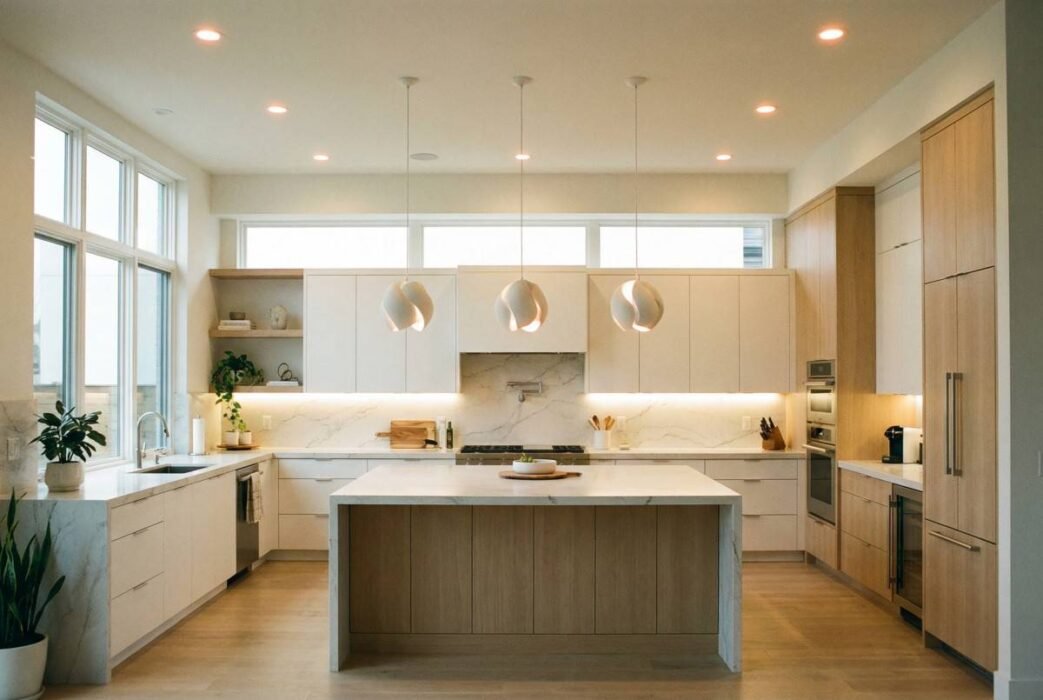
Every room benefits from at least two to three different light sources to achieve balanced lighting levels [1]. Ambient lighting, often provided by recessed cans, offers general illumination. Task lighting, such as under-cabinet lights in a kitchen, focuses on specific work areas. Accent lighting, like wall sconces or floor lamps, highlights architectural features or decor, adding visual interest and dimension. This combination prevents a room from feeling one-dimensional and enhances the perception of depth, making the space feel larger and more inviting.
Color Temperature and Bulb Choice
The color temperature of light bulbs significantly influences the perceived atmosphere and size of a room. Warmer tones generally foster a cozier feel, while cooler tones can make a space seem starker. Selecting the appropriate color temperature is vital for complementing a room’s design and enhancing its visual appeal, directly impacting how colors are rendered and the overall mood conveyed within the illuminated area [1].
Cool white light, typically around 5000K, can make a small room feel clinical and less inviting. In contrast, warm light, ranging from 2700K to 3000K, creates a more comfortable and cozy ambiance. For most residential settings, a neutral yet inviting color temperature around 3000K is often recommended, striking a balance between warmth and brightness. This choice ensures that the room feels welcoming without appearing dim, contributing to a pleasant and seemingly larger environment.
Common Lighting Mistakes to Avoid
- Relying solely on a single overhead light, which creates shadows and emphasizes the room’s confines.
- Using too much direct downlighting as the only light source, leading to unflattering illumination.
- Neglecting layered lighting, which results in a lack of depth and a flat appearance.
Recessed Lighting Benefits
| Benefit | Description |
|---|---|
| Aesthetics | Sleek, modern design that integrates seamlessly into the ceiling, reducing visual clutter. |
| Space Perception | Creates an illusion of larger, more open spaces by providing even illumination and washing walls/ceilings with light. |
| Versatility | Suitable for various room types and can be used for ambient, task, or accent lighting. |
| Energy Efficiency | Many recessed lighting options utilize LED technology, offering long lifespan and lower energy consumption. |
FAQ
Q1: Does recessed lighting make ceilings look higher?
Yes, recessed lighting can make ceilings appear higher by directing light upwards or evenly across the ceiling surface. This technique draws the eye upward, creating a visual expansion of vertical space and contributing to a more open feel in the room.
Q2: What is the best color temperature for recessed lighting in small rooms?
For small rooms, a warm to neutral white light, typically between 2700K and 3000K, is often recommended. This range provides a comfortable and inviting ambiance without making the room feel stark, which can happen with cooler color temperatures.
Q3: How far apart should recessed lights be placed?
A common guideline for spacing recessed lights is to place them approximately 4 to 6 feet apart. This ensures even light distribution and helps to prevent dark spots, which can make a room feel smaller and less inviting.
Q4: Can recessed lighting be the only light source in a room?
While recessed lighting can provide excellent ambient illumination, it is generally recommended to layer it with other light sources like task and accent lighting. This creates depth, visual interest, and a more functional and aesthetically pleasing environment.
Lighting is a powerful tool in interior design, capable of transforming the perception of space without structural changes. Recessed lighting, with its ability to provide even illumination and minimize visual clutter, is particularly effective in making rooms appear larger and more open. By carefully considering placement, layering with other fixtures, and selecting appropriate color temperatures, homeowners can create environments that feel both expansive and inviting. A thoughtful lighting plan is an investment that significantly enhances the comfort and aesthetic appeal of any home.
References
- [1] All City Electric (2023). How Recessed Lighting Transforms Living Spaces. https://www.allcityelectricsecurity.com/recessed-lighting-living-spaces/
