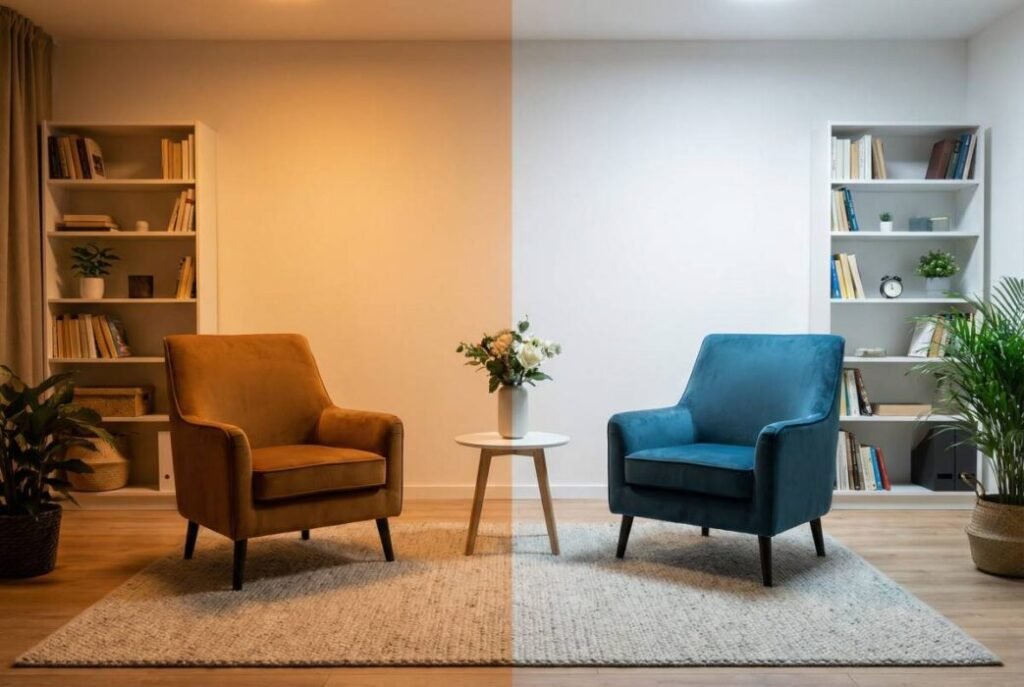
Warm white light, typically ranging from 2700K to 3000K, fosters a cozy and inviting atmosphere, while cool white light, often between 4000K and 6500K, provides bright, crisp illumination that enhances focus and visibility for tasks.
Introduction
Choosing the appropriate lighting for a home extends beyond mere illumination; it significantly influences mood, productivity, and overall well-being. The debate between warm white and cool white light centers on their distinct characteristics and suitability for various domestic environments. Understanding the nuances of color temperature is crucial for homeowners aiming to optimize their living spaces for comfort, functionality, and aesthetic appeal says Aromas Property Management.
Understanding Color Temperature in Home Lighting
Color temperature, measured in Kelvin (K), dictates the perceived warmth or coolness of light, influencing a home’s ambiance and functionality. Lower Kelvin values (2700K-3000K) produce warm, yellowish light ideal for relaxation, while higher values (4000K-6500K) emit cool, bluish-white light that promotes alertness and task visibility.
The Kelvin scale quantifies the color appearance of light, with lower numbers indicating warmer tones and higher numbers signifying cooler tones. For instance, a light bulb in the 2000 K to 3000 K range produces a soft, warm light with subtle yellow tones, often considered ideal for creating a relaxing environment [1]. Conversely, light in the 4000K to 6500K range appears brighter and more bluish, akin to natural daylight. This distinction is vital because the color temperature of light can profoundly impact human physiology and psychology, affecting everything from sleep patterns to cognitive performance. According to a 2019 study from the Lighting Research Center at Rensselaer Polytechnic Institute, exposure to cool light during the day improved cognitive performance and alertness [2].
Warm Light: Creating Comfort and Relaxation
Warm white light, typically ranging from 2700K to 3000K, fosters a cozy and inviting atmosphere, making it ideal for spaces dedicated to relaxation and social interaction within the home. Its soft, yellowish glow mimics natural sunset hues, promoting a sense of calm and aiding in the body’s natural winding down process.
This type of lighting is characterized by its soft, often amber or yellowish hue, which evokes feelings of comfort and intimacy. Warm light is particularly favored in areas where unwinding and social engagement are primary activities. Bedrooms, living rooms, and dining areas benefit significantly from warm lighting, as it enhances a sense of coziness and encourages relaxation. Harvard researchers found that participants exposed to warm light in the evening fell asleep 19 minutes faster than those exposed to cool light, highlighting its role in supporting natural sleep cycles [3]. While excellent for ambiance, warm light may not be suitable for tasks requiring high visual acuity, as it can reduce mental sharpness and make colors appear less defined.
Cool Light: Enhancing Focus and Productivity
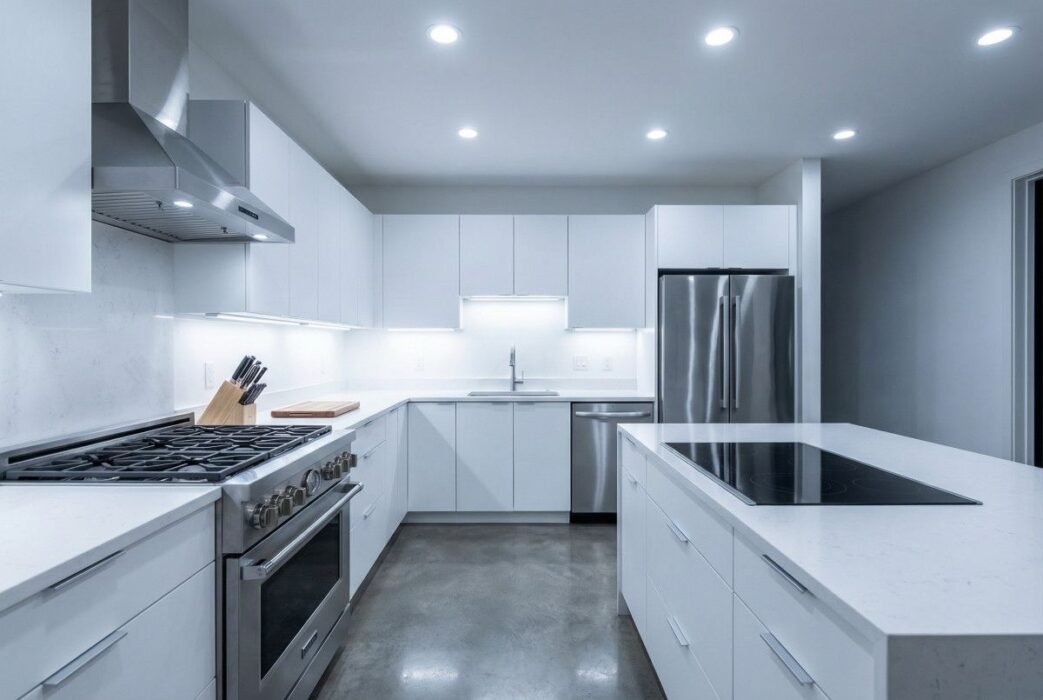
Cool white light, generally between 4000K and 6500K, provides a bright, crisp illumination that enhances focus, alertness, and visibility, making it optimal for functional areas requiring concentration and detailed work. Its bluish-white tone emulates midday daylight, which can boost productivity and reduce eye strain during tasks.
Cool light, with its bright, sometimes bluish-white appearance, is highly effective in environments where alertness and precision are paramount. Kitchens, bathrooms, and home offices are prime candidates for cool lighting, as it aids in task performance and creates a clean, modern aesthetic. A study published in Building and Environment indicated that task performance in kitchens improved by 12% under cooler lighting compared to warm lighting [4]. Furthermore, Philips Lighting found that cool lighting increased productivity by up to 23% in controlled environments [5]. However, excessive exposure to cool light, especially in the evening, can have adverse health effects. The blue light content in cool illumination can suppress melatonin production, delaying sleep onset and disrupting circadian rhythms, as confirmed by the Journal of Clinical Endocrinology & Metabolism [6].
Strategic Placement: Optimizing Light for Every Room
Optimizing home lighting involves strategically selecting warm or cool light based on each room’s primary function and desired mood, with warm tones for relaxation zones and cool tones for task-oriented areas. Dynamic lighting systems that adjust color temperature throughout the day can further enhance well-being by mimicking natural light cycles.
The optimal color temperature varies significantly from room to room, reflecting the diverse activities and moods associated with each space. For instance, living rooms and bedrooms thrive with warm light (2700K-3000K) to foster relaxation and comfort. In contrast, kitchens and bathrooms benefit from neutral to cool white light (3000K-4000K) to ensure clear visibility for tasks like cooking or grooming. Home offices, where concentration is key, are best served by cool light (4000K-5000K) to enhance focus and minimize eye fatigue. Outdoor areas can utilize a mix, with brighter cool lights for security and warmer tones for ambient patio lighting. The emergence of tunable white technology and dynamic lighting systems allows for greater flexibility, enabling homeowners to adjust color temperature throughout the day to align with natural light cycles and personal preferences.
Differentiated Module 1: Warm vs. Cool Light Comparison Table
| Feature | Warm Light (2700K-3000K) | Cool Light (4000K-6500K) |
|---|---|---|
| Appearance | Yellowish, orange glow | Bluish-white, bright |
| Mood/Atmosphere | Cozy, relaxing, inviting | Energizing, modern, clean |
| Best For | Bedrooms, living rooms, dining | Kitchens, bathrooms, home offices |
| Impact on Sleep | Supports natural sleep cycle | Can disrupt sleep (blue light) |
| Effect on Focus | Calming, less ideal for tasks | Increases alertness and focus |
Differentiated Module 2: Choosing the Right Light: A Step-by-Step Guide
- Identify Room Function: Determine the primary activities for each space (e.g., relaxation, cooking, working).
- Consider Desired Mood: Decide on the ambiance you want to create (e.g., cozy, vibrant, professional).
- Match Color Temperature: Select the Kelvin range that aligns with the room’s function and mood.
- Evaluate CRI: Choose bulbs with a high Color Rendering Index (CRI 90+) for accurate color perception.
- Explore Tunable Options: Consider smart bulbs with adjustable color temperatures for flexibility.
FAQ Section
Is soft light the same as warm light?
No, soft light and warm light are distinct concepts. Warm light refers to the color temperature, characterized by yellow or orange hues. Soft light, however, describes the diffusion or gentleness of the light, indicating how harsh or diffused its output is. A light can be both warm and soft, or warm and hard, depending on its design and application.
Which is better, warm light or cool light, for overall home use?
Neither warm nor cool light is universally superior; the optimal choice depends on the specific function and desired ambiance of each room. Warm light is better for relaxation and comfort, while cool light is better for tasks requiring focus and alertness. A balanced approach, utilizing both types of lighting strategically throughout the home, is generally recommended.
Can cool light negatively impact health?
Yes, excessive exposure to cool light, particularly in the evening, can negatively impact health. The blue light emitted by cool-toned lighting can suppress the production of melatonin, a hormone crucial for regulating sleep. This suppression can lead to delayed sleep onset, disrupted sleep cycles, and potential long-term effects on circadian rhythm and overall well-being.
What is the ideal color temperature for a living room?
For a living room, the ideal color temperature typically falls within the warm white range of 2700K to 3000K. This range creates a cozy, inviting, and relaxing atmosphere, conducive to socializing, unwinding, and comfortable family gatherings. It mimics the soft glow of incandescent bulbs, promoting a sense of warmth and comfort.
How can I combine warm and cool lighting effectively?
Effective combination of warm and cool lighting involves strategic placement and, ideally, the use of tunable white technology. Install warm lights in areas for relaxation (e.g., living rooms, bedrooms) and cool lights in task-oriented spaces (e.g., kitchens, home offices). Smart lighting systems with adjustable color temperatures allow for dynamic changes throughout the day, mimicking natural light cycles and adapting to various activities and moods.
Conclusion
The choice between warm white and cool white light for your home is not a matter of one being inherently superior, but rather about strategic application. By understanding the distinct characteristics of each and aligning them with the specific functions and desired moods of different rooms, homeowners can create an optimized and harmonious lighting environment. A thoughtful approach to color temperature enhances comfort, productivity, and overall well-being, transforming a house into a truly illuminated home.
References
[1] TCP Lighting. (2023). Light Color & Temperature Guide – Best Home Lighting. https://www.tcpi.com/home-lighting-color-temperature-why-they-matter/
[2] Lighting Research Center at Rensselaer Polytechnic Institute. (2019). Study on cognitive performance and alertness. (Cited in AiDot article)
[3] Harvard Medical School. (Cited in AiDot article)
[4] Building and Environment. (Cited in AiDot article)
[5] Philips Lighting. (Cited in AiDot article)
[6] Journal of Clinical Endocrinology & Metabolism. (Cited in AiDot article)
