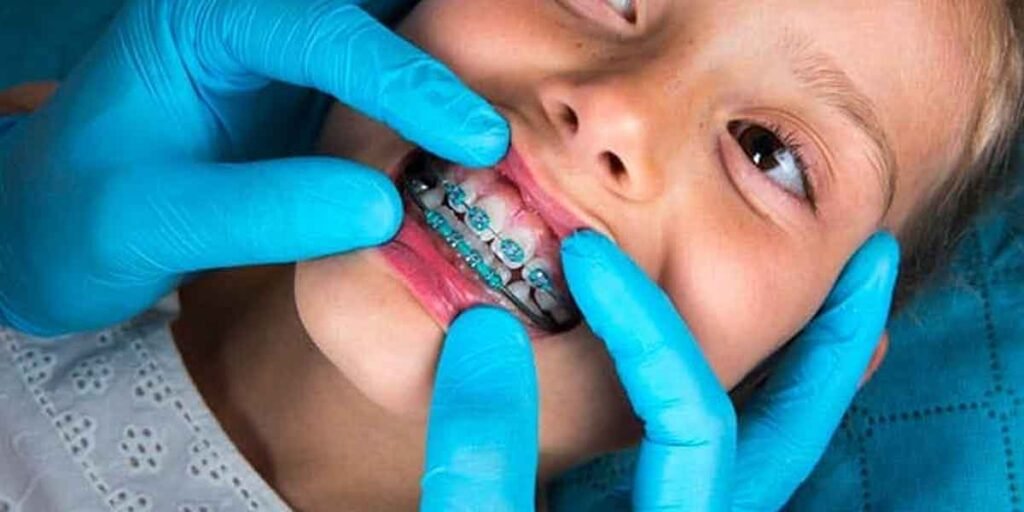
Orthodontic treatment may begin when a child has a mixture of primary and permanent teeth. An orthodontist utilizes the early stage since a child’s jawbones are still growing and are sometimes pliable. Here are a few benefits of early orthodontic treatment for children:
Jaw Growth Guidance
An orthodontist uses specialized appliances to direct the development of the jaws in children. Some use a palatal expander to widen or narrow the upper jaw while the mouth’s roof is still flexible. This guidance helps the skeletal structure develop symmetrically, and it may improve the facial profile.
Eruption Space Creation
Early orthodontic treatment facilitates the creation of eruption space by monitoring the transition from primary to permanent teeth. Specialists use appliances to widen narrow dental arches or maintain gaps left by missing baby teeth. A palatal expander gently pushes the halves of the upper jaw apart to increase the perimeter of the dental arch. Space maintainers hold open the room needed for adult teeth to emerge when a baby tooth is lost prematurely.
Eruption space creation provides adult teeth with a clear path to enter the mouth. When there is enough room for every tooth, the risk of impacted teeth may be lowered. By preventing crowding before it starts, the treatment helps eliminate the need for permanent tooth extractions in the future. Having well-spaced teeth enables children to have easier access to their teeth to brush and floss, and this may reduce decay and gum disease risks.
Future Treatment Simplification
Childhood interventions simplify future treatments by correcting skeletal and dental issues while the child’s jaw is still growing. By addressing concerns like jaw misalignment, the practitioner creates a more manageable environment for later stages. This approach may reduce the time a child must spend in traditional braces later in life. Resolving structural issues early helps improve the final alignment of the teeth and jaws.
If braces are needed to properly align teeth, consulting with a dentist helps children and parents choose a treatment plan that will address the patient’s unique issues. The dentist inspects children’s teeth to determine where their bite alignment could be improved. An X-ray and digital scan of the teeth allow dentists to make a personalized treatment plan to make sure incoming teeth will grow in the proper place.
Oral Function Improvement
Orthodontic treatment allows the jaws and teeth to work together efficiently. When the upper and lower teeth meet properly, the mechanical force used during eating can be distributed evenly; this helps prevent excessive wear on specific teeth. Correcting the position of the teeth also assists in the proper development of speech patterns. The role of early treatment in promoting oral function includes:
Learn More About an Orthodontist
Orthodontic specialists may use early interventions to address behaviors like thumb sucking in children, which distort the dental structure. They use specialized appliances to disrupt harmful habits while guiding the teeth and jaw into a healthier position. Regular visits to a pediatric orthodontist allow children to have enhanced oral health, and they may be able to avoid extensive tooth procedures in the future. Contact an orthodontist to learn more about their services.
