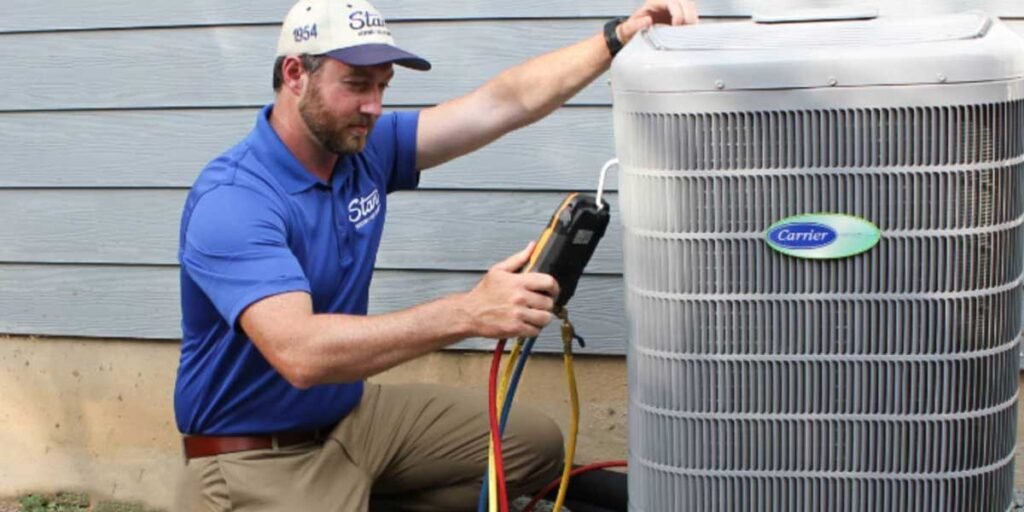
Most HVAC systems should be professionally serviced at least once a year, and many homes are better served by two visits: cooling service in spring and heating service in fall. That simple schedule catches dirty coils, clogged drains, weak airflow, electrical wear, and safety issues before the system is under peak seasonal load. Consistent upkeep helps support steady energy efficiency and limits unexpected mechanical failures. For many families, tracking these adjustments is easier when aligned with the changing weather each year. Investing time in seasonal HVAC maintenance ensures that components remain clean and calibrated to manage temperature fluctuations smoothly. This proactive oversight also addresses small performance changes before they reduce indoor comfort during heavy-use months. Consistent care ultimately contributes to a longer system lifespan and keeps monthly utility expenses predictable.
The twice-a-year answer is not just contractor upselling. It is a practical rhythm for homes that use both air conditioning and heat, especially where summers are long, winters are cold, or the system is older than about 10 years. Annual service can be enough for mild climates and newer equipment, but the system still needs regular filter checks between professional visits.
Seasonal transitions often dictate the intensity of household climate control needs, making strategic timing essential for professional system evaluations. While many homeowners prioritize these checkups during spring or fall, local environmental factors like high humidity or extreme temperature swings can necessitate more frequent monitoring. Homeowners who wish to remain proactive can view it now to better understand how location-specific demands impact long-term equipment health. Beyond simple efficiency, regular oversight addresses subtle mechanical wear that typically goes unnoticed during daily operation. Balancing professional expertise with consistent monthly filter changes creates a comprehensive approach to home comfort, ensuring that heating and cooling units remain reliable even during the most demanding months of the year.
The Short Answer: Once A Year Is The Minimum, Twice A Year Is Often Smarter
Professional HVAC service should happen annually at a minimum. Schedule cooling maintenance before summer and heating maintenance before winter if the system works hard, has separate AC and furnace components, or must stay under warranty.
So, how often should HVAC systems be serviced? For a typical home, once per year is the floor; for year-round comfort systems, spring and fall service is the more reliable schedule.
ENERGY STAR recommends annual pre-season checkups, with the cooling system checked in spring and the heating system checked in fall. That timing matters because HVAC contractors get busy once the first heat wave or cold snap arrives, and small problems become more expensive when every appointment slot is full.
A good rule of thumb is this: if your home has one system doing both heating and cooling, plan on at least one professional visit every year. If you have central AC plus a furnace, a heat pump running year-round, an older unit, pets, dust, allergies, or high energy bills, two visits a year is the cleaner decision.
| System or home condition | Professional service frequency | Best timing |
|---|---|---|
| Central AC only | Once a year | Spring, before heavy cooling starts |
| Gas furnace only | Once a year | Fall, before regular heating starts |
| Central AC plus furnace | Twice a year is ideal | Spring for AC, fall for heating |
| Heat pump used for heating and cooling | Twice a year | Spring and fall |
| Older system, heavy use, pets, dusty area, allergy concerns | Twice a year, sometimes with extra filter checks | Before peak seasons, plus monthly homeowner checks |
Why Seasonal HVAC Service Matters
Seasonal service is about load, timing, and prevention. HVAC equipment usually fails when demand spikes, so a spring or fall tune-up gives the technician a chance to correct small issues before the system runs long hours.
The U.S. Department of Energy says regular maintenance of air conditioner filters, coils, fins, and refrigerant lines is essential for efficient performance. Dirty filters reduce airflow; dirty evaporator coils lose heat-absorbing capacity; clogged condensate drains can reduce moisture removal and may cause water damage. Those are boring failures until they are happening in your hallway ceiling.
Spring service focuses on cooling performance. A technician should inspect or clean the outdoor condenser coil, check refrigerant charge if performance suggests a problem, inspect electrical connections, test the contactor and capacitor, clear or inspect the condensate drain, measure airflow, and confirm the thermostat is calling correctly.
Fall service focuses on heating performance and safety. For a furnace, that means checking ignition, burners, flame sensor operation, blower components, venting, electrical connections, and safety controls. For a heat pump, the technician should also check defrost operation, outdoor coil condition, refrigerant-related performance, and auxiliary heat staging.
What A Professional HVAC Service Visit Should Include
A real HVAC service visit should be more than a quick filter swap. The technician should inspect airflow, electrical components, coils, drain lines, thermostat operation, safety controls, and obvious wear that could shorten equipment life.
Ask what is included before you book. A low-priced tune-up that only changes a filter and glances at the outdoor unit is not the same as a maintenance visit that measures, tests, cleans, and documents the system condition.
- Thermostat operation and settings
- Electrical connections, voltage, amperage, contactors, and capacitors
- Indoor blower operation and accessible moving parts
- Outdoor condenser coil condition and airflow clearance
- Evaporator coil condition where accessible
- Condensate drain and drain pan condition
- Air filter size, fit, condition, and replacement interval
- Refrigerant performance checks when cooling symptoms justify them
- Furnace ignition, burners, venting, and safety controls for combustion systems
- Heat pump defrost and auxiliary heat operation where applicable
Documentation matters. If the system is under a labor plan, manufacturer warranty, or home-sale inspection window, keep service receipts and notes. A paper trail will not make equipment bulletproof, but it can prevent a warranty argument later.
Maintaining a simple folder for your service history helps verify that you have followed the manufacturer’s recommended upkeep. Many homeowners find it helpful to keep receipts and registration details together to get info on coverage terms when a component fails unexpectedly. This organization is particularly useful during a home sale or when dealing with an extended labor plan. Keeping these records accessible ensures that any necessary repairs are handled within the appropriate timeframes and supports the long-term reliability of your heating and cooling equipment. Taking a few minutes to document each professional visit can limit future stress and protect your financial investment in the system.
What Homeowners Should Do Between Service Visits
Homeowner maintenance does not replace professional service, but it prevents many avoidable calls. The big three are checking filters, keeping airflow clear, and noticing changes before the system struggles.
The U.S. Department of Energy advises cleaning or replacing filters regularly, with monthly or every-two-month checks during cooling season when the air conditioner is used heavily, exposed to dust, or serving a home with pets. A filter that looks like gray felt is not just ugly; it is airflow resistance.
“No need to clean the ducts unless there is an issue that needs to be cleaned up. The most important things that MUST be done on a regular basis are: 1. Replace air filters on a regular basis per manufacturers recommendation. This could be anywhere from monthly to yearly. 2. Clean the condenser coil fins yearly. Dirt clogs these and reduces efficiency.”
– r/homeowners, July 2025
| Task | Typical frequency | DIY or professional? |
|---|---|---|
| Check the return-air filter | Monthly during heavy heating or cooling | DIY |
| Replace or clean the filter | As manufacturer recommends, often every 1-3 months for common disposable filters | DIY |
| Clear leaves, grass, snow, and storage from outdoor unit | Monthly in active seasons | DIY, with power off for any careful cleaning near the unit |
| Trim vegetation around condenser | As needed, usually spring and summer | DIY |
| Inspect condensate drain for obvious water backup | Monthly during cooling season | DIY observation, professional repair if clogged or leaking |
| Test refrigerant charge, combustion, electrical components, or safety controls | During annual or semiannual service | Professional |
When HVAC Systems Need Service More Often
Some homes should not stretch maintenance to the bare minimum. Heavy runtime, poor airflow conditions, older equipment, pets, construction dust, and allergy-sensitive households all make more frequent checks worthwhile.
Twice-yearly service is especially sensible for heat pumps because the same outdoor unit works in both heating and cooling seasons. It is also sensible for homes in hot southern climates, cold northern climates, coastal areas with salt exposure, dusty rural areas, or neighborhoods with cottonwood, pollen, or heavy leaf debris.
Age changes the calculation too. A two-year-old system with clean filters and modest runtime may not need much beyond its annual check. A 14-year-old system with noisy starts, uneven temperatures, and a history of capacitor or drain issues deserves more attention. Older equipment often gives small warnings before a major failure, but only if someone looks closely enough to catch them.
- Service twice a year if the system heats and cools the home year-round.
- Service twice a year if utility bills rise without a clear weather or rate explanation.
- Service twice a year if you have pets, heavy dust, nearby construction, or high pollen.
- Service twice a year if the system is older and repairs are becoming more frequent.
- Service promptly if airflow, noise, odor, moisture, or temperature control changes suddenly.
Signs You Should Not Wait For Scheduled Maintenance
A maintenance calendar is useful, but symptoms outrank the calendar. Weak airflow, short cycling, burning smells, ice, water around the indoor unit, or sudden bill changes call for service now, not next season.
Call a technician if the system starts and stops repeatedly, runs constantly without reaching the set temperature, blows warm air in cooling mode, makes grinding or hissing sounds, trips breakers, or leaves water near the air handler.
When these symptoms occur during a heat wave, the need for a solution becomes urgent to prevent the living space from becoming unsafe. A system that frequently trips the breaker or produces a mechanical burning smell should be shut down immediately to avoid further damage to the compressor or electrical wiring. In such cases, seeking emergency ac repair St Peters can help identify the root cause, whether it is a failing capacitor or a more serious electrical fault. Addressing these critical failures promptly supports home safety and ensures that the cooling system is restored before indoor temperatures reach uncomfortable levels. Turn the system off and seek urgent help if you smell gas, suspect carbon monoxide, see smoke, or notice electrical burning odors.
One subtle sign is a home that feels damp even when the temperature looks normal. In cooling mode, the HVAC system should remove moisture as it cools. A clogged drain, dirty coil, low airflow, or oversized system can leave the air clammy, and that is not something a filter change always fixes.
Annual Vs Twice-Yearly HVAC Maintenance: How To Decide
Annual maintenance is the minimum for most residential HVAC systems. Twice-yearly maintenance is the better choice when heating and cooling components both need seasonal attention or when the system carries higher risk.
When the practical question is how often should HVAC systems be serviced, the honest answer is not one-size-fits-all. The minimum is annual; the better schedule depends on runtime, equipment type, and how costly a breakdown would be for the household.
Choose annual service if the system is newer, usage is moderate, climate is mild, filters stay clean, and there are no warranty or health concerns. Choose twice-yearly service if you would rather pay for planned inspection than gamble on a summer or winter breakdown. That is a personal risk calculation, but for many households the second visit buys peace of mind during the two seasons when comfort matters most.
Be careful with maintenance memberships. Some are useful because they include reminders, priority scheduling, discounted repairs, and documented inspections. Others are mostly a sales channel. Read what the plan includes: a real checklist, cleaning where needed, measurements, and written findings are worth more than a vague “tune-up” coupon.
Duct Cleaning, Filters, And The Maintenance Myths That Confuse People
HVAC service and duct cleaning are not the same thing. Regular filter changes and coil maintenance matter far more often than routine duct cleaning for a typical home with no specific contamination problem.
The U.S. Environmental Protection Agency advises good preventive maintenance to reduce duct contamination, including using the highest-efficiency filter recommended by the HVAC manufacturer, changing filters regularly, preventing filter bypass, and asking providers to clean cooling coils and drain pans when the system is maintained.
Duct cleaning may make sense after visible mold growth, pest infestation, heavy debris, fire or smoke contamination, or construction dust that entered the duct system. It is not automatically required every year just because the HVAC system is being serviced. If a company treats duct cleaning as a default add-on, ask what problem they found and request photos before agreeing.
FAQ
Is once a year enough for HVAC service?
Once a year is enough for some newer, lightly used HVAC systems, but twice a year is better for many homes. If your system provides both heating and cooling, schedule spring cooling service and fall heating service.
How often should HVAC systems be serviced?
HVAC systems should be serviced at least once a year, with twice-yearly service preferred for heat pumps, separate AC and furnace systems, older equipment, heavy use, pets, dust, or warranty documentation.
How often should AC be serviced?
Central AC should usually be serviced once a year, ideally in spring before long cooling cycles begin. The visit should include airflow, coil, drain, electrical, thermostat, and overall performance checks.
How often should a furnace be serviced?
A furnace should be serviced once a year, preferably in fall before regular heating starts. Combustion, burners, ignition, blower operation, venting, and safety controls deserve professional attention.
How often should HVAC filters be changed?
Many common HVAC filters need checking monthly and replacement every 1-3 months, but the correct interval depends on the filter, system, pets, dust, runtime, and manufacturer instructions. Check more often during heavy heating or cooling.
Do heat pumps need service twice a year?
Heat pumps are good candidates for twice-yearly service because they operate in both heating and cooling seasons. A spring and fall check helps catch airflow, coil, refrigerant-performance, defrost, and auxiliary heat issues.
Do HVAC ducts need cleaning every year?
HVAC ducts do not usually need yearly cleaning unless there is a specific problem such as visible mold, pests, heavy debris, or contamination after construction. Filters, coils, drain pans, and airflow are the routine maintenance priorities.
Final Answer
Service your HVAC system at least once a year, and choose twice-yearly service if the equipment handles both heating and cooling, runs hard, is older, or protects a home where comfort and air quality matter a lot. Spring for cooling, fall for heating, monthly filter checks in heavy-use seasons: that rhythm prevents the dull little problems that become expensive at the worst possible time.
