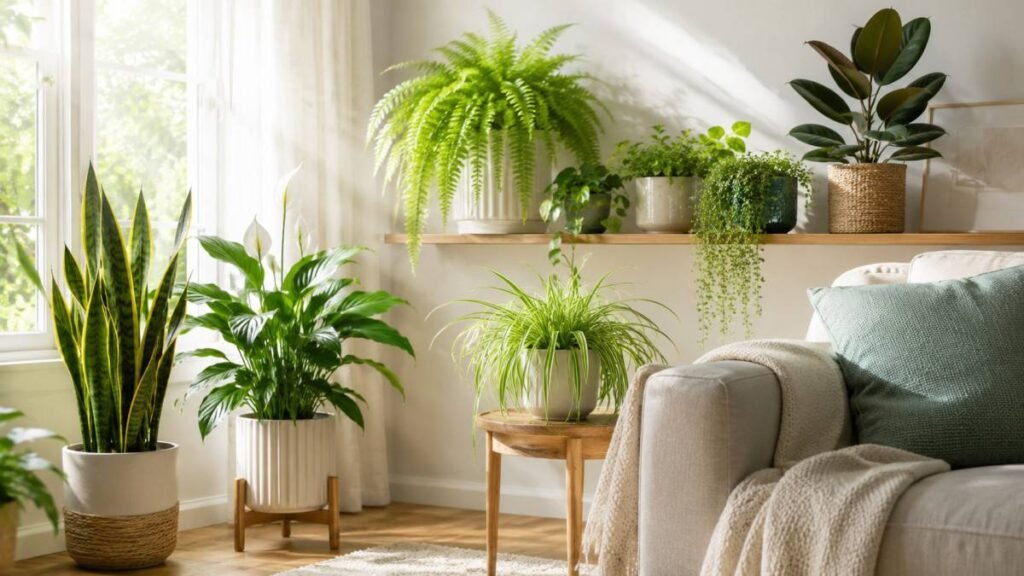
We spend nearly half of our time inside our home, yet most of us rarely stop to think about what we’re actually breathing. According to the Environmental Protection Agency, indoor air can be two to five times more polluted than outdoor air, a sobering statistic, considering we often think of home as a safe haven. From paint fumes and cleaning products to dust mites and mould spores, our homes quietly accumulate a surprising range of airborne pollutants. The good news? One of the simplest, most beautiful solutions has been sitting in garden centres all along: houseplants.
Long before air purifiers became a household staple, people relied on greenery to freshen their living spaces. Today, science is catching up with that ancient intuition. Certain air purifying plants have been shown to actively filter toxins, regulate humidity, and create a healthier breathing environment, all while adding life and colour to your interiors. Whether you live in a compact city apartment or a sprawling suburban home, incorporating the right plants can make a meaningful difference to the air you breathe every day.
Here are five simple ways indoor plants make the air in your home healthier.
1. They Filter Out Toxins in the Air
A lot of everyday household items, think furniture, carpets, paint, and cleaning sprays, quietly release chemicals into the air. You can’t see or smell most of them, but over time, they can cause headaches, irritate your eyes, or just leave you feeling a bit off.
Plants actually absorb these chemicals through their leaves and roots, breaking them down naturally. Some of the best ones for this job are peace lilies, spider plants, and Boston ferns. You don’t need a house full of them; even a few dotted around your main living areas can make a difference.
2. They Freshen the Air with Oxygen
This is the one most people already know: plants take in carbon dioxide and give back oxygen. It’s basically what they’re built to do.
In a room that doesn’t get much fresh air, things can start to feel heavy and stuffy pretty quickly. A few plants help keep things feeling lighter and more breathable. And here’s a fun fact: some plants, like snake plants and aloe vera, actually keep producing oxygen through the night, which makes them a great choice for the bedroom.
3. They Add Moisture to Dry Air
Ever wake up in winter with a dry throat or irritated skin? That’s often because heated indoor air loses a lot of its moisture. The same thing happens in summer when the air conditioning is running non-stop.
Plants release moisture into the air naturally as they grow, a bit like how we breathe. Grouping a few plants together in a room can quietly raise the humidity to a more comfortable level, which is easier on your airways and skin. Areca Palms and Boston Ferns are especially good at this. Think of them as a natural, low-maintenance alternative to a humidifier.
4. They Catch Dust Before You Breathe It
This one surprises a lot of people. Plant leaves actually trap dust particles floating around in the air, stopping them from circulating around the room and ending up in your lungs.
The bigger the leaves, the better they are at catching dust, so plants like rubber plants and fiddle leaf figs are particularly useful here. The only catch is that you need to wipe the leaves down every week or so with a damp cloth. It takes two minutes and keeps the plant looking good and functioning properly.
5. They Help Keep Mould at Bay
Bathrooms and kitchens are the usual suspects when it comes to mould, and once it takes hold, it can be a real nuisance. Plants can actually help here, too.
Some plants, like peace lilies, naturally discourage mould from growing nearby. They also help keep humidity balanced, and when moisture levels in a room are steady rather than all over the place, mould has a much harder time getting started. It’s not a complete fix on its own, but as part of keeping those rooms fresh and well-maintained, plants definitely pull their weight.
6. They Help You Feel Calmer and Think More Clearly
This one’s easy to overlook, but it’s worth mentioning. When a room has too much carbon dioxide and not enough fresh air, you might feel sluggish, distracted, or just a little on edge, without really knowing why.
Plants help keep the air balanced, and when the air is fresher, your mind tends to follow. Many people find that rooms with plants feel more peaceful and easier to work or unwind in. So, beyond the physical benefits, having greenery around can quietly support your mood and focus throughout the day. It’s a small thing that adds up more than you’d expect.
Where to Start
You don’t need to turn your home into a jungle overnight. Start with one or two plants in the rooms where you spend the most time, like a snake plant by the bed, a spider plant in the living room, or a peace lily in the bathroom. They’re all easy to care for, widely available, and pretty hard to kill.
Over time, you’ll likely notice your home just feels a bit fresher and more alive. And honestly, that’s reason enough.
