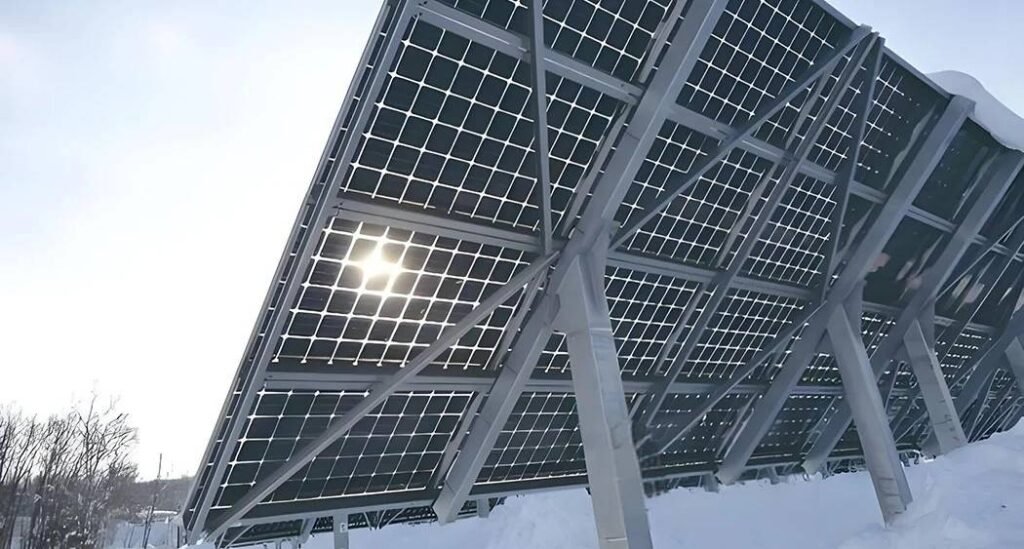
Standard solar panels capture sunlight on one side. Bifacial panels capture light on both the front and the back. The back side collects sunlight that reflects off the ground, the roof, or surrounding surfaces and converts it into additional electricity, shares American Heritage Properties experts. Under the right conditions, this adds 5 to 30 percent more power from the same panel footprint.
Bifacial panels cost 10 to 20 percent more than comparable monofacial panels. Whether that premium is worth it depends entirely on your installation type. On a white commercial flat roof with high reflectivity, bifacial is almost always the right choice. On a dark residential roof with panels mounted flush against shingles, the back side captures essentially nothing and the premium is wasted. Here is how to tell which category you fall into.
How Bifacial Panels Work
A bifacial panel has a transparent back sheet or a second layer of glass instead of the opaque white back sheet on a standard panel. Solar cells are visible from both sides. The front side captures direct sunlight, exactly like a standard panel. The back side captures light that reflects off the ground or surrounding surfaces, which is called albedo light.
The additional power comes from the back side only. The front side efficiency is the same as a comparable monofacial panel. A bifacial panel rated at 400 watts is rated based on front-side output under standard test conditions. The back side adds additional wattage that varies based on how much light reaches it. A panel with a bifaciality factor of 70 percent can generate up to 70 percent of its front-side rating from the back side under ideal conditions. Real-world back-side production is typically 10 to 20 percent of front-side output in well-designed installations.
Where Bifacial Panels Are Worth the Premium
Ground-Mount Systems: Yes, Almost Always
Ground-mount solar is the ideal application for bifacial panels. The panels are elevated several feet above the ground, which allows reflected light to reach the back side. Grass, light-colored gravel, and snow all reflect sunlight upward. A ground-mount bifacial system over light gravel or grass typically gains 10 to 15 percent more annual energy output compared to the same system using monofacial panels.
In snowy climates, the gain is even higher. Snow reflects up to 90 percent of sunlight. A bifacial ground-mount array in a region with consistent winter snow cover can gain 20 to 30 percent during the winter months. Over the full year, the gain averages 8 to 15 percent depending on snow duration. This makes bifacial ground-mount systems particularly attractive in the Northeast, Midwest, and mountain West.
The cost premium for bifacial panels on a ground-mount system, typically 10 to 15 percent more for the panels themselves, is recovered through the additional energy production within three to five years. After that, the extra production is pure return.
Commercial Flat Roofs: Yes, With the Right Surface
Commercial buildings with flat white or light-colored roofing membranes are excellent candidates for bifacial panels. White TPO and PVC roofing membranes reflect 70 to 80 percent of sunlight. Bifacial panels mounted on tilted racking above a white roof capture significant back-side light. Energy gains of 10 to 20 percent are typical for well-designed commercial bifacial installations.
The ballasted racking systems used on flat commercial roofs naturally elevate panels above the roof surface, which provides the clearance needed for reflected light to reach the back side. The panel tilt also exposes the back side to a wider angle of reflected light than flush-mounted residential installations.
Solar Carports and Canopies: Yes
Solar carports are elevated structures with panels mounted on a frame above parked cars. The ground underneath is typically light-colored concrete or gravel. The height and open space below the panels provide excellent conditions for back-side light capture. Bifacial panels on carports typically gain 10 to 15 percent compared to monofacial. This application combines bifacial technology with an installation type that already maximizes back-side exposure.
Where Bifacial Panels Are Not Worth It
Standard Residential Roofs: Usually Not
Most residential solar installations mount panels flush against a dark asphalt shingle roof with only a few inches of clearance. Dark shingles reflect 5 to 15 percent of sunlight. The small gap between the panel and the roof blocks most of what little reflected light exists. Under these conditions, the back side of a bifacial panel captures negligible additional energy. The 10 to 20 percent cost premium produces near-zero production gain.
There are two residential exceptions. A standing seam metal roof with a light color or a white flat roof section can provide enough reflectivity to justify bifacial panels. These are uncommon residential roof types but they exist, particularly on modern or custom homes. The second exception is a residential ground-mount system, which is covered above.
Shaded Installations: No
Bifacial panels do not compensate for shading on the front side. If your roof or ground-mount location is shaded by trees or buildings, the production loss from shading on the front affects both panel types equally. The back side adds production only from reflected light, which is also reduced when the surrounding area is shaded. Bifacial does not solve the shading problem.
Cost Comparison: Bifacial vs. Monofacial
| Installation Type | Bifacial Premium | Energy Gain | Payback on Premium |
| Ground-mount, light gravel | 10–15% | 10–15% | 3–5 years |
| Ground-mount, snowy region | 10–15% | 8–15% annually | 2–4 years |
| Commercial flat white roof | 10–15% | 10–20% | 2–4 years |
| Solar carport | 10–15% | 10–15% | 3–5 years |
| Residential dark roof | 10–20% | 1–3% | 15+ years or never |
The premium for bifacial panels is not just the panel cost. Bifacial panels are heavier because of the dual-glass construction, which can require stronger racking. They may also cost slightly more to install because of the additional weight and handling requirements. However, bifacial panels often come with longer warranties, typically 30 years compared to 25 for standard panels, and have lower annual degradation rates. The dual-glass construction is more durable and resistant to moisture, which matters in humid climates and coastal areas.
Non-Energy Benefits of Bifacial Panels
Bifacial panels are built with glass on both sides, which makes them more durable than standard panels with a plastic back sheet. They resist moisture ingress, which causes delamination and power loss in standard panels over time. In coastal areas with salt spray and high humidity, bifacial panels degrade slower and last longer.
Most bifacial panels have a lower annual degradation rate, typically 0.45 to 0.55 percent per year compared to 0.55 to 0.70 percent for standard panels. Over 25 years, this difference adds up to several percent of total production. A panel that retains 88 percent of its original output at year 25 produces more lifetime energy than one that retains 83 percent, independent of the bifacial gain.
Some bifacial panels are designed with a frameless glass-on-glass construction that is more aesthetically appealing for certain installations. This is a subjective benefit but matters for visible ground-mount systems and carports where appearance influences purchasing decisions.
Frequently Asked Questions
Are bifacial panels always better than monofacial?
No. Bifacial panels are only better when the back side receives meaningful reflected light. On a dark residential roof with flush-mounted panels, the back side receives almost no light and bifacial panels perform essentially identically to monofacial panels despite costing more. Bifacial technology is an optimization for specific installation types, not a universal upgrade. A monofacial panel on a ground-mount system with high ground reflectivity will be outperformed by a bifacial panel. The same monofacial panel on a dark residential roof will match a bifacial panel’s output at lower cost.
Can I install bifacial panels on my existing roof?
You can, but you probably should not, unless you have a light-colored roof or a roof with significant tilt and clearance between the panels and the shingles. Standard residential roof installations with dark shingles and minimal panel clearance are the worst application for bifacial technology. If you are considering bifacial panels for a residential roof, ask the installer to model the expected back-side gain based on your specific roof color, panel height, and tilt angle. If the modeled gain is less than 5 percent, the premium is not recovering its cost within the panel warranty period.
