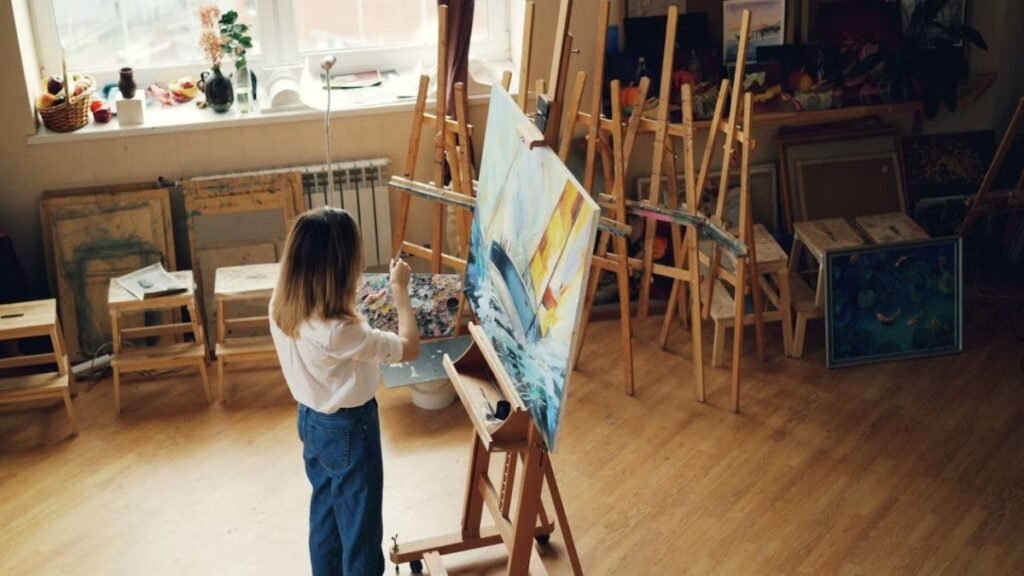
Ever thought about ditching your day job for something you actually love?
You’re not the only one.
Increasing numbers of career-driven creatives are pursuing their passions professionally. Many of them are entering the field of art education.
Here’s the thing:
There’s no need to leave your current job to make the transition. Thanks to flexible online courses and massive demand for creative teachers, it’s never been easier to make the switch. In fact, recent studies show 44% of Americans are already making money from side hustles – and plenty of them are transitioning to something more fulfilling.
What’s inside this guide:
- Why Creative Careers Are Booming Right Now
- Why Art Education Attracts So Many Career Changers
- What Secondary Art Teacher Training Actually Looks Like
- Making The Career Leap Without Losing Your Mind
Let’s jump in!
Why Creative Careers Are Booming Right Now
The old career playbook is dead.
Individuals once chose one career path at age 22 and retired from it at 62. Times have changed.
Workers today desire meaning, flexibility, and they actually want to enjoy what they do daily. That is why there are so many people pursuing careers in creative fields.
Statistics show: 67% of career changers feel more satisfied with their job after switching careers.
But here’s the kicker…
Changing careers creatively was painful. Quit your job. Return to school full-time. Get buried in debt. Cross your fingers.
Not anymore. Online learning has completely flipped the script. Now busy professionals can:
- Study around their current job
- Keep earning a full-time paycheck
- Learn from anywhere in the world
- Build a new career at their own pace
Why Art Education Attracts So Many Career Changers
Of all of the creative careers available… Art education continues to attract career changers. And for good reason.
Secondary Art Ed. allows you to have your cake and eat it too. You continue to create art that you love while teaching the ages you like, 12-18. Oh, and get this – a steady paycheck, benefits, and a family-friendly schedule!
Secondary art teacher training will equip you to walk into a middle school or high school and teach a class. If you’re a busy professional unable to leave your job, earning your art education degree online may be your best bet. Take classes at night, maintain your current career, and ease your way into teaching without going broke.
Here’s what makes art education so appealing for career changers:
- Meaningful work: You get to shape the next generation of creatives
- Steady income: Teachers get consistent paychecks and benefits
- Time off: Summer breaks and school holidays are built in
- Room to create: There’s still plenty of time for personal art practice
- High demand: Schools everywhere need qualified art teachers
The average age of a career changer coming into teaching is 36. Don’t feel pressure to jump ship at 25. Bringing real world experience with you is a huge asset.
What Secondary Art Teacher Training Actually Involves
So what does secondary art teacher training look like day-to-day?
Here’s the breakdown:
Secondary art teacher education will train you to instruct students between 12-18 years of age. This degree will show you how to operate a successful art room from studio techniques to classroom management. All well rounded programs should include:
- Studio practice: Building your own art skills across different mediums
- Art history and theory: Understanding the context behind the work
- Classroom management: Keeping teenagers engaged (harder than it sounds)
- Curriculum design: Planning lessons that actually work
- Assessment strategies: Grading creative work fairly
The best part?
You have to love teaching before you love art. Outstanding art teachers are talented educators first and artists second. If you love kids and you love creating – you can be great.
Others include a student teaching placement. This is an opportunity to experience what working in a classroom will actually be like with a cooperating teacher.
Making The Career Leap Without Losing Your Mind
Ready to make the shift? Here’s how to do it without falling apart.
Start With A Solid Plan
Don’t just wing it. Career changes take planning.
Plan your schedule. Determine how long your education will take. Calculate how much you will need to save. Be honest with how much you can handle at one time.
Keep Your Day Job (Seriously)
The dream of quitting your job to chase your passion sounds amazing…
Until the bills come in.
Work while you train. Distance learning programs allow you to do that. You can continue to provide for your family while learning, no stress of losing income.
Build Your Art Portfolio
Schools want to see your work.
Start building a strong portfolio now. Include:
- A variety of mediums you’re comfortable with
- Personal projects that show your style
- Any teaching or mentoring experience
- Work with different age groups if possible
Get Comfortable With Teenagers
Teaching teenagers is a specific skill.
Experience – If you haven’t been around a lot of 12-18 year olds lately, find some. Volunteer with an after school art program at your local museum. Teach a workshop at your community center. Help out at an elementary, middle or high school art night. Experience is priceless.
Turning Your Creative Passion Into Something Real
The path from creative hobby to full-blown career isn’t a pipe dream anymore.
Increasing numbers of professionals are taking the plunge – into careers like art education where they can actually put their creativity to use on a daily basis.
Quick recap of what makes this possible:
- Online programs let you study while working full-time
- Career changers are welcomed (and even encouraged) in teaching
- Secondary art teacher training gives you the skills to run a classroom
- Demand for qualified art teachers is strong across the country
The reality is that building a legitimate career out of your creative passion requires effort. There’s no overnight success formula. However, with proper education, a solid game plan, and some perseverance – it is possible.
It might take two years. Or five. Doesn’t matter. The point is to create a career that both pays the bills AND fuels you creatively. An art education can help you do just that.
Begin small. Choose a program that works for your lifestyle. Take the first step this week. You’ll thank yourself later.
