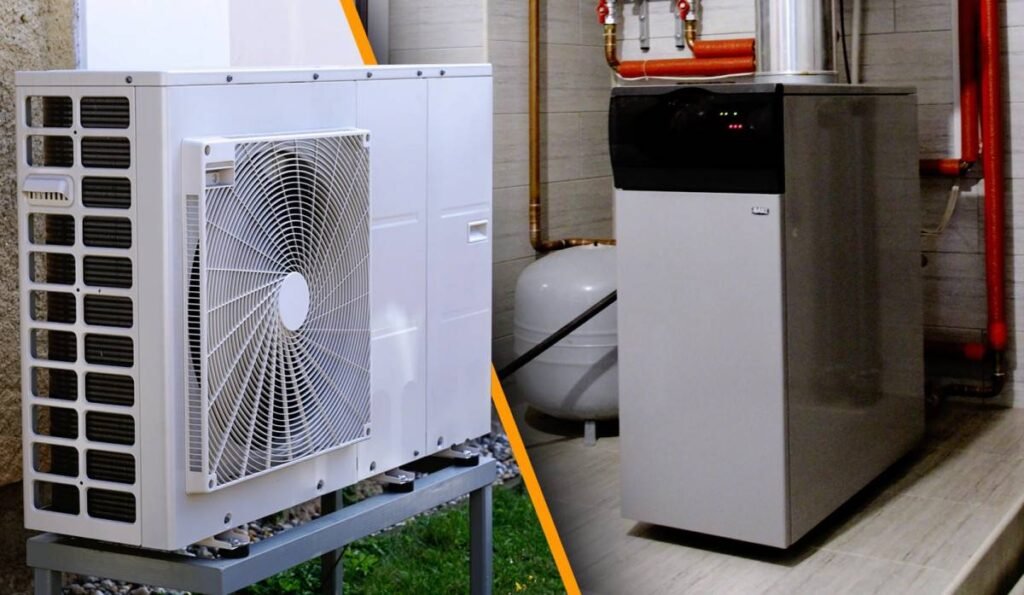
On heat pump vs furnace, there is no universal winner; the right choice depends on your climate, your local energy prices, your upfront budget, and what your home already has. A heat pump moves heat and shines in mild weather, while a furnace creates its own heat and handles very cold conditions without complaint. Since gas and electricity prices vary sharply by region, a choice that makes sense in one state can be wrong in the next, notes property management Drexel Hill PA.
The four factors below decide it, and the comparison table lines up the rest.
How Each System Works
The mechanical difference explains everything else. A gas furnace burns fuel to create heat and blow it through your ducts, so it works regardless of the outdoor temperature and heats a home fast, which is why it is strong in very cold climates.
An air-source heat pump uses electricity and the refrigeration cycle to move heat from the outside air into your home, so it is most efficient in mild weather and works harder as the temperature swings toward extremes, per the Trane comparison of furnace and heat-pump heat.
The two also feel different. A gas furnace blows hot, dry air and can leave a home dry in winter, while a heat pump sends gentler airflow and holds onto humidity, which many find more comfortable and easier on skin and sinuses. These comfort differences matter to people even when the bills are close.
Heat Pump vs Furnace at a Glance
The table sums up where each system stands on the questions buyers actually ask.
| Factor | Heat pump | Gas furnace |
| How it heats | Moves heat from outside air | Burns fuel to create heat |
| Best climate | Mild to cool regions | Very cold regions |
| Cold performance | Modern cold-climate units much improved | Unaffected by outside cold |
| Air feel | Gentler, holds humidity | Hot, drier air |
| Upfront cost | Higher, may need wiring upgrade | Usually lower |
| Operating cost | Depends on electricity price | Depends on gas price |
| Cooling | Cools too (one system) | Heating only |
No column wins outright, because the climate and energy-price variables decide the outcome. That is why the next section matters more than the table.
The Four Factors That Decide It
The choice comes down to four questions, and answering them settles most homes. First, your climate: if winters are very cold and long, a furnace, or a heat pump paired with a backup, is the truer fit, while a mild or cool climate favors a heat pump, and modern cold-climate heat pumps have narrowed the gap in much of the country. Second, your energy prices: compare what you pay for gas versus electricity, since a heat pump’s efficiency only saves money when electricity is cheap, and gas can be the cheaper bill in many places. Third, your upfront budget and infrastructure: a heat pump usually costs more upfront and may need an electrical upgrade, while a gas furnace is often the lower-cost install if gas already reaches the home. Fourth, rebates and cooling: a heat pump doubles as air conditioning in summer, and utility rebates can tip a close decision toward whichever system your local utility rewards.
Work through the four with your actual numbers, not a rule from a forum, and the honest answer for your home appears.
An Honest Read on Cost
Cost splits into the price to install and the price to run. A heat pump install commonly runs from the mid-thousands to ten thousand dollars or more depending on the system and the home, and a gas furnace install is often less, though both depend on your region and equipment, so treat any single figure with care. A heat pump can also add an electrical-upgrade cost if your home needs more capacity to run it, an easily missed line in a quote. On the running side, a heat pump is efficient when the heat it moves beats the electricity it uses, while a gas furnace’s running cost tracks the gas price, so the monthly bill depends on which energy source is cheaper where you live.
The gas industry’s own analysis leans into that regional difference, arguing that in many states gas heating is the more affordable long-term option, with the American Gas Association’s regional breakdown citing more affordable gas heating in most states, while heat-pump manufacturers counter that efficiency and rebates close or reverse the gap in mild, cheap-electricity markets. Neither side is neutral, which is why you should run your own comparison of local gas and electricity rates rather than take a side’s word.
The Cold-Climate and Dual-Fuel Detail
Two nuances matter if you live somewhere cold. Modern cold-climate heat pumps have improved dramatically, with some makers stating their variable-speed units hold near-full capacity down to around freezing and specialized cold-climate models work well below that, so the old idea that “heat pumps fail under freezing” no longer holds for the newest equipment. Even so, in areas with severe prolonged cold, many homeowners choose a dual-fuel setup, a heat pump for efficient mild-weather heating and cooling, plus a gas furnace for the coldest days, which captures the comfort and efficiency of both without betting the winter on one system.
The Questions People Actually Ask
Three common questions deserve straight answers. Is a heat pump better than a furnace? It depends on the four factors; in a mild climate with cheap electricity a heat pump often wins, and in a harsh cold climate with pricey power a gas furnace is usually the better and cheaper heat. Why do contractors seem to not like heat pumps? There is no universal dislike; some installers are simply less experienced with them, and heat pumps reward careful sizing and quality installation more than furnaces, so an unfamiliar installer may steer to what they know, but a skilled one handles them well. And the “$5,000 rule” for a furnace is a legacy rule of thumb, roughly that a common furnace replacement lands near five thousand dollars or about five hundred per installed ton, not an official or current price, so pair it with real local quotes.
Choosing for Your Home
Write down the four answers and the choice narrows fast. Note your winter low and how often you hit it, your local gas and electricity rates per unit of heat, what you can spend today, and whether your home has ducts and electrical headroom.
In a mild or cool climate with reasonable electricity, a heat pump, especially one with a rebate, is a strong, efficient pick that also cools in summer. In a very cold climate or where gas is clearly cheaper, a gas furnace is the dependable and often lower-bill choice. Where winters are cold but the rest of the year is mild, a dual-fuel system combines both strengths, and whichever you choose, get three itemized quotes from a licensed installer that include any electrical or ductwork work, not just the box.
Heat Pump vs Furnace: Common Topics
How much does a heat pump cost for a 2000 sq ft home?
For a home around 2,000 square feet, a heat pump install commonly runs from the mid-thousands to ten thousand dollars or more, depending on the system’s size, efficiency, and whether the home needs ductwork or electrical work. Three itemized quotes give a true number for your area.
Is a heat pump better than a furnace?
It depends on your climate, energy prices, budget, and existing setup. A heat pump is often better in mild climates with cheaper electricity and it also cools in summer, while a gas furnace is usually better in very cold climates or where gas is clearly cheaper to run.
Why don’t contractors like heat pumps?
There is no universal dislike. Some installers are simply less familiar with heat pumps, and heat pumps reward careful sizing and clean installation more than furnaces do, so an installer may steer toward what they know well. A skilled pro handles either system well.
What is the $5000 rule for furnaces?
It is a legacy rule of thumb, roughly that a common furnace replacement lands near five thousand dollars, or about five hundred dollars per installed ton, not an official or current price. Modern cost depends on size, efficiency, and local labor, so treat it as a loose check, not a budget.
Are heat pumps or gas furnaces cheaper per month?
Whichever energy source is cheaper in your area wins the monthly bill. A heat pump’s efficient running cost saves money when electricity is affordable, while a gas furnace’s cost tracks the gas price, so compare your local rates and your climate before the decision.
The answer to heat pump versus furnace lives in your numbers, not in a slogan. Check what your winter is like, what you pay for gas against electricity, what you can spend upfront, and what your home already has. A heat pump wins in mild territory with cheap power, a gas furnace in harsh cold or costly electricity, and a dual-fuel system bridges cold and mild winters alike. Run the four factors and the right heating system for your home stops being a debate.
