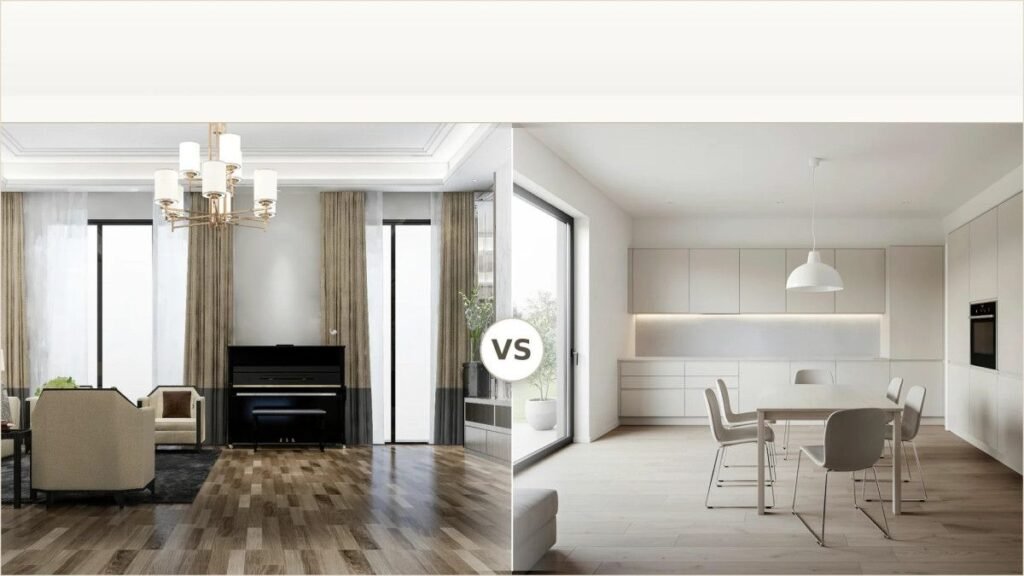
On laminate flooring vs LVP, the right answer depends on the room, not on a universal winner. Luxury vinyl plank, LVP, wins wherever moisture is real, kitchens, bathrooms, basements, and busy homes with kids and pets, because it is genuinely waterproof. Laminate wins on a sharper wood look and better scratch resistance at a similar price in dry living areas. Both are budget-friendly click-together floors, so decide on water first, then durability and looks, notes Concord property management.
A side-by-side comparison, the water difference, and the honest answers to the common questions follow.
Laminate vs LVP at a Glance
The table lines up the two on what homeowners actually weigh.
| Factor | Laminate | LVP (luxury vinyl plank)
|
| Made of | Pressed wood-core plank with a printed wood layer | Flexible vinyl plank, often with a rigid core |
| Water resistance | Water-resistant, core can swell in standing water | Waterproof, ideal for wet rooms |
| Scratch resistance | Excellent, shrugs off most drops and claws | Softer, scratches more easily under heavy furniture |
| Wood look | Very convincing hardwood realism | Good, can also mimic stone or tile |
| Feel underfoot | Harder, can be noisier | Softer, warmer, quieter |
| Fade resistance | Better | Can fade in strong sun |
| Typical lifespan | 15-20 years | 10-15 years |
| Best rooms | Living, dining, bedrooms, offices | Kitchens, baths, basements, mudrooms, pet homes |
No column wins across the board, because the water question changes which column you should be reading.
Water Is the Deciding Difference
Water is the reason most people end up with one or the other, as the CarpetOne vinyl-versus-laminate comparison makes clear. LVP is genuinely water-resistant to waterproof, so it shrugs off spills, steam, and damp and is the smart pick for kitchens, bathrooms, basements, mudrooms, and homes with kids or pets whose water bowls and accidents are a reality. Laminate is water-resistant too, but its wood-based core can swell and soften when it sits in standing water for long, which is exactly why a waterproof laminate line with sealed edges only goes so far. If moisture happens in the room, LVP is the honest choice; if the room stays dry, the water weakness does not bite.
Durability and the Look, Compared
On durability and appearance, the two trade strengths. The honest laminate-versus-LVP review from America’s Floor Source finds laminate harder-wearing on the surface, resistant to scratches and fading, and delivering a very convincing hardwood look, with a typical lifespan of fifteen to twenty years. LVP is softer and quieter underfoot and easier to live with, but it scratches more easily under heavy furniture and claws, can fade in strong direct sun, and typically lasts ten to fifteen years, though its advantage is unbeatable where moisture is the enemy. For a dry living room where you want it to look like wood and shrug off daily traffic, laminate often earns its keep; for a room that gets wet, the waterproofing wins.
Honest Answers to the Common Questions
Three questions deserve straight answers. Do high-end homes use laminate? Not typically as the showpiece, since the high-end crowd usually picks solid or engineered wood, natural stone, or premium tile, but a well-made laminate or LVP can look convincingly wood-like and does the job on a budget, so the “high-end home” tag says more about the whole project than the floor alone. What are LVP’s disadvantages? It scratches more easily under heavy furniture, can fade in bright sun, feels softer and less rigid, varies in thickness and density by product, and needs a suitable underlayment to feel comfortable. And what is better than LVP? Nothing beats it where waterproofing is the goal, but engineered hardwood or tile win on certain looks and perceived quality, and laminate beats it on scratch resistance and realism in a dry room, so “better” follows the room.
Choosing for Your Room
Choose by room first, then by the quality number. Match the floor to the space, LVP for any room where water is a risk, laminate for dry living areas where you want the wood look and a tough surface.
Then read the durability rating: for LVP, a thicker wear layer in mils means a tougher floor, and for laminate, the AC, abrasive-class, rating tells you its traffic grade, so match those to your household. On an uneven subfloor, both are floating floors that settle over minor dips with the right underlayment, but a truly wavy floor needs leveling first. Compare cost as the total installed, check the warranty, and buy enough for roughly ten percent waste. Both are smart budget floors, and the one that fits the room is the one you will stay happy with.
Laminate vs LVP: Common Topics
Is laminate or LVP flooring better?
It depends on the room. LVP is better where moisture is real, kitchens, baths, basements, and pet homes, because it is waterproof, while laminate is better in dry living areas where you want the sharper wood look and better scratch resistance. Decide on water first.
Do high-end homes use laminate flooring?
Not typically as the showpiece, since high-end homes usually choose solid or engineered wood, natural stone, or premium tile. A good-quality laminate or LVP can look convincingly wood-like on a budget, but the material itself is usually a value pick rather than a luxury one.
What are the disadvantages of luxury vinyl plank?
LVP scratches more easily under heavy furniture and claws, can fade in strong direct sun, feels softer and less rigid underfoot, and its thickness and density vary by product. It still wins clearly where waterproofing matters, so those trade-offs are worth it in wet rooms.
What is better than LVP flooring?
Nothing beats LVP where waterproof flooring is the goal, but engineered hardwood or tile win on certain looks and perceived quality, and laminate beats it on scratch resistance and realism in a dry room. The better choice follows the room and your budget.
Is laminate or LVP cheaper?
Both sit in a similar budget range at most retailers, and the real number depends on thickness, quality, and the wear layer rather than the type. Compare the total installed cost, material plus labor, for the specific products you are choosing between.
Let the water decide, then the look. Where moisture is a real risk, LVP is the pick, waterproof and tough for kitchens, baths, basements, and pet homes. Where you want the sharpest wood look and scratch resistance in a dry room, laminate often wins for the money, but never trust it in standing water. Both are smart budget floors, and matching the one to the room is what makes either a good buy.
