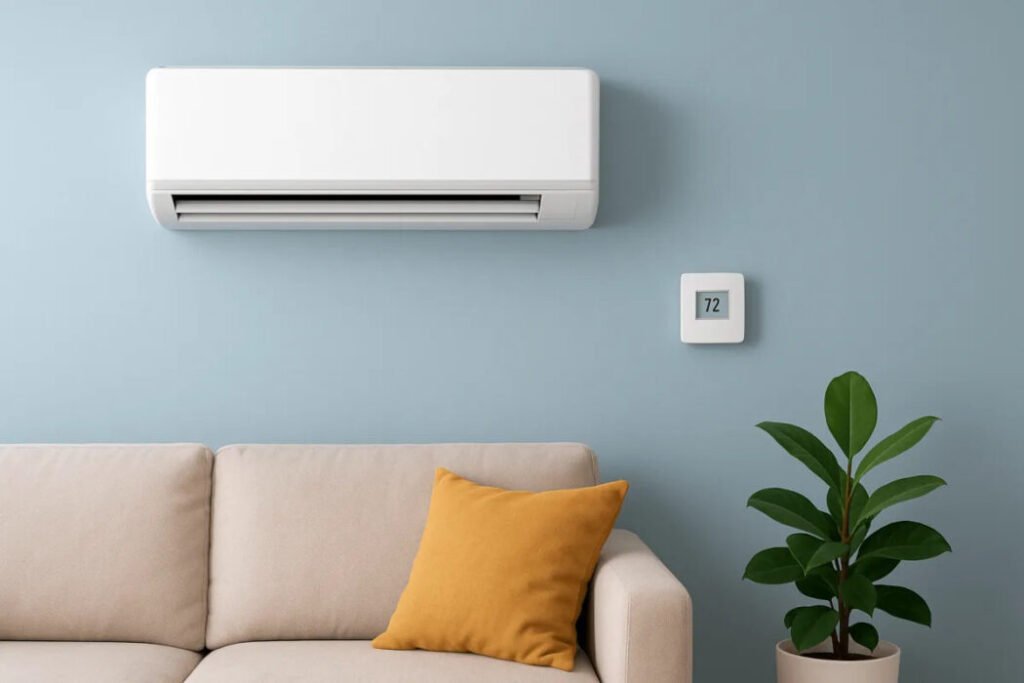
The best way to read mini split systems reviews is to answer two questions together: is a ductless system even right for your home, and which unit and installer earn the money. Mini-splits win on efficiency, zoned heating and cooling, and the fact that they need no ductwork, but they are not cheap, with installation that can reach into five figures, and they add a visible wall unit to each room you climate-control. On brand, no one name is universally best or worst, so a respected brand, a careful professional install, and local parts and service matter more than any forum list, notes property management Hyrum UT.
This covers the tested picks, the reliability truth, and the downsides most reviews rush past.
Is a Mini Split Right for Your Situation?
Before the brand debate, decide whether the system fits your home. A mini split shines when you want heating and cooling without ductwork, which makes it a strong fit for additions, garages, converted rooms, and older homes with no ducts, and it harvests real efficiency in mild climates.
It also delivers zoned control, letting you heat or cool one room without affecting the rest. The honest trade-offs come next: you pay for professional installation, you see an indoor wall unit in each room you cover, and a single indoor unit serves one zone, so covering several rooms means a multi-unit system that costs more. For a whole ducted house, a central system may still fit better and cheaper.
Run the fit check first, because no review can make a ductless system right for a home it does not suit.
The Tested Picks, by Route
On the tested side, the Wirecutter review of ductless mini splits lands on the Mitsubishi Electric Premier MSZ-GX as its top pick, favored for the widest range of system sizes and installation locations and the largest network of licensed installers, with the LG Artcool as a strong alternative on looks and performance. Consumer Reports lab-tests models from Fujitsu, Mitsubishi, MrCool, and others, and separately picks a DIY-oriented MrCool for homeowners who install themselves, while noting that most of its tested units require professional installation and recommending an HVAC pro plus three bids on it.
So the route matters as much as the brand. If you will hire an installer, widen your choice and lean on a network with local licensed techs, as Wirecutter does with Mitsubishi. If you plan to install it yourself, a unit engineered for DIY, the MrCool route Consumer Reports calls out, changes the math entirely.
The Reliability Truth: It Is the Install as Much as the Brand
There is no universal answer to “which brand is most reliable,” and the independent brand review that compares LG, Mitsubishi, Daikin, and Midea shows the truth: each major maker has real strengths, LG on its app and looks, Mitsubishi on build quality, Daikin on reliability and price, Midea on cost, and each varies more by the unit and the installer than by any simple ranking. Likewise, there is no credible universal “brand to avoid” list; most such lists are regional and anecdotal. What actually drives reliability is a correct professional install, regular maintenance, and local parts and service when something fails, so a trusted brand with a licensed installer near you beats a marginal name at any price.
The one caution worth heeding is the unknown no-name unit sold cheap online, which often lacks the parts, warranty, and local tech support to be serviced when it fails. Established brands with local dealers are the safer bet, even if the sticker is higher.
The Honest Downsides
The downsides are real, so weigh them plainly. Upfront cost is the largest, since the unit is only part of it and professional installation can add thousands, to the point that a multi-room system can reach five figures, though rebates can offset some. Each room you want covered takes its own indoor wall unit, mounted high on a wall, which some people find unattractive and which takes up space. Coverage is per zone, so a single unit handles one room and a whole house needs multiple units. Daily upkeep is modest but real, cleaning the filters and keeping the condensate drain clear. And professional installation is usually expected for best results, so a DIY install is the exception, not the rule, for most of these systems.
None of these are deal-breakers for the right home, but a review that skips them is not doing you any favors. Read them against your house and your budget.
Buying the Right System for You
The practical path to a good outcome is straightforward. Dimension to the room, matching the unit’s BTU capacity to the square footage and heat load, since an oversized or undersized unit both underperform.
Choose single-zone or multi-zone by how many rooms you need to cover, and decide the install route honestly, professional versus DIY, because a unit chosen for one route is a poor match for the other. Get at least three quotes from installers and compare what is included rather than just the number. Check the warranty, local parts availability, and any rebate, since those change the real cost. A respected brand installed correctly, sized to the room, and maintained beats an expensive name handled poorly.
Mini Split Systems: Common Topics
Which mini split brand is the most reliable?
There is no single universal answer. Mitsubishi, Daikin, LG, and Fujitsu all carry strong reliability reputations, and which one is best for you depends more on a correct professional install, regular maintenance, and local parts and service than on any one brand being universally reliable.
What mini split brand should I avoid?
There is no credible universal list of mini split brands to avoid; most such lists are regional and anecdotal. The real caution is the unknown no-name unit sold cheap online, which often lacks the parts, warranty, and local service to be repaired when it fails.
What are the downsides of a mini split system?
The main downsides are higher upfront cost, with professional installation able to add thousands, a visible indoor wall unit in each room you cover, coverage limited to one zone per unit, and regular filter and drain maintenance. They still make sense for the right home.
What are the best mini splits according to reviews?
Per independent testing, the Mitsubishi Electric Premier series is a top pick for its range and installer network, with LG Artcool a strong alternative, and Consumer Reports also picks a DIY-oriented MrCool for homeowners who install it themselves. Match the pick to your install route.
Are Mitsubishi or Daikin mini splits worth it?
Yes, both are respected names, with Mitsubishi praised for build quality and a wide installer network and Daikin for reliability and value. The worth depends on correct sizing, a proper install, and local parts and service, more than on the brand alone.
Buy the system that fits the room, install it properly, and skip the brand war. Match the capacity to each room, choose a trusted brand with local service, and pay for a careful professional install, getting three bids and weighing rebates, because reliability lives in the installation as much as in the label. Mini split systems reward the efficiency and comfort they promise when the unit is right, fitted right, and maintained, and that is the review that matters.
