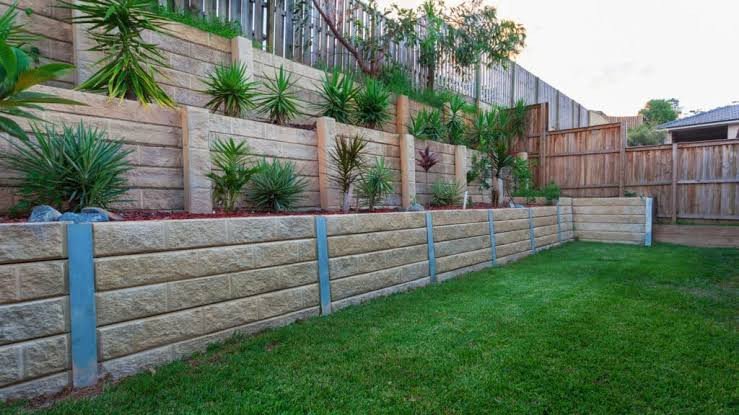
A retaining wall costs about $20 to $50 per square foot installed, and the single biggest reason the range is that wide is height, not material. A low garden wall under 3 feet is a weekend yard project of a few thousand dollars, while a wall over 4 feet becomes an engineered structure that can run $15,000 or more because it needs permits, geogrid, and possibly a structural review. Size the wall, pick a material, and add height, access, and permitting before you trust any one number.
On retaining wall how much does it cost, the answer follows the height first, then the material and the site. The cost by material, cost by height, a quick way to estimate your own project, and the decisions that actually move the final bill come below.
The Range, Not a Single Number
Published averages for retaining walls cluster near $6,300 nationally, with most homeowners paying $3,500 to $9,400 and extreme jobs from $1,200 to $13,700 or more, figures that match the LawnStarter retaining-wall cost guide. Per square foot, most walls land somewhere between $20 and $53, with the average near $33. Another price source puts the national installed range at $35 to $49 per square foot, because it averages a different mix of tall engineered walls.
None of these numbers is wrong; they are answering for different materials, heights, and regions. Remove “average” and a 2-foot timber border and a 6-foot poured hillside wall are in wholly different price universes, which is why the honest starting point is always the range and the height, says Keyrenter West Chicago experts.
Retaining Wall Cost by Material
Material sets both the look and the long-term cost, and the five common options split cleanly by price and lifespan. Timber is the budget buy but rots in 15 to 20 years. Segmental concrete block, the residential workhorse, is moderate in price and lasts 50-plus years. Poured concrete runs higher and suits tall structural walls. Natural stone costs the most and suits low garden borders. The price per square foot below is installed.
| Material | Cost / sq ft | Lifespan | Best for |
| Pressure-treated timber | $15 – $25 | 15 – 20 years | Short-term, budget, under 3 ft |
| Segmental concrete block | $20 – $35 | 50+ years | Most residential walls |
| Poured concrete | $25 – $40 | 50+ years | Tall structural walls |
| Natural stone | $30 – $50 | 50+ years | Low garden walls, borders |
Segmental block is the most popular residential choice because the blocks interlock, survive freeze-thaw cycles, and mimic stone at a lower price. Poured concrete is the strong choice when the wall has to hold real soil pressure at height. Timber saves money up front but is a losing trade if you want a wall that lasts decades, since replacement cost lands twice.
Retaining Wall Cost by Height
Height is the number that changes everything, because a wall crosses a hard line above 4 feet: from a yard project into a structural engineering job. A regional retaining-wall pricing breakdown lays this out by material and height. Under 3 feet, a small garden or border wall can be a do-it-yourself weekend for a couple thousand dollars. Above 4 feet, the wall may need a permit, a structural review, and geogrid reinforcement, and the price jumps sharply as a result.
| Wall height | Character | Typical total | Key cost |
| Under 3 ft | Garden border | $2,000 – $6,000 | Simple wall, no engineering |
| 3 – 4 ft | Residential workhorse | $3,500 – $10,000 | Some sites add reinforcement |
| Over 4 ft | Structural | $15,000 – $25,000+ | Permits, geogrid, engineer |
The jump is real, not cosmetic. A 4-foot retaining wall might need two layers of geogrid extending behind it; a 6-foot wall can need four or five layers, each several feet into the slope. That means more excavation, more material, more labor, and a permit cost on top, which is why a per-square-foot quote that ignores height is hiding the most expensive part of the job.
Height is where the real price hides, so never trust a per-foot number that does not ask it.
Estimating Your Own Retaining Wall
You can estimate most walls in three steps without a contractor. First, find the square footage of the wall face by multiplying the length by the height in feet. Second, apply a per-square-foot number for your material, from the earlier table, choosing the installed rate. Third, add the jobs that per-foot price does not include, which is where estimates hide.
Those add-ons are height-driven. A wall over 4 feet adds engineering, permits, and geogrid. Site access adds 15 to 25 percent in labor if equipment or materials must be carried through a tight gate or down a slope. Removing existing soil or vegetation, drainage behind the wall, and a cap or finish on top each add a line. Add those and your rough number becomes a realistic budget.
Build or Buy: DIY vs a Pro
“Cheaper to build or buy” is really “DIY versus a licensed installer,” and the answer depends entirely on height and slope. Below about 3 feet on a flat, accessible site, a competent DIYer can install segmental block or a prefab timber kit themselves and save the labor portion, often the majority of the cost. Above 4 feet, or on a slope near a house or public area, the structural and liability stakes are too high for DIY, and the correct move is a licensed installer, and often an engineer, who can meet code and hold the permits.
The prefab and segmental-block “buy” option is not a shortcut to a tall wall; these systems are rated to a max height for DIY and step up to geogrid and engineering above it. So the honest rule is cheap and below 3 feet, DIY makes sense; tall, engineered, or risky, hire the pro who takes the responsibility.
Retaining Wall Cost: Common Questions
Retaining wall how much does it cost is the question behind every estimate, and the answers below cover the specific sizes people most often ask about.
How much does it cost to build a 100-foot retaining wall?
At $20 to $50 per square foot, a 100-foot wall depends entirely on height: a 3-foot wall, about 300 square feet, runs roughly $6,000 to $15,000, while a 4-to-6-foot version can reach $15,000 to $30,000 or more once engineering, geogrid, and permits land. Work out length times height for the square footage, then apply your material rate plus the height add-ons.
Is it cheaper to build or buy a retaining wall?
Building it yourself with block or a timber kit is cheaper up front because you save the labor, which is the largest cost. But “buy” is not a fix for a tall wall, since engineered systems step up in cost and permits above 4 feet. Below about 3 feet, DIY saves you real money; above that, hiring a licensed installer is the cheaper option once the risk of a failed wall is counted.
How do you estimate the cost of a retaining wall?
Multiply the wall’s length by its height in feet to get the square footage of the face, apply a per-square-foot rate for your material, then add the omitted jobs. The biggest omitted ones are height and structure, since a wall over 4 feet adds engineering, permits, and geogrid, plus site access and drainage, which can add 15 to 25 percent and more.
How much is a 4-foot retaining wall?
A 4-foot retaining wall typically costs $35 to $50 per square foot installed, because it sits at the crossing point into structural work. For a 4-foot wall of common length, 40 feet, that is about 160 square feet and roughly $5,600 to $8,000, before any engineering or permitting pushes it higher.
What’s the cheapest retaining wall material?
Pressure-treated timber is the cheapest, around $15 to $25 per square foot, but it lasts only 15 to 20 years and suits walls under 3 feet. Segmental concrete block costs a bit more at $20 to $35 but lasts 50-plus years, making it the better long-term value for a wall you want to keep.
Load one question into every retaining-wall estimate: how tall does this wall have to be? Below 3 feet it is a low-cost garden project; over 4 feet it is an engineered structure that demands permits and can reach five figures. Match the material to the lifespan you want, add height, access, and drainage to any per-square-foot number, and you can read a retaining-wall quote instead of flinching at it.
