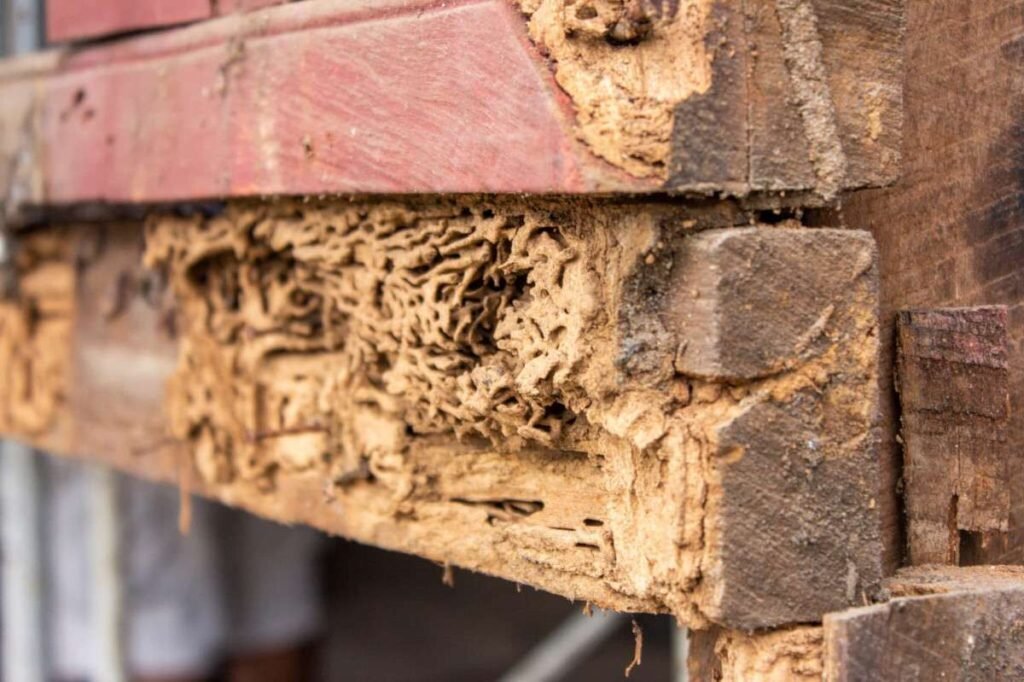
On termites how to get rid of them, the honest answer comes down to one question: can you reach the colony, or only the damage it leaves behind? Subterranean termites, the most common kind in the U.S., nest underground and workers tunnel into a house through soil, so a visible problem is usually the tip of a colony you cannot reach with a spray. Small, exposed, or detached problems can be handled yourself with borates, but a structural infestation with mud tubes almost always needs a licensed professional with a soil barrier or baits.
The guide below separates what really works from the home-remedy claims, walks the identify-check-decide order, and gives the safety steps that matter before you treat anything.
First, Confirm It Is Termites, Not Ants
The most common mistake is treating flying ants as termites, because the two swarm at the same time of year, in spring. The wing and antenna differences settle it. Termites have two pairs of wings of roughly equal length and straight antennae, while ants have longer front wings and elbowed antennae that bend sharply, adds Keyrenter Triad solutions. If the winged insects inside have uneven wing length and bent antennae, they are ants, and the response is different.
To confirm termites in wood, probe exposed beams and framing with a flathead screwdriver. A healthy board resists; a hollow, buzzing spot is a warning sign. For termites specifically, companies and extension services like the U.S. EPA’s termite guidance point to the same rule: straight antennae and equal wings, found by tapping or probing wood.
When You Can Handle It Yourself
The honest boundary is whether the colony is reachable, and most homeowner treatment only works when the problem is small and exposed. That means a woodpile, a fence post, a mailbox post, or an early, localized patch of infested wood you can reach directly.
For those cases, a borate-based product applied to the wood is the realistic DIY option. Borates soak into the wood and keep working long after application, which is why they are the backbone of homeowner wood treatment.
Two limits keep the DIY lane narrow. Contact sprays and oils kill only what they touch, so they reduce surface termites without stopping the workers behind a wall. And no spray or home remedy gets at the subterranean colony nesting in the soil, because its tunnels extend far beyond what a can reach. If you know the problem is confined to a small, detached piece of wood, you can treat; if it is in the house or against the foundation, the colony is under it.
The DIY Methods That Actually Work
For a reachable, minor problem, a few methods are worth naming, and none of them is a miracle. Borate wood treatments, brushed or sprayed on exposed wood, kill and prevent termites in that piece and keep working for years. A borate powder or liquid applied to fresh tunnels or infested framing is the most dependable homeowner option, and boric acid poisons termites that consume it. Concentrated orange or citrus oil kills termites on contact but only lasts days, so it suits a spot treatment, not a colony. Diatomaceous earth and neem are sometimes cited as natural options, but they are minor and best used with realistic expectations.
None of these eradicates an established colony in the structure. As the University of Kentucky’s entomology extension puts it, termite control for a home infestation is normally a job for a licensed professional, and consumer DIY products will seldom fix an existing structural termite problem. If the colony is under the footing or reaches into the house, the DIY bottle fails where it matters.
When to Call a Professional
Three signs line up clearly for a licensed pro: subterranean termites, mud tubes, and swarmers rising from the foundation. Subterranean termites nest in soil and need a chemical barrier or bait system that reaches the colony, which requires drilling, injecting, and enough termiticide that a trained professional handles.
Finding mud tubes, the pencil-thick soil tunnels they build up a foundation or wall, or seeing winged swarmers emerge next to the foundation almost always means a treatment is needed.
Professionals use two main approaches, and the choice depends on the property. Liquid termiticide puts a long-lasting barrier in the soil that kills termites as they cross it, and it is usually reliable the first time when applied by someone trained. Bait systems place cellulose stations in the ground that termites feed on and carry back to the colony, which dies gradually, and they use less pesticide. For drywood termites, whole-structure fumigation seals the house under a tent and kills every insect inside, but it puts you out for a couple of days and leaves no residual protection. All three are licensed-pro work.
Prevention That Stops Them Before They Start
Most of the reliable termite control is prevention, and almost all of it is free or cheap, per the EPA’s homeowner checklist. Keep the soil next to the foundation dry through proper grading, drainage, and working gutters and downspouts, since termites need moisture. Fill cracks in the foundation and around pipes, wires, and where utilities enter the wall. Fix leaks promptly. Keep vents clear of plants and debris. Keep trees and shrubs from touching or growing against exposed wood. Do not stack firewood or wood debris against the house. And inspect exposed wood periodically, tapping for hollow spots before a colony ever establishes.
Home Remedies Put to the Test
The most-searched home treatments deserve an honest answer rather than a false promise. Dawn dish soap does not kill an established termite colony; at best it can coat and suffocate a few insects on contact, which is why it occasionally appears in listicles, but it will not stop workers or the colony. The idea that termites “hate” a particular household scent is mostly myth; there is no reliable home smell that repels or kills a colony. And the “fastest way to kill termites” is a professional liquid barrier or fumigation, not a DIY spray. Realistic expectations here save you money spent on cures that cannot work.
Safety Rules for Any Termite Treatment
Termiticides are serious chemicals, and the safety rule is the same one professionals follow: use registered products only according to the label, and know who is licensed to apply them. Many termiticides are toxic if mishandled, so read the label for the product’s proper use, the surfaces it is meant for, and whether the label even claims termite control. Before signing any termite service, ask the company for its state pesticide license and confirm it is current; your state’s pesticide regulatory agency can verify it. If a treatment needs you out of the house, confirm the re-entry time on the label and from the applicator before you return.
Termites How to Get Rid of Them: Common Questions
What is the fastest way to kill termites?
The fastest and most effective treatment is a professional liquid termiticide or fumigation, because it reaches the colony instead of just the surface you can see. Contact sprays and borates kill on touch but only where you apply them, so they are fast to use but slow to matter against an established colony.
Can I get rid of termites on my own?
Only for a small, exposed, or detached problem, such as a woodpile, fence post, or an early patch of infested wood you can reach. A structural infestation with subterranean termites, mud tubes, or swarmers near the foundation needs a licensed professional, because the colony is in the soil and beyond any homeowner spray.
What do termites hate most?
Termites do not reliably hate any household smell; the claims about vinegar, soap, or scents are mostly myth. What actually kills or repels termites is a borate-treated wood, a registered termiticide, or a bait system, and the reliable version of each is applied where the termites actually feed.
Does Dawn dish soap kill termites?
Dawn dish soap can coat and suffocate a few termites on contact, but it does not kill an established colony and will not stop the workers or the nest. It is not a reliable or registered termite treatment, so do not rely on it for an active infestation.
How do I get rid of termites permanently?
The closest to permanent is a professional liquid soil barrier or a bait program with an annual service and warranty, which keeps the colony from the house long-term. Combine it with the prevention checklist, dry grading, sealed cracks, no wood on the ground near the house, and inspections, and you address the conditions that bring termites back.
Termite control rewards honesty more than most pest problems. Confirm the species, probe the wood, and decide whether you can actually reach the colony. Handle small, exposed, or detached cases yourself with borates, hire a licensed pro for subterranean or structural termites, and keep the soil dry and the wood off the ground so the problem does not start again. Get the treatment right the first time, and termites stop being your worry.
