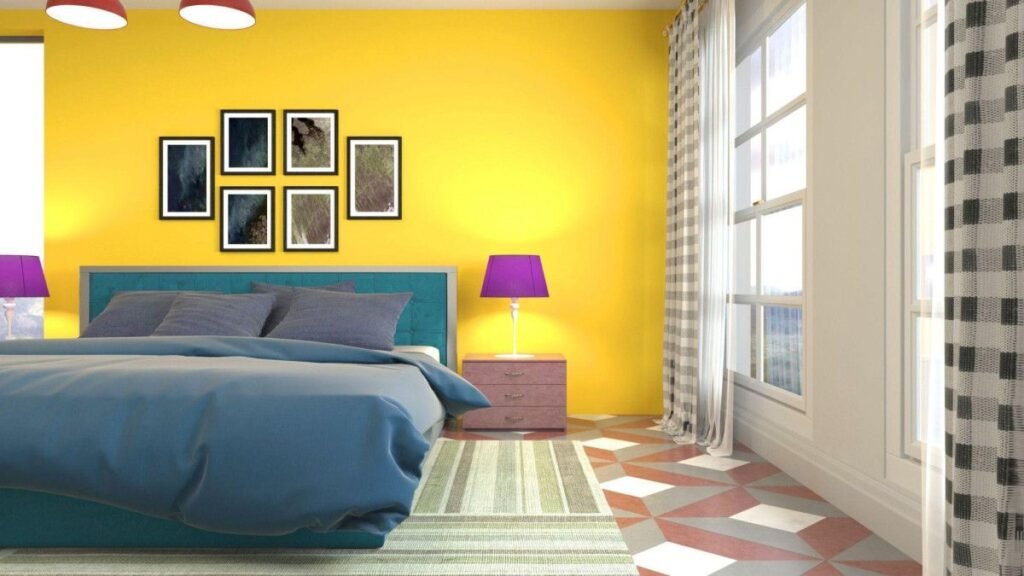
Yellow can completely change how a wall feels. A pale shade may brighten a quiet corner, while a deeper yellow can give a plain wall more character. Still, yellow needs some thought. Daylight, room size, flooring and nearby furniture all affect how it finally appears. Looking at each shade separately makes the choice easier and helps the finished walls feel connected to the rest of the room.
Lemon Yellow for Fresh-Looking Walls
Lemon yellow has a crisp, lively quality. It can work well on kitchen walls, study corners or passages where a cleaner, brighter look is preferred.
Since lemon yellow may appear stronger on a full wall than on a small shade card, balance it with white ceilings, pale wood or light grey furnishings. A room with plenty of daylight can usually carry this shade more comfortably than a darker space.
Butter Yellow for Everyday Warmth
Butter yellow is softer and creamier. It adds warmth without making the walls feel too bold, which is why it can suit bedrooms, living rooms and dining areas.
A colour catalogue can help you compare butter, pastel and muted yellow shades before making a shortlist. Check the undertone carefully. Some options lean towards cream, while others have a warmer golden base that becomes more visible under evening lights.
Pastel Yellow for a Gentle Background
Pastel yellow keeps walls light without leaving them looking plain. It is useful in rooms where curtains, furniture or artwork already bring in stronger colours.
For walls that need regular cleaning, Nerolac Beauty Gold Washable can be considered as an interior emulsion option. Its smooth, rich-sheen finish can support softer yellow shades, while the washable surface makes it relevant for frequently used rooms. The final choice should still depend on the wall condition, desired finish and maintenance needs.
How Yellow Shades Change
People searching ‘How to make Yellow colour?’ are often trying to understand how one yellow develops into another. Yellow itself is a primary colour, but its tone changes when lighter, warmer or earthy influences are introduced.
White softens yellow into a pastel or creamy shade. Orange takes it closer to gold, while brown creates ochre and mustard tones. For painting a complete wall, using a prepared shade is more practical because it helps maintain a consistent appearance across the surface.
Golden and Ochre Yellow for Earthy Walls
Golden yellow feels warm and full, whereas ochre has a muted brown base. Both can bring depth to dining rooms, entrances or a selected living room wall.
These shades may appear richer under warm artificial lighting. Test a patch during the day and again after sunset. Dark wood, cane, stone textures and neutral fabrics usually sit well beside them without making the room look overly busy.
Mustard Yellow for a Stronger Feature Wall
Mustard yellow has an earthy, settled character. It can give a feature wall more presence without the sharpness associated with brighter yellow shades.
Cream, charcoal, olive and natural wood can balance mustard walls. Before finalising it, check a broad test patch. In some rooms, the shade may look more brown or green because of the lighting and surrounding materials.
Final Thoughts
From lemon to mustard, yellow offers much more than one bright wall colour. The best shade is the one that suits the room’s light, size, surfaces and everyday use. Check changing daylight and evening conditions before painting the complete room. Testing the colour directly on the wall, rather than relying only on a screen or card, can prevent an unsuitable choice and lead to a more balanced finish.
