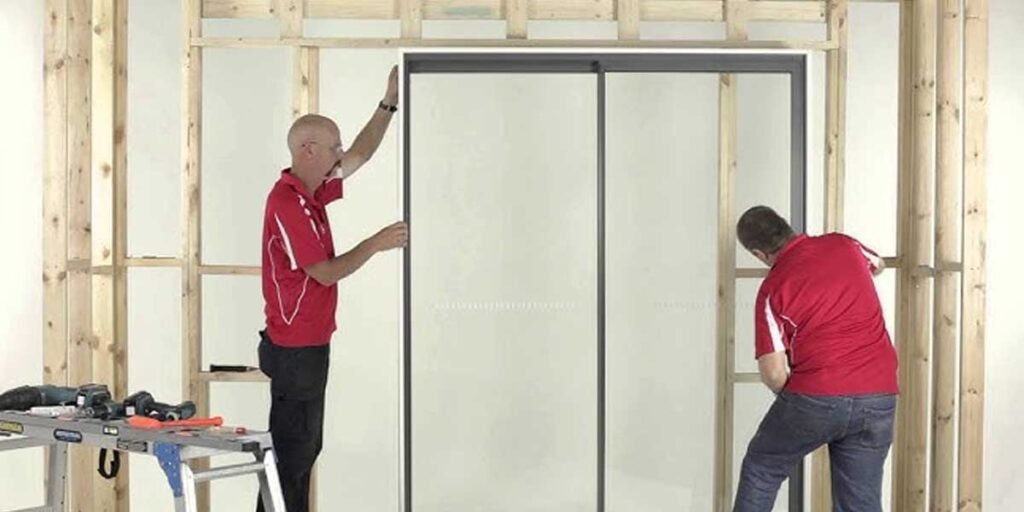
How to install sliding doors depends on where they go, and the honest answer is that you can install an interior closet or room sliding door yourself when it fits the opening, but a full exterior sliding-glass patio door, a heavy unit, or an opening that needs structural work calls for a professional, because the weight and the weatherproofing are where a DIY fails. The energy performance of a door depends on it being set level, plumb, and sealed tight, so a door installed wrong leaks air and water no matter how good the glass is. For a fit you can handle, the process is measure the opening, remove and prep, set the unit level and plumb, fasten it, insulate and weather-seal, then hang and finish.
Below is when to DIY it, the tools and the safe setup, the step-by-step with checkpoints, and when to stop and call a pro.
Can you handle how to install sliding doors yourself
According to Real Property Management Partners experts, you can install an interior sliding door yourself when it fits a finished opening with a standard track, and you should hire a professional for an exterior sliding-glass door, a heavy or oversized unit, or any opening that needs the framing changed, where the weight and the waterproofing are the test. The table sorts it out.
| Situation | DIY or pro | Why |
|---|---|---|
| Interior closet or room, fits the opening | DIY | Light panels, standard track |
| New door in an existing finished opening | DIY or pro | Depends on the size and the fit |
| Exterior sliding-glass patio door | Pro | Heavy glass, weatherproofing, flashing |
| Oversized, multi-panel, or a new rough opening | Pro | Framing, weight, and structure |
The table is the call. An interior sliding door with manageable panels and a standard track is a well-scoped DIY, and a door that fits an existing finished opening with a straight, level frame is within reach, while an exterior sliding-glass patio door brings a heavy glass panel and the flashing and the weather seal that keep out the water, and an oversized or a multi-panel door or a new rough opening wants the framing and the structure only a pro should touch. Weigh the type of door, the weight, and the weather, and set your boundary before you buy.
Tools, materials, and a safe work area
Gather the measuring, leveling, fastening, and sealing tools, clear a safe, two-person work area, and protect yourself with work gloves and eye protection, since a sliding-glass panel is heavy and an awkward lift is the real risk. Measure the finished opening before ordering anything.
The kit is straightforward. You need a tape measure, a level, a drill with the right bits and anchors for your wall, shims, a rubber mallet, a utility knife, the fasteners, and the caulk or the polyurethane insulation foam for the sealing, plus the door’s own track, rollers, and lock. Before you start, measure the finished opening’s height and width at several points to confirm the door fits and that the frame and the floor are level, then clear the path, cover the floor, and arrange a second person for the lift, wearing work gloves and eye protection. A sliding door that hangs by top rollers or slides in a bottom track, the top-hung style rolls more smoothly and holds up longer than a bottom-roller one.
A safe step-by-step guide to installing sliding doors
Work the door in a clear order, measure and prep, set and fix it level and plumb, seal it, then hang and finish, because each step rests on the one before it and a door that starts off level is the ground a good seal stands on. Follow the checkpoints at each step.
- Measure and confirm. Measure the finished opening’s height and width and confirm the door and the track fit, allowing the small clearance the door needs to slide past.
- Remove and prep. Take out the old door, clean the frame line, and repair any rotten or loose surrounds before the new unit goes in.
- Set it level and plumb. Set the unit in the opening and use shims to get it level across and plumb on the sides, the ground a square door and a good seal stand on.
- Fasten and square. Secure the unit to the frame without over-tightening, which would bow the frame, and re-check the level after fixing.
- Insulate and weather-seal. Fill the gaps around the perimeter with the insulation foam or the caulk, and for an exterior door install the flashing and the weather seal that keep the water out.
- Hang and finish. Hang the panels on the track, test the slide and the lock, and apply the trim and the seal for a clean, weathertight finish.
Each step has a checkpoint. Confirm the opening is level and the door fits, get the unit level and plumb before you fix it, fasten without bowing, fill the gaps and seal the exterior properly, and test the slide and the seal at the end. For an interior door the track and the rollers are the focus, and for an exterior door the flashing and the perimeter seal are the focus, because a sliding door that is level and sealed is the same one that slides well and keeps the weather out.
Checkpoints and common failure points
Watch the points where a sliding door install goes wrong, a door that is not level or plumb, a frame bowed by over-tightening, a gap that is not sealed, an exterior door without proper flashing, and a track that is misaligned, and fix each at its checkpoint. The seal and the alignment are the two things that decide whether a door works and lasts.
| Checkpoint | What to check | Failure it prevents |
|---|---|---|
| Opening level and square | Height and width, level and plumb | A door that jams or leaks |
| Unit level and plumb | Shim under the unit | Glass that shifts or seals wrong |
| Fastening | Not over-tightened | A bowed frame that leaks |
| Perimeter seal and flashing | Insulation, caulk, flashing | Water and a draft at the edges |
| Track and rollers | Alignment, smooth slide, lock | Sticking, wear, a failed latch |
The failures follow the checkpoints. A door that is not level or plumb shifts and jams or seals wrong at the corners, a frame over-tightened into a bow loses its seal, a gap left unsealed lets in a draft and water, an exterior door without proper flashing lets water into the wall and stains or rots it, and a misaligned track wears the rollers and sticks. Set the unit level before you fix it, fasten without force, seal every gap, flash an exterior opening, and align the track, and the sliding doors pros and cons start to look quite good on a door you install right.
When to call a professional
Call a professional when the door is an exterior sliding-glass door, too heavy for a two-person lift, oversized, or in an opening that needs the wall or the framing changed, because the weatherproofing and the structure are where a DIY failure costs the most. Match the job to the door’s weight and the opening.
The line is honest. Hire a pro for an exterior door where the flashing, the weather seal, and the water work are critical, for a heavy or oversized sliding-glass panel that needs a power lift or a crew, and for any opening that needs new framing, a widened rough opening, or a structural repair, which is beyond a homeowner’s scope. DIY an interior door that fits a level, finished opening with light panels and a standard track, and stop at the first sign the opening is out of square, the unit is too heavy to lift safely, or an exterior job needs the flashing and the seal a pro owns. Where the weight or the weather is the issue, the professional is the right call, and the door earns its keep for years.
Frequently asked questions
Can I install a sliding door myself? You can install an interior sliding door that fits a level, finished opening with standard panels, but an exterior sliding-glass door, a heavy or oversized unit, or an opening needing structural work is usually a professional’s job. The weight and the weatherproofing are the deciding factors.
How to install a sliding door step by step? Measure the finished opening and confirm the fit, remove and prep, set the unit level and plumb with shims, fasten it without bowing the frame, insulate and weather-seal the gaps, then hang the panels and test the slide and the lock. Each step has a checkpoint.
What is a ghost door? A ghost door is a frameless, flush interior sliding door set in a channel in the wall, so it reads almost invisible and slides away into a pocket or alongside the wall. It gives a clean, minimal look but needs a straight wall and a careful track setup.
What is the average cost of installing a sliding door? The cost varies widely by the door type, the size, and whether it is an interior kit or a full exterior sliding-glass unit, so it is best priced with an itemized quote for your door and opening. An interior closet kit is far less than an exterior installation.
Is installing a sliding glass door hard? Installing an exterior sliding-glass door is hard because the panel is heavy and the flashing and the weather seal are critical, so it is usually a professional’s job. An interior sliding door that fits is a well-scoped DIY.
Let the weight, the opening, and the weather decide
Decide how to install sliding doors by the weight and the opening: DIY an interior door that fits a level opening, and call a professional for an exterior door, a heavy unit, or any structural work, because the weatherproofing and the structure are where a mistake costs. When you do it yourself, measure, set it level and plumb, fasten without force, seal every gap, and align the track, and the door slides true and seals tight for years. Match the job to the weight and the water, and it earns its place.
