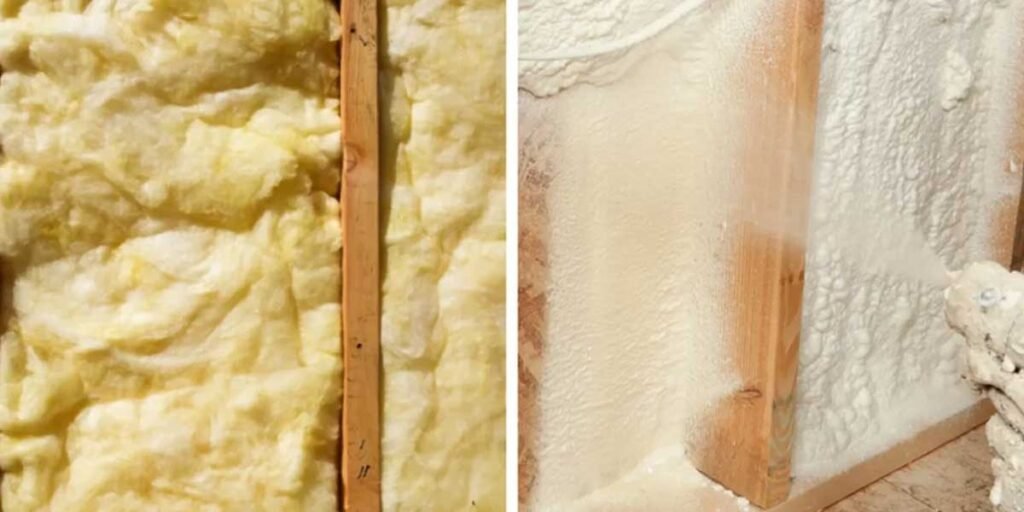
Fiberglass insulation is the value pick for a clean, standard-framing attic or wall where an air seal is handled separately.
It is cheap, easy to install, noncombustible, and made with recycled glass, but it performs only as well as the gaps you do not leave around it, and it can settle or absorb moisture if the depth and vapor plan are wrong. Across US markets a fiberglass batt runs roughly $0.30 to $1.50 per square foot installed, so it suits budget-minded projects over spray foam, states property management Nampa, Idaho.
The comparison below lays out the fiberglass insulation pros and cons in a side-by-side table and explains the trade-offs and lifecycle implications, then gives clear rules for who should choose fiberglass versus spray foam or rockwool, without declaring a single universal winner. If you are weighing the air-sealing alternative, the best spray foam for homes guide covers that option.
Fiberglass insulation pros and cons at a glance
Fiberglass wins on price, ease of install, and fire resistance in clean standard framing, and it falls short where an air seal, moisture control, or a tight irregular cavity matters. The table below maps each point to the condition where it matters, so you can see at a glance which side dominates for your home.
| Pros | Where it matters | Cons | Where it bites |
|---|---|---|---|
| Lowest cost per sq ft | Budget projects, large attics | Poor air seal on its own | Drafty walls without extra sealing |
| Easy DIY install | Clean standard framing | Gaps at framing cut R-value | Irregular or tight cavities |
| Noncombustible | Near heat and attics | Absorbs and holds moisture | Wet or vapor-prone areas |
| Recycled glass content | Green-minded buyers | Blown-in settles over time | Walls thinned years later |
| Wide availability | Retail and contractor stock | Irritates skin, eyes, lungs if disturbed | DIY without protective gear |
The material traps air in fine glass fibers to slow heat transfer, which is why it is both effective and light on the budget; the trade-off is that it needs a good fit and a separate air-seal to reach its rated performance.
Where fiberglass insulation wins
Fiberglass is the right first pick for a budget insulation project in clean, standard framing where an air seal is handled separately, because it is the cheapest reliable R-value per square foot and does not support flames. It wins on cost, install speed, and availability.
On price, fiberglass batt runs roughly $0.30 to $1.50 per square foot installed, which makes a 500-square-foot area cost about $150 to $750, and it is the least expensive of the common batt and blown-in options. Made with a substantial recycled-glass content, it is also an easy fire and heat choice because it does not catch flame. Its main lifecycle caveat is blown-in settling, which can thin the layer and cut the R-value over years unless the depth is topped up, but a correctly installed batt avoids most of that.
Where fiberglass insulation falls short
Fiberglass falls short in three ways, it does not air-seal by itself, it absorbs and holds moisture, and blown-in settles.
That makes it the wrong pick for a damp, unvented, or irregular cavity where those factors matter more than the saved cost, and it also irritates skin, eyes, and lungs when disturbed during install.
A batt left with gaps around the framing loses a large share of its R-value because air moves through the gaps, so a tight fit and a separate air-seal are essential. In a wet or vapor-prone area, fiberglass that gets wet holds the moisture and loses its insulating value, and blown-in loose-fill settles over time, thinning the coverage. For installers, the material itself is a mild irritant, so gloves, eye protection, and a mask are the sensible minimum. These are real limits, but each is manageable with the right application.
Fiberglass vs spray foam vs rockwool: who should choose what
Choose fiberglass for a clean, standard-framing attic or wall on a budget with a separate air seal; choose spray foam when you need air-sealing and a vapor barrier in one step, which costs more; and choose rockwool (mineral wool) when fire ratings, noise, or moisture resistance in a wet spot justify its higher cost. Each wins a different profile rather than one being universally best.
- Budget fibreglass, clean framing: fiberglass batt or loose-fill with a separate air seal.
- Air-seal and vapor in one step: spray foam (open or closed cell), at a higher price per square foot.
- Fire or noise priority: rockwool, which is denser and more fire- and moisture-resistant but pricier.
- Wet or damp cavity: rockwool or closed-cell foam, not standard fiberglass.
- DIY, small project: fiberglass batt is the most homeowner-friendly of the three.
The spray-foam side of this trade-off is compared in detail in the best spray foam for homes page, which goes through open-cell versus closed-cell for the same decision.
Questions people ask about fiberglass insulation
What are the downsides of fiberglass insulation?
The main downsides are that it does not air-seal on its own, it absorbs and holds moisture, blown-in loose-fill settles over time, and the fibers irritate skin, eyes, and lungs during install. Each is manageable with a tight install, a vapor plan, and protective gear.
What is the healthiest insulation for a house?
The healthiest choice depends on your priorities: rockwool and closed-cell foam are moisture- and mold-resistant in damp spots, while air-sealed fiberglass is fine in a dry attic when installed and handled with protective gear. The safety record for common fiberglass is addressed by public-health sources such as the toxicology profile for synthetic vitreous fibers.
What is the lifespan of fiberglass insulation?
A fiberglass batt that stays dry and undisturbed often lasts a decade or two, but blown-in loose-fill settles over time and can thin, so check the attic depth and top up as needed. Moisture is the main thing that shortens its life.
Is fiberglass insulation safe?
Installed and enclosed, fiberglass is a common, well understood material, and the fibers are a mild irritant rather than an established hazard when handled with gloves, eye protection, and a mask. The public-health record for synthetic vitreous fibers is laid out by the CDC toxicology profile for synthetic vitreous fibers; the short version is that irritation is real and the long-term cancer claims are far less settled than casual talk implies, so follow the handling guidance and keep it enclosed.
The fiberglass decision, summed up
Choose fiberglass when clean standard framing and budget matter more than an in-material air seal.
Make the fit, the vapor plan, and the protective handling the priorities, and add a separate air seal where the draft risk is real; the spray foam and rockwool pages give the alternatives for a vapor barrier or a wet spot.
