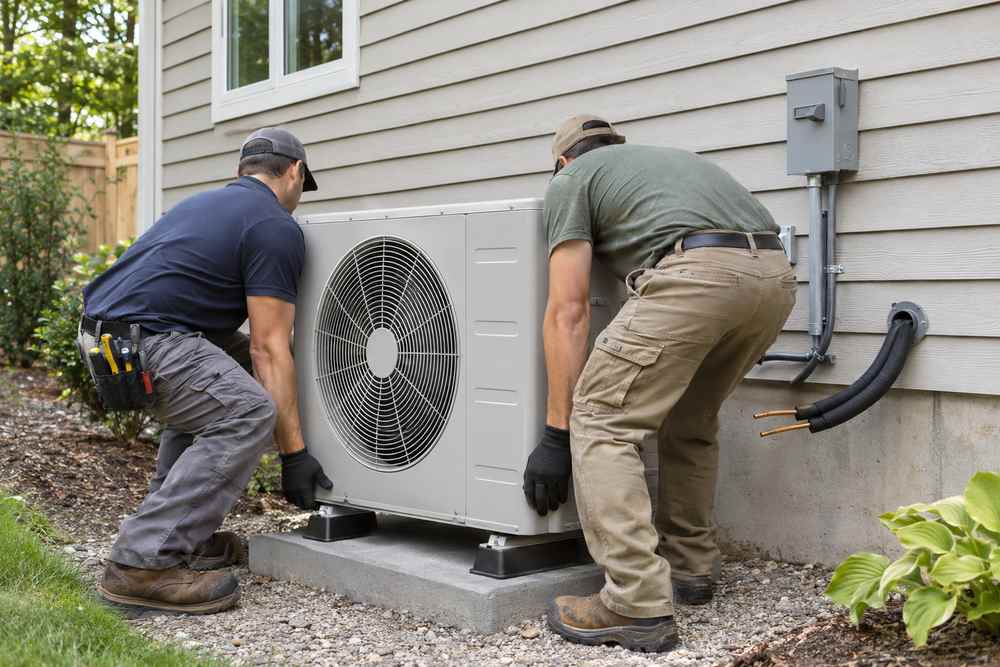
The main federal homeowner credit, the Energy Efficient Home Improvement Credit (IRC 25C), covers 30 percent of qualified costs up to $1,200 a year for most improvements, plus a separate $2,000 a year for heat pumps and heat-pump water heaters, filed on Form 5695 in the year the work is installed. It is nonrefundable and has no lifetime dollar cap, and on the IRS guidance current as of this writing the credit applies to qualifying property placed in service before December 31, 2025, so you should confirm whether it still applies for the year you act.
This is tax law, so the energy efficiency tax credits for homeowners described below are each anchored to the IRS page on the credit. The comparison tables the categories you can claim, who qualifies, and how to file it, then walks realistic examples and the mistakes that lose the credit. If you want the upgrade list first, the best home energy efficiency improvements guide ranks the projects this credit can help pay for.
The home energy efficiency tax credits for homeowners, and which to claim
You can claim the Energy Efficient Home Improvement Credit (25C) at 30 percent of qualified expenses, capped at $1,200 a year with a separate $2,000 for heat pumps and heat-pump water heaters; the Residential Clean Energy Credit (25D) is the separate credit for solar and other clean-energy systems. A homeowner claiming elective energy equipment can take both credits in the same year, subject to each one’s limits, if both qualify.
The 25C credit is nonrefundable, so you cannot get back more than you owe in tax, and it has no lifetime limit.
You can claim it every year you complete qualifying work while it is in effect, but the IRS states it is for qualifying property placed in service on or after January 1, 2023 and before December 31, 2025, and that from 2025 a qualified-manufacturer identifier is required for most items, which is why checking the current IRS page before you buy is the first step.
Energy efficiency tax credits compared by category
The credit breaks into items with set caps: insulation and air sealing fall under the $1,200 total, windows and skylights cap at $600, exterior doors at $250 per door up to $500 a year, a home energy audit at $150, and heat pumps, heat-pump water heaters, and qualified biomass at $2,000 a year. The table below keeps the numbers straight.
| Improvement | Credit % | Cap | Key rule |
|---|---|---|---|
| Insulation and air sealing | 30% | Under the $1,200 total | Must meet IECC standard for your year; no item cap |
| Exterior windows and skylights | 30% | $600 | ENERGY STAR Most Efficient certified |
| Exterior doors | 30% | $250 per door, $500/yr | ENERGY STAR certified |
| Home energy audit | 30% | $150 | Must be a qualified home energy auditor |
| Heat pumps / heat-pump water heaters | 30% | $2,000/yr | Highest-efficiency tier; labor may qualify |
| Air conditioner / furnace / water heater | 30% | $600 per item | Subject to $1,200 total; residential energy property |
Read the cap column as your anchor, and repeat these from the current IRS page if they drift after this is written, because tax limits can change. A single year’s total for the non-heat-pump items is $1,200, then the heat-pump line can add $2,000 more for a combined $3,200, which matches the up-to-$3,200 figure the IRS cites.
Who qualifies and what counts
You qualify if the home is your main US residence, it is an existing home you improve rather than a new construction, you are not a landlord using it for rental, and the items meet the credit’s efficiency standards. Labor counts for some items but not the building envelope, so the eligibility rules matter as much as the cap.
The IRS requires a home you live in most of the year, located in the United States, and not newly built. A landlord or a property owner who does not live there cannot claim it, and a home used more than 20 percent for business prorates the credit. Envelope components must meet the IECC standard in effect two years before installation, and labor to install doors, windows, and insulation does not qualify, whereas labor for a heat pump or heat-pump water heater typically does. This is why the same window purchase can qualify on the window but leave the install labor out of the credit.
Realistic homeowner examples
The credit works as a tax-return amount, not a counter discount, so it takes a 30 percent slice of qualified costs up to each cap. A heat-pump water heater bought and installed for $4,500 would use the $2,000 heat-pump cap; a window-plus-insulation year can stack several line items up to the $1,200 total.
- Heat-pump water heater, $4,500 installed: 30% of cost applies but is capped at $2,000, so the credit is $2,000 for that item.
- Windows $2,000 plus insulation $1,500, same year: windows cap at $600 and insulation sits under the $1,200 total, potentially using most of the annual $1,200 across both.
- Home energy audit, $200: the 30% credit caps at $150, leaving $50 uncapped.
Work through your own numbers the same way, the highest qualifying line items first.
Remember the credit is nonrefundable, so the amount you can actually use is bounded by the tax you owe, which makes it most useful in a year you owe enough tax for the full slice to offset.
Common mistakes to avoid
The most common mistakes are claiming on a new build or rental, including envelope labor that does not qualify, filing in the wrong tax year, and assuming a fixed figure is still current. Each costs part or all of the credit until you correct it.
- Claiming on a new home or a rental when the credit is for an existing, primary US residence.
- Counting envelope install labor, which is not a qualified expense for doors, windows, and insulation.
- Filing the wrong year, the credit is claimed in the year the property is installed, not purchased.
- Assuming the limits still apply, confirm the current IRS availability and caps before you spend.
- Missing the documentation, keep the receipts and, from 2025, the qualified-manufacturer identifier for most items.
None of these fail on their own, but each is easy to trip on late in the season.
Review the current IRS page before you buy and keep the receipts in one place, so the paperwork is ready at filing.

Claiming the credit, and what to do next
To claim the Energy Efficient Home Improvement Credit, file Form 5695 Part II with your federal tax return in the year the work is installed, and keep the receipts and any required manufacturer identifier. Check the current IRS guidance first, because the availability and limits can change for the year you act.
- Confirm current rules on the IRS credit page for the year of your project.
- Buy qualifying items that meet the efficiency standards, and keep itemized receipts.
- Collect the manufacturer identifier where it is now required for the item.
- File Form 5695 Part II in the tax year the property is placed in service.
- Keep the credit within the tax you owe, since it is nonrefundable.
For the projects the credit can help finance, the best home energy efficiency improvements page ranks the highest-return upgrades, so you can pair the work with the credit in one plan. Confirm the current IRS limits, then buy and file.
Questions homeowners ask about energy tax credits
Who qualifies for a home energy tax credit?
You qualify if the home is your main residence in the United States, it is an existing home you improve rather than a new build, and you are not a landlord. The Energy Efficient Home Improvement Credit is the one most homeowners use, at 30 percent of qualifying costs up to the annual caps.
Will there be energy efficiency tax credits in 2026?
On the IRS page current at the time this is written, the Energy Efficient Home Improvement Credit applies to qualifying property placed in service before December 31, 2025, so you should confirm whether it still applies for the year you act. Check the current IRS guidance before you spend.
Can I deduct the cost of a new furnace on my taxes?
A qualifying high-efficiency furnace is claimed as a tax credit, not a deduction, under the residential energy property item capped at $600 within the $1,200 annual limit. It appears on Form 5695 in the year the furnace is installed.
Do heat pumps qualify for the credit?
Yes, a qualified heat pump or heat-pump water heater meets the higher efficiency tier and qualifies for a separate credit of up to $2,000 a year, with labor typically included. This sits on top of the $1,200 cap for other items, for a combined up to $3,200, per the IRS 25C credit page.
What is the $6,000 tax break?
There is no current $6,000 federal homeowner amount in the 25C credit; the headline figure is the up-to-$3,200 combination. A larger figure usually refers to a state or rebate program, not the federal 25C credit, so check the specific source before planning around it.
The credit that cuts the upgrade bill
Plan the credit around the item, confirm the current IRS limit, buy the qualifying equipment, and file Form 5695 in the install year, because the credit lands on the return rather than at the counter.
Start with the current IRS page to lock the year’s numbers, then stack the highest-return qualifying improvements and keep the receipts and identifier together.
A credit you document and file correctly turns part of an energy upgrade into money back at tax time.
