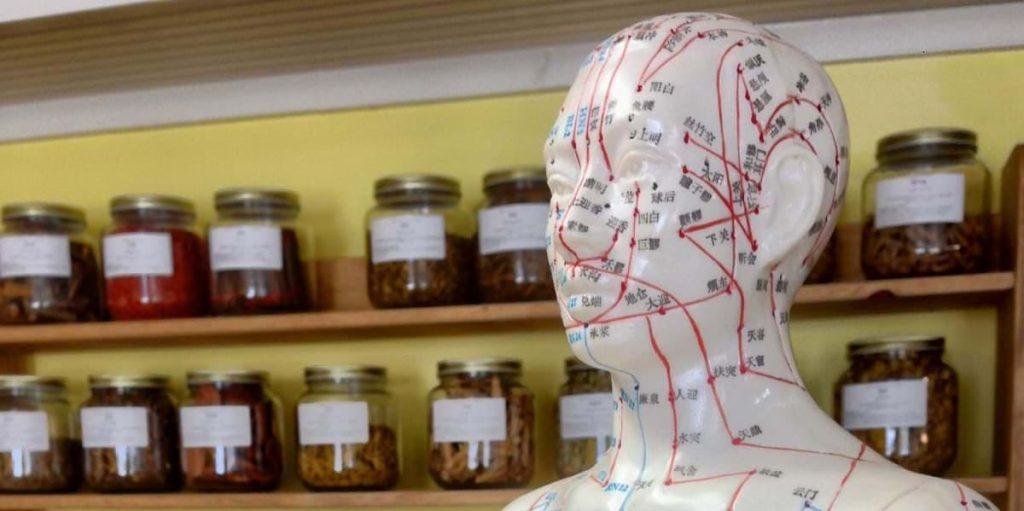
Stress rarely appears as one clear symptom. It can show up as tight shoulders, brain fog, or a racing mind at night. Traditional Chinese medicine (TCM) views these concerns as connected, rather than treating them in isolation.
Chinese herbal medicine uses personalised formulas based on factors such as sleep, digestion, energy, and emotional wellbeing. Below are six traditional formulas, each associated with a different pattern of imbalance.
- Sleep quality: whether rest feels restorative or restless
- Digestion: appetite, energy after eating, and gut comfort
- Emotional wellbeing: stress levels, mood, and mental clarity
- Physical vitality: stamina, warmth, and overall resilience
Xiao Yao San
The name gives away the intent: loosening what feels stuck. First recorded in the Song dynasty’s official medical text, the Taiping Huimin Heji Ju Fang, it’s built on the theory that prolonged stress constrains the smooth flow of Liver Qi, showing up as irritability, a tight chest, or digestive upset that flares under pressure. Bupleurum and dong quai are its two defining herbs, traditionally paired to ease that constraint and steady both mood and digestion through demanding stretches.
Suan Zao Ren Tang
Named for its main ingredient, sour jujube seed, this formula targets a specific pattern: tired but wired, lying awake with a racing mind despite genuine exhaustion. It dates back roughly 1,800 years to the Jin Gui Yao Lue, one of the foundational texts of Chinese medicine. It is traditionally framed as nourishing Heart and Liver Blood, addressing the root of restlessness rather than just the wakefulness itself.
Yin Qiao San
When a sore throat or fever starts to build, this is often the first formula reached for. Its two lead herbs, honeysuckle (jin yin hua) and forsythia (lian qiao), give the formula its name and its purpose: dispersing what TCM calls “Wind-Heat” before it settles in deeper. It’s meant as an early-intervention formula, taken at the first sign of symptoms rather than once an illness has fully set in, which is a large part of why it’s remained a household staple across generations.
Gui Pi Tang
The name translates roughly to “restore the spleen decoction,” aimed at a specific kind of exhaustion: mentally foggy, physically depleted, struggling to concentrate or digest well after a long stretch of overwork or worry. Ginseng and longan fruit are among its core ingredients, traditionally used to rebuild depleted energy. It’s also frequently linked to sleep quality, since a depleted Spleen and Heart are seen as contributing to both poor concentration and poor rest.
You Gui Wan and Zuo Gui Wan
These two are usually mentioned together because they approach the same territory: the body’s foundational energy, or “Kidney Jing” from opposite directions. Both were developed by the Ming dynasty physician Zhang Jingyue as a matched pair. You Gui Wan runs warming, aimed at low stamina and cold-leaning fatigue. Zuo Gui Wan runs more nourishing and cooling, used where depletion shows up alongside signs of heat or dryness. Both remain longstanding reference points in conversations around low energy, reduced resilience, and fertility support within TCM practice.
Why the Same Symptom Gets a Different Formula
This is the most important thing to understand about Chinese herbal medicine: it isn’t a symptom-matching exercise. Take two people who both report fatigue. One sleeps well but can’t focus and has a poor appetite, a pattern pointing toward Spleen deficiency and possibly Gui Pi Tang. The other sleeps poorly, runs cold, and feels drained in the lower back, a pattern pointing toward Kidney depletion, and possibly You Gui Wan: same complaint, different root, different formula.
Across the six formulas above, a few common concerns tend to come up again and again:
- Ongoing stress or emotional strain affecting mood, digestion, or sleep
- Poor-quality or disrupted sleep, even when the person feels physically tired
- Low stamina or slow recovery after illness, overwork, or prolonged stress
- Recurrent seasonal illness, such as frequent colds or sore throats
Herbal medicine is also rarely used in isolation. It’s commonly discussed alongside Acupuncture treatment, with the two therapies working from the same underlying theory of Qi and balance, even though their methods differ.
Final Thoughts
Whether it’s Xiao Yao San easing the strain of a demanding week, Suan Zao Ren Tang settling a restless mind at night, or the vitality-focused pairing of You Gui Wan and Zuo Gui Wan, each of these formulas reflects the same underlying principle: real wellbeing comes from treating the whole person, not just the symptom in front of you. No two prescriptions look the same, because no two people carry stress, fatigue, or imbalance in quite the same way.
If any of these patterns sound familiar, the next step isn’t to self-diagnose from a formula name online; it’s to speak with a qualified TCM practitioner who can assess your full picture and recommend an approach suited to you. Village Remedies offers both Chinese herbal medicine and acupuncture consultations for those ready to explore a more traditional, personalised route to feeling better.
Ready to get started? Contact us today to book your consultation.
