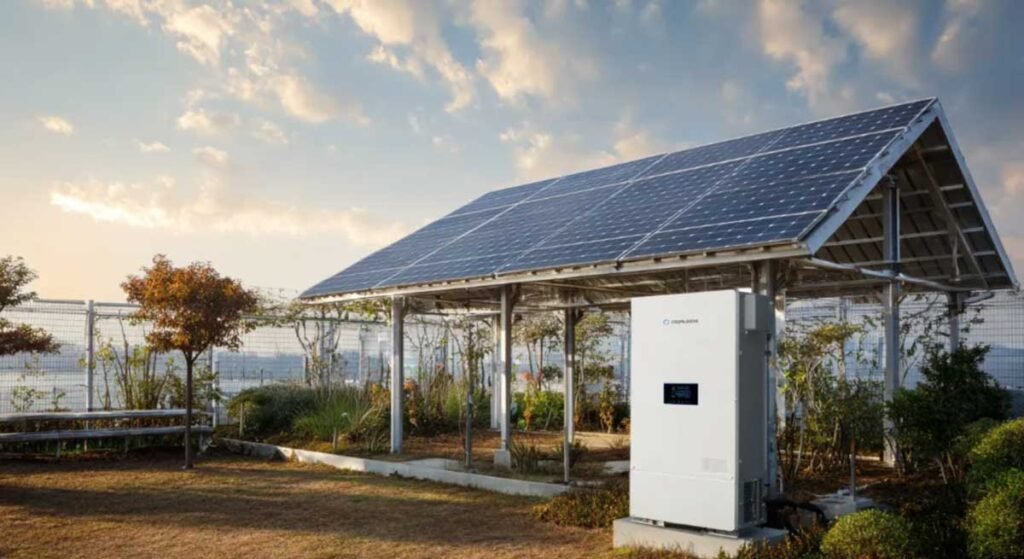
A solar system does more than generate electricity from sunlight. It also needs to convert, manage and monitor that electricity efficiently to maximise the value of the installation. This is where inverter technology becomes important.
A smart solar inverter combines electricity conversion with monitoring, protection and energy management features. Depending on the system configuration, it can track solar generation, optimise energy harvesting, manage battery storage and provide information about system performance.
Understanding these capabilities can help homeowners and businesses assess how inverter technology can contribute to energy generation, system efficiency and long-term return on investment.
What is a Smart Solar Inverter?
A smart solar inverter is an advanced inverter that combines the core function of converting DC electricity from solar panels into AC electricity with digital monitoring and control capabilities.
Depending on the model, smart features can include:
- Real-time energy monitoring
- MPPT-based solar optimisation
- Remote system monitoring
- Fault and performance alerts
- Battery management
- Grid interaction
- Energy consumption tracking
These functions allow users to understand how their solar system is performing and identify potential issues more quickly.
How Does a Smart Inverter Improve Solar Energy Generation?
Solar panel output changes throughout the day because sunlight intensity, temperature and shading conditions vary. An intelligent inverter can respond to these changing conditions to make better use of available solar energy.
MPPT Optimisation
Maximum Power Point Tracking (MPPT) allows the inverter to identify the operating point at which the solar array can produce its available power effectively.
This can help optimise energy generation when sunlight conditions change.
Multiple MPPT Inputs
Some inverters have multiple MPPT inputs. These can be useful when panels are installed across different roof orientations or experience different shading conditions.
Instead of treating the entire array as one uniform group, separate MPPTs can manage different sections according to their operating conditions.
How Does Monitoring Improve System Performance?
A smart solar inverter can provide access to information about solar generation and system operation through an integrated display, monitoring platform or mobile application.
Users may be able to monitor:
- Daily solar generation
- Historical energy production
- Inverter status
- Energy consumption
- Battery charge level
- Fault notifications
Regularly reviewing this information can help identify unusual changes in generation. For example, a sudden decline in output could indicate shading, soiling, an inverter issue or another system-related problem.
Early identification can help reduce prolonged performance losses.
How Can Smart Features Improve System ROI?
The return on investment from a solar system depends on factors such as installation cost, electricity consumption, solar generation, tariffs and system lifespan.
A smart solar inverter can support better ROI indirectly by helping the system operate efficiently and allowing users to understand how their solar investment is performing.
Potential benefits include:
- Better monitoring of energy generation
- Faster identification of performance issues
- Improved solar energy utilisation
- More informed maintenance decisions
- Better management of battery-stored energy
However, smart features do not automatically guarantee a specific financial return. ROI still depends on the complete solar system and local electricity conditions.
Can a Smart Inverter Help Manage Battery Storage?
Hybrid smart inverters can combine solar generation, battery storage and grid electricity management.
During periods of high solar generation, excess electricity can be directed towards battery charging, depending on the system configuration. Stored energy can then be used when solar generation is lower.
A smart solar inverter with battery management capabilities can help coordinate:
Solar generation → Household loads → Battery storage → Grid
The actual operating sequence depends on the inverter’s design, battery settings and applicable system configuration.
How Does Remote Monitoring Help?
Remote monitoring can make it easier to assess solar system performance without physically inspecting the inverter every day.
Depending on the system, users may receive information about:
- Energy generation
- System status
- Fault conditions
- Historical performance
- Battery operation
This can be particularly useful for larger residential, commercial or distributed solar installations where continuous physical monitoring is less practical.
What Smart Inverter Features Should You Compare?
Not every inverter with digital monitoring offers the same capabilities. When comparing options, look at the features that directly relate to your system requirements.
| Feature | How It Can Help |
| MPPT Technology | Helps optimise solar energy extraction |
| Multiple MPPTs | Allows different solar array sections to be managed independently |
| Remote Monitoring | Provides access to generation and system information |
| Fault Alerts | Helps identify potential problems sooner |
| Battery Compatibility | Supports energy storage in compatible systems |
| Grid Monitoring | Helps manage grid-connected operation |
| Performance Data | Helps users track generation over time |
The most useful features depend on the solar system’s size, configuration and operating requirements.
Is a Smart Solar Inverter Worth Considering?
A smart solar inverter can add value by combining efficient energy conversion with monitoring, protection and energy management capabilities. These features can make it easier to understand system performance and respond to potential issues.
However, the inverter should be evaluated as part of the complete solar system. Panel efficiency, system sizing, roof conditions, battery requirements and installation quality also influence overall energy generation and financial returns.
Solar solution providers like Eastman Auto & Power Limited provide smart solar inverter solutions for different energy requirements and system configurations. By combining suitable inverter technology with correctly sized solar panels and appropriate system design, users can build a solar installation designed for efficient energy generation and long-term performance.
