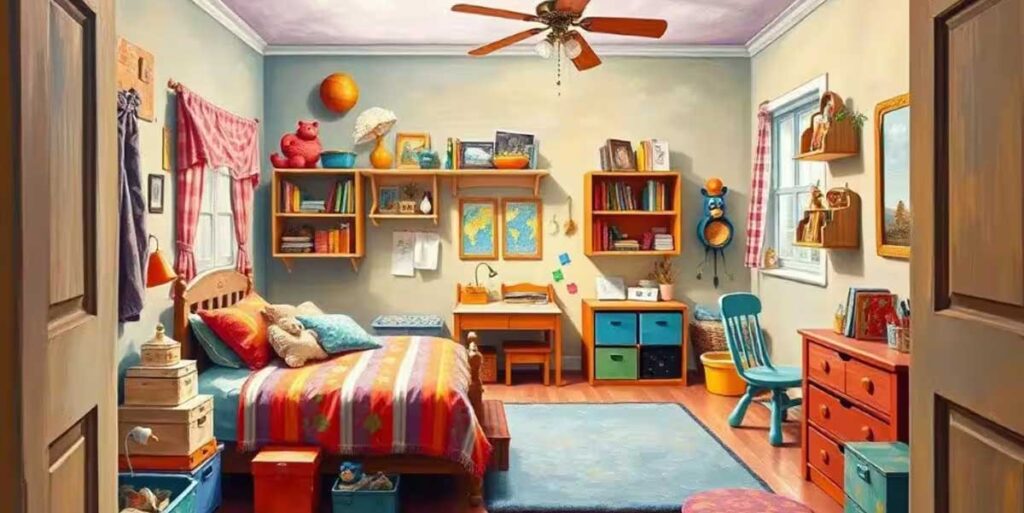
Decorating a child’s bedroom works best when the big, costly parts can stay for years and the small, cheap parts can change whenever a new interest comes along. Children’s tastes change quickly, and a room planned around a single theme can need redoing within a couple of years. Walls, flooring and main furniture carry most of the expense, so they need to suit a toddler and still look reasonable when that child is ten. Colour, bedding, posters and displays can then follow the child’s interests without a full redecoration.
Start With a Neutral Base
Paint the walls and choose larger furniture in soft whites, greys, warm beiges or gentle pastels, then let colour come from items that are easy to swap, such as cushions, rugs, lampshades and artwork. A child who loves dinosaurs this year may prefer football or horses by the next, and a neutral room lets that change happen through a new duvet cover and a few prints instead of a weekend with the paint roller. Wooden and white furniture ages well because it goes with almost any scheme.
Making the Room Feel Like Theirs Quickly
Giving the child a say in a few small choices makes a room feel personal far faster than any amount of careful styling. Foster carers often put part of the fostering allowance towards bedding or a poster that a new arrival picks for themselves, so the space can feel like theirs from the first night, and the same approach can suit any child moving into a new room or taking over a sibling’s old one.
Offer two or three duvet covers and let the child pick one, ask which wall should hold their own drawings, or let them decide where their favourite toys and books go, because small choices count as much as big ones to a child who’s still getting used to the space. Those decisions cost very little and give the child a reason to look after the space, since they can see their own taste in it. A new arrival or a child switching rooms can settle in sooner with a few quick personal touches than by waiting weeks for a finished scheme.
Furniture and Storage That Adapt
Open shelving and baskets cope with toys at five and books and hobbies at twelve, while a pegboard wall for displaying favourite items can be rearranged whenever interests change. Where space allows, a pull-out or fold-down desk can sit unused for years and then become the homework spot, and storage under the bed or up on the walls keeps the floor clear for play.
Keep the decisions that are costly to reverse plain and the ones that are cheap to change playful, and ask the child before buying anything with a character on it. A yearly look at the room, with a new duvet, rearranged shelves and a fresh set of prints, is usually all it needs to stay in step with the child, and it gives them a regular chance to say what they’d like changed.
