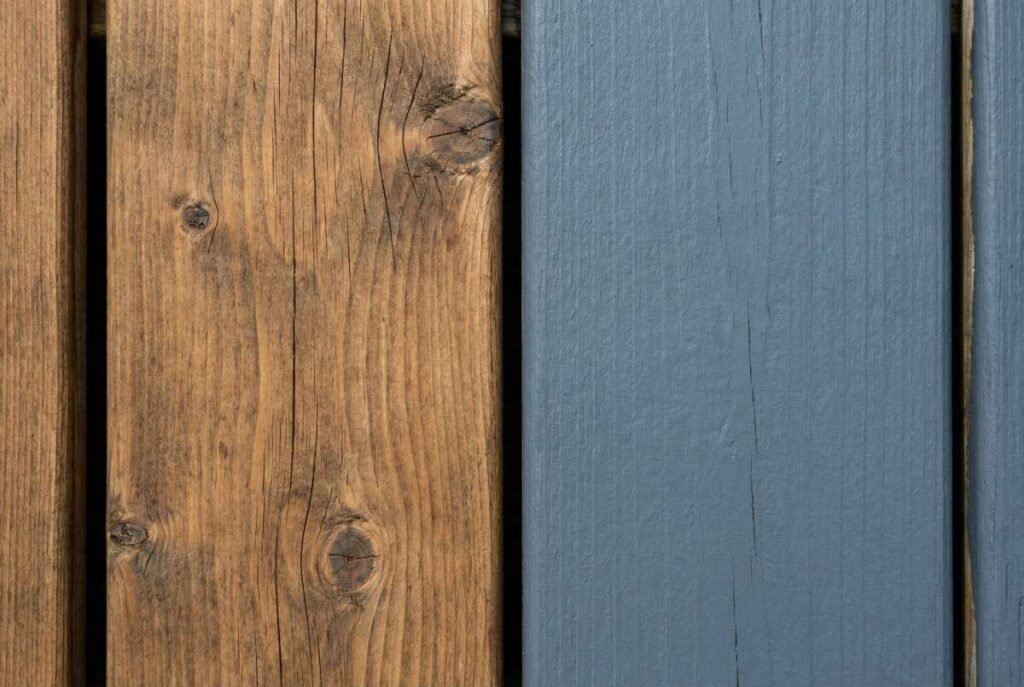
Deciding between deck stain and deck paint involves evaluating the desired aesthetic, level of protection, and maintenance commitment for your outdoor living area, as each option offers distinct advantages and disadvantages regarding durability, appearance, and application complexity.
Understanding Deck Stain: Enhancing Natural Beauty
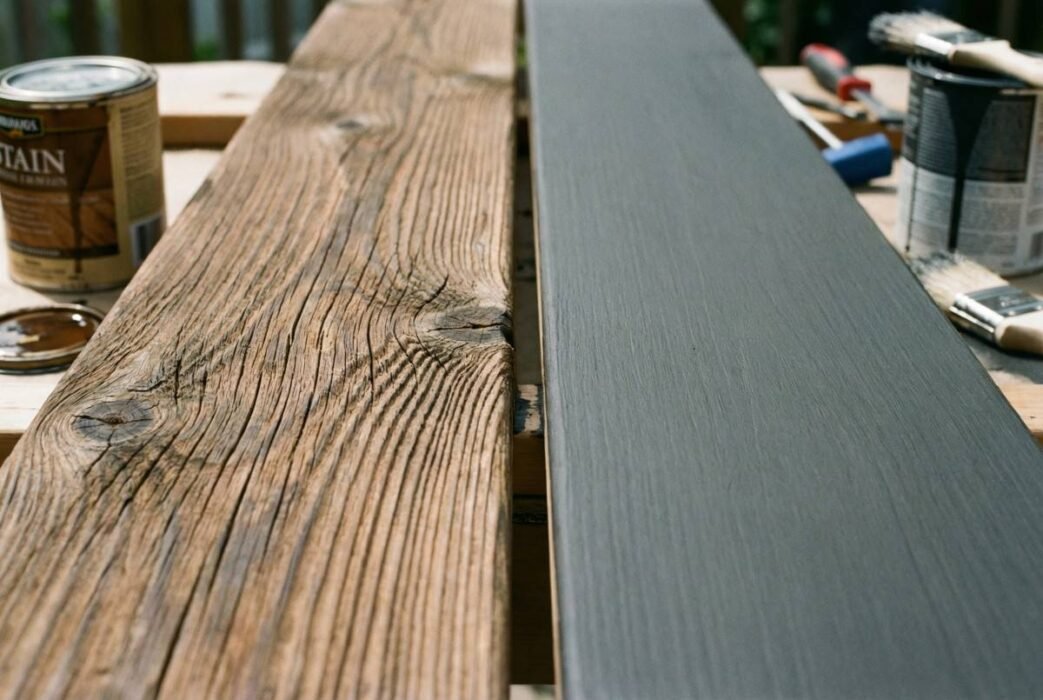
Deck stain penetrates the wood fibers, providing protection while allowing the natural grain and texture of the timber to remain visible, which is ideal for homeowners who prefer a more organic and rustic appearance for their outdoor surfaces.
Deck stain offers a natural look by soaking into the wood rather than forming a layer on top. This enhances the wood’s inherent beauty and provides UV protection, preventing graying and weathering. According to Bob Vila (2020), stain is generally more budget-friendly than exterior paint suitable for decking. Stains are available in various opacities, from clear to solid, allowing for different levels of wood grain visibility. They are also less prone to peeling and chipping compared to paint, as they flex with the wood’s natural expansion and contraction.
Understanding Deck Paint: Durable Coverage and Color
Deck paint forms an opaque, protective layer on the surface of the wood, effectively concealing the natural grain and offering a uniform color finish that can significantly transform the appearance of an older or weathered deck while providing robust defense against elements.
Paint provides a solid, uniform color that can cover imperfections and offer a fresh, new look. It creates a thicker barrier against moisture and wear, potentially offering superior protection in high-traffic areas. However, paint is more susceptible to peeling, cracking, and chipping, especially in areas with significant temperature fluctuations or heavy foot traffic. The Spruce (2024) warns that painted decks can retain moisture and become slippery, requiring more frequent maintenance to address these issues.
Key Differences and Considerations
When choosing between deck stain and deck paint, key factors such as longevity, maintenance requirements, aesthetic preferences, and surface preparation needs should be carefully weighed to ensure the best outcome for your specific deck and climate conditions.
| Feature | Deck Stain | Deck Paint |
|---|---|---|
| Appearance | Enhances natural wood grain, translucent to semi-opaque | Opaque, uniform color, hides wood grain |
| Durability | Penetrates wood, less prone to peeling/chipping | Forms a surface film, prone to peeling/cracking |
| Maintenance | Easier reapplication, typically every 2-5 years | More intensive prep for reapplication, typically every 3-7 years |
| Protection | Good UV and moisture resistance | Excellent UV and moisture resistance, thicker barrier |
| Application | Easier, less surface prep for reapplication | More rigorous surface prep, multiple coats often needed |
| Cost | Generally less expensive per gallon | Generally more expensive per gallon |
Application and Maintenance Tips
Proper application and consistent maintenance are crucial for maximizing the lifespan and aesthetic appeal of both deck stain and deck paint, requiring thorough cleaning, appropriate surface preparation, and timely reapplication to prevent premature wear and damage.
For Deck Stain:
- Clean the Deck: Remove all dirt, mildew, and old finishes using a deck cleaner and a power washer.
- Sand if Necessary: Lightly sand rough areas to ensure smooth application and better absorption.
- Apply Stain: Use a brush, roller, or sprayer, applying in thin, even coats along the grain.
- Allow to Dry: Follow manufacturer guidelines for drying times between coats and before use.
- Regular Cleaning: Clean annually with a mild detergent and reapply stain every 2-5 years as needed.
For Deck Paint:
- Thorough Cleaning: Deep clean the deck, removing all loose paint, dirt, and mildew.
- Repair and Sand: Fill any cracks or holes, then sand the entire surface to create a smooth, adhesive base.
- Prime the Surface: Apply a high-quality exterior primer suitable for decks to ensure paint adhesion.
- Apply Paint: Apply two thin coats of deck paint, allowing adequate drying time between coats.
- Inspect and Touch Up: Regularly inspect for chips or peels and address them promptly to prevent further damage.
Frequently Asked Questions
How long does deck stain last compared to deck paint?
Deck stain typically lasts between 2 to 5 years, depending on the type of stain and environmental exposure. Deck paint, due to its thicker film, can last longer, often between 3 to 7 years, but it is more prone to visible peeling and chipping over time.
Is surface preparation different for deck stain and deck paint?
Yes, while both require a clean surface, deck paint generally demands more rigorous preparation, including thorough sanding and priming, to ensure proper adhesion and prevent premature failure. Stain preparation focuses more on cleanliness and ensuring the wood can absorb the product.
Which is more cost-effective: deck stain or deck paint?
Initially, deck stain is often more cost-effective per gallon. However, considering the longer lifespan of paint and potentially less frequent full reapplication, the long-term cost can vary. Stain reapplication is generally less labor-intensive, which can save on labor costs.
Does deck paint make the deck more slippery than stain?
Yes, deck paint can make the surface more slippery, especially when wet, due to its smooth, film-forming nature. Some deck paints include anti-slip additives, but stains generally maintain more of the wood’s natural texture, offering better traction.
Can I switch from deck paint to deck stain, or vice versa?
Switching from stain to paint is generally easier, requiring thorough cleaning and priming. Switching from paint to stain is more challenging, as all existing paint must be completely removed through stripping and sanding to allow the stain to penetrate the wood effectively.
The decision of how to choose deck stain vs deck paint ultimately depends on your priorities for appearance, protection, and maintenance. By carefully considering the characteristics of each product and the specific needs of your deck, homeowners can make an informed choice that ensures lasting beauty and durability for their outdoor living space.
References
- Bob Vila (2020). What’s the Difference? Painting vs. Staining the Deck.
