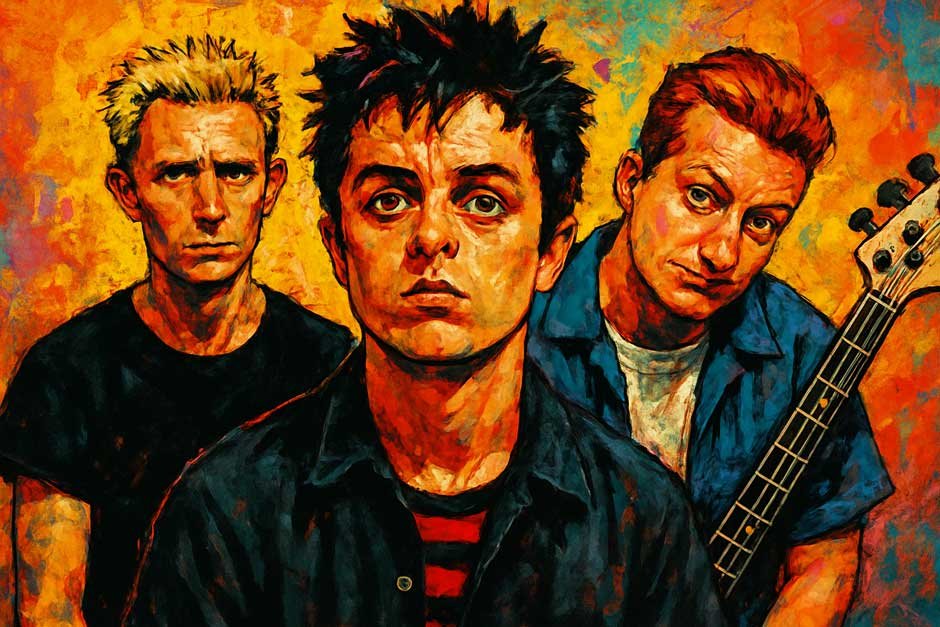
When Green Day released their third studio album, **Dookie**, in 1994, the music world was still reeling from the grunge explosion.
Yet, this record, with its bright, fast, and undeniably catchy sound, offered a sharp, energetic contrast to the prevailing mood of heavy introspection.
It wasn’t just an album; it was a cultural flashpoint that redefined the landscape of punk rock and brought the genre screaming into the mainstream.
The success of **Dookie** was a direct result of its raw, youthful energy and its surprisingly polished, hook-laden songwriting.
The Sound of Teenage Angst and Boredom
The lyrical themes on **Dookie** perfectly captured the malaise and boredom of the mid-90s youth, giving voice to feelings that were often dismissed.
Billie Joe Armstrong’s writing was intensely personal, exploring topics like personal anxieties, masturbation, bisexuality, and the general feeling of being lost and unmotivated.
This honesty, delivered with a sneer and a wink, resonated with millions of listeners who felt similarly isolated in their suburban lives.
Tracks like “Longview” and “Basket Case” became instant anthems for a generation struggling with identity and a pervasive lack of direction.
“Basket Case”: Anxiety as a Pop Hook
“Basket Case,” arguably the **Dookie** album’s most recognizable hit, took the serious topic of anxiety and panic attacks and turned it into a catchy, three-minute pop song.
The song’s frantic, nervous energy and relatable lyrics about feeling crazy resonated deeply with listeners who felt misunderstood.
It was a brilliant demonstration of Armstrong’s ability to couch profound emotional turmoil in deceptively simple, energetic punk rock structures.
From Underground Roots to Global Stardom
Green Day’s journey from the underground 924 Gilman Street club in Berkeley to a major label was a move that sparked immediate controversy among punk purists.
The band was accused of “selling out” by their former peers, but the move to Reprise Records and the collaboration with producer Rob Cavallo proved crucial.
Cavallo helped polish the band’s sound, allowing their infectious melodies to shine without sacrificing the raw aggression of their punk roots.
This transition, while criticized by some, was essential for the **Dookie** album to reach the millions of disaffected youth who desperately needed its message.
Musical Simplicity and Pop Sensibility
Musically, **Dookie** is a masterclass in economy and efficiency. The songs are short, fast, and built on simple, powerful chord progressions that stick in your head.
The album stripped away the complex, often meandering nature of grunge, offering a direct, energetic alternative that was both aggressive and undeniably catchy.
This perfect blend of punk speed and pop structure is what cemented Green Day as the popularizers of the “pop-punk” genre, setting a new standard for the sound.
Every track, from the breakneck opener “Burnout” to the mid-tempo smash “When I Come Around,” feels perfectly placed and instantly memorable.
An Unforgettable Impact and Lasting Influence
The **Dookie** album has sold over 20 million copies worldwide, making it one of the best-selling albums of all time and a commercial behemoth.
Its influence can be heard in countless bands that followed, from Blink-182 to Fall Out Boy, establishing a clear blueprint for mainstream punk success that endures today.
More than just sales figures, the album provided a voice for the marginalized and bored, proving that even the most “pathetic” feelings could be turned into powerful, chart-topping art.
Thirty years later, **Dookie** remains a timeless document of youthful frustration, a loud, fast, and funny soundtrack to growing up and figuring things out.
