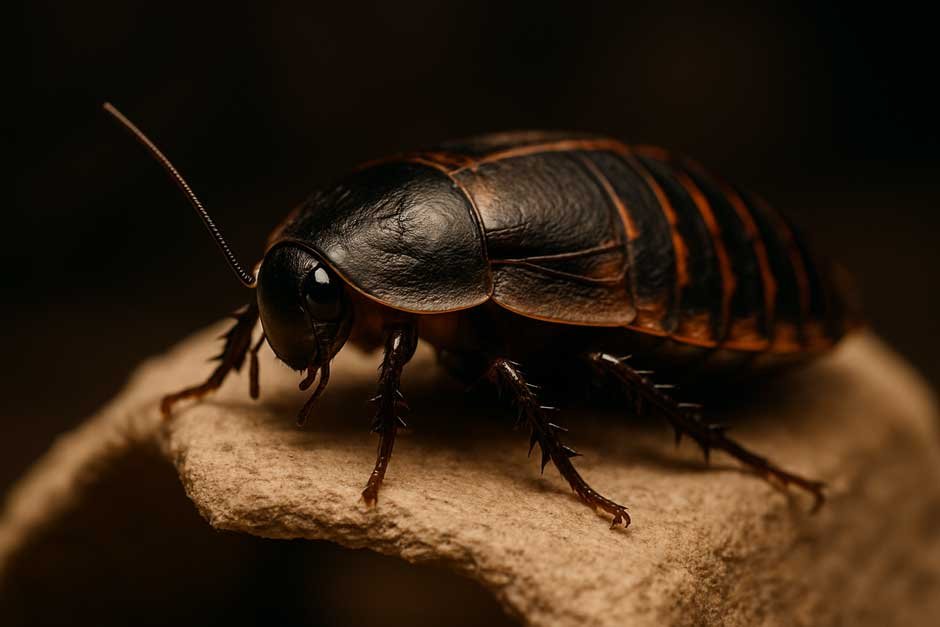
Introduction to the Dubia Cockroach (*Blaptica dubia*)
Scientific Background and Common Names
The Dubia Cockroach, or Blaptica dubia, is a fascinating species native to Central and South America. It has quickly become the go-to choice in the exotic pet community, prized as a highly nutritious feeder insect.
Beyond its scientific designation, this insect is also commonly referred to as the orange-spotted roach, the Guyana spotted roach, or the Argentinian wood roach. These names reflect its appearance and geographical origins.
Unlike many of its notorious relatives, the Dubia roach is not considered a household pest. It lacks the ability to climb smooth surfaces, fly effectively, or infest homes in temperate climates, making it a manageable captive species for keepers.
Physical Characteristics and Sexual Dimorphism
*Blaptica dubia* is a medium-sized cockroach, typically growing to a length of about 1.6 to 1.8 inches. Its coloration is generally dark brown to black, often featuring subtle orange spotting along its body segments.
The species exhibits clear sexual dimorphism, a key characteristic for those who keep or breed them. Adult males possess full wings that cover their entire body, though they rarely use them for sustained flight.
In contrast, adult females have only small wing stubs, or tegmina, that cover a fraction of their body. This difference in wing structure makes distinguishing between the sexes quite straightforward for keepers.
The Superior Feeder: Why Choose Dubia Cockroaches?
Nutritional Powerhouse: Protein and Fat Content
The reason for the Dubia Cockroach’s soaring popularity is simple: its exceptional nutritional profile. Many experienced keepers now regard it as the single best feeder insect for reptiles, amphibians, and tarantulas.
These roaches boast a high protein content and a relatively low-fat composition, which is ideal for the long-term health of exotic pets. This balance helps prevent issues associated with high-fat diets and obesity.
Furthermore, their soft exoskeletons are easier for many animals to digest compared to the hard shells of other common feeders like crickets. This ease of digestion ensures that pets can absorb the maximum amount of nutrients.
Ease of Handling and Maintenance
Perhaps the most appealing feature of the Dubia roach is its docile nature and the sheer ease of containment. They are slow-moving, cannot jump, and this simplifies the feeding process for even the newest keeper.
Crucially, they are unable to climb smooth surfaces, meaning a simple plastic or glass enclosure with smooth sides is sufficient to keep them contained. This eliminates the need for messy petroleum jelly barriers or complicated setups.
They are also quiet, unlike crickets, and produce very little odor when their enclosure is kept clean. These factors contribute to a much more pleasant and low-maintenance experience for the keeper.
Creating the Ideal Habitat
Enclosure Requirements and Setup
A suitable habitat for Dubia roaches must prioritize smooth walls and adequate ventilation. A 10-gallon glass aquarium or a 40-quart plastic tub is a common starting point for a colony.
The enclosure should be covered to prevent pests from entering, but a large section of the lid must be cut out and replaced with vinyl mesh to ensure proper airflow. This is vital for the roaches’ health and to prevent mold.
Inside the enclosure, vertically stacked cardboard egg crate flats are the preferred method for providing hiding places and maximizing surface area. Stacking them vertically allows droppings, or frass, to fall to the bottom.
Temperature and Humidity Essentials
While Dubia roaches can survive at room temperature, they require a consistent ambient temperature of 90–95°F (32–35°C) to successfully breed and thrive. Temperatures below 68°F (20°C) will halt reproduction.
Heat can be supplied using a ceramic heat emitter placed above the enclosure or an under-tank heater (UTH) attached to the side or bottom. A thermostat should always be used to regulate the temperature and prevent overheating.
Humidity is less critical than for some other tropical species, with a range of 40–60% being acceptable. Providing high-moisture foods is often enough to maintain the necessary humidity levels without the need for misting.
Diet and Hydration for Optimal Health
Recommended Foods and What to Avoid
A healthy diet for Dubia roaches translates directly into a healthier meal for the pet that consumes them. They are omnivores and will readily eat a variety of dry and fresh foods.
Recommended foods include commercial roach chow, powdered grains, and a wide selection of organic fruits and vegetables. Orange vegetables and fruits are particularly beneficial as they contain carotenoids.
It is essential to avoid high-protein foods such as dog or cat kibble and meat. Dubia roaches convert excess protein into uric acid, which can be harmful to reptiles when consumed in large quantities.
Safe Water Sources: The Role of Water Crystals
The safest and most effective way to provide water to a Dubia colony is through the use of water crystals. These polymer-based materials hold water in a gel form, preventing the roaches from drowning.
Water crystals should be placed in a shallow dish separate from the food dish. This separation is important to prevent the food from becoming wet and developing mold, which is lethal to a roach colony.
While fresh fruits and vegetables also contribute to hydration, water crystals ensure a constant and safe supply of moisture, which is especially important in warmer breeding environments.
Maintaining a Thriving Colony
Cleaning and Frass Management
Dubia roaches produce dry droppings known as “frass.” Their enclosure should be cleaned every one to two weeks to prevent the buildup of frass and shed exoskeletons.
Frass is a valuable byproduct, often used as a fertilizer, but its accumulation in the enclosure can lead to unsanitary conditions. Keepers typically transfer the roaches and egg crates to a temporary container while cleaning.
The frass and debris at the bottom of the main enclosure can then be sifted out. Maintaining a clean, dry environment is the best defense against mold and bacterial growth.
Breeding Basics for a Sustainable Supply
Breeding *Blaptica dubia* is relatively straightforward, provided the correct temperature and food requirements are met. They are partially ovoviviparous, meaning the eggs hatch inside the female, and she gives birth to live young.
Under ideal conditions, a female can produce a batch of 20 to 40 nymphs per month. A healthy colony requires a good male-to-female ratio and consistent warmth to ensure continuous reproduction.
Starting a colony can be a cost-effective way to ensure a steady, high-quality food source for exotic pets, though it requires a commitment to maintaining the proper environmental parameters.
Important Safety and Handling Notes
Understanding the Allergy Risk
It is important for keepers to be aware of the potential for developing an allergy to Dubia roaches or their frass. This risk increases with frequent handling and constant exposure, particularly when breeding.
To minimize this risk, it is strongly recommended to handle the roaches in a well-ventilated area. Wearing gloves and, for those with high exposure, a respirator can significantly reduce the chance of developing an allergic reaction.
Initial symptoms often include itchy skin and eyes, which can progress to congestion and, in rare cases, respiratory issues. Taking simple precautions ensures that keeping these beneficial insects remains a safe and enjoyable endeavor.
