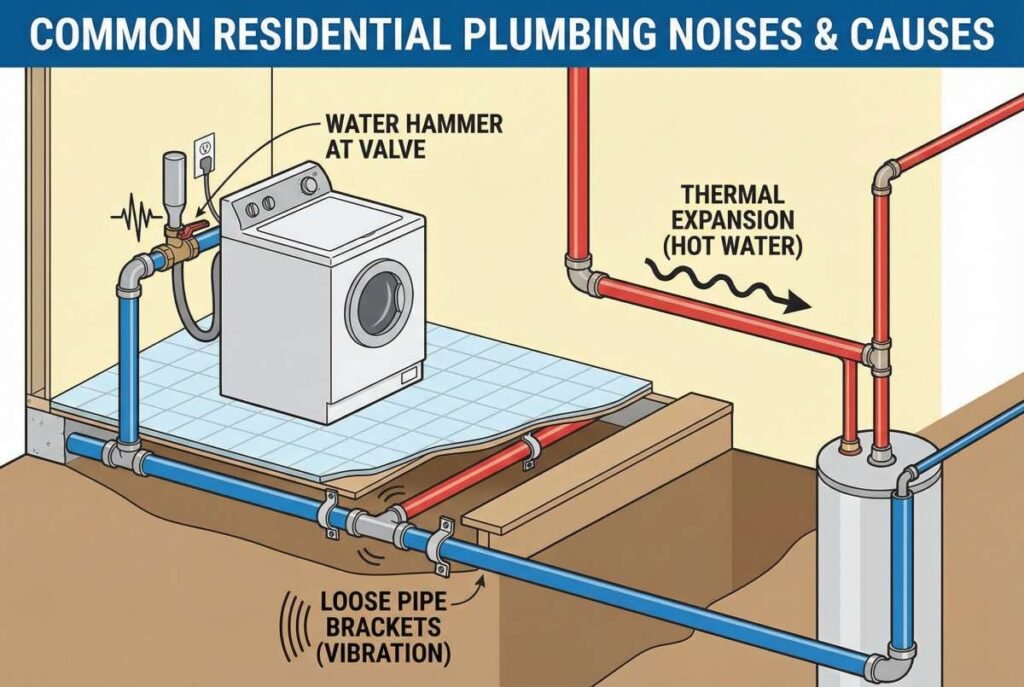
Addressing noisy pipes in a home often involves identifying the specific sound and its origin, as various plumbing issues can manifest as banging, rattling, or gurgling noises. Resolving these sounds typically requires targeted interventions, such as securing loose pipes, installing specialized devices, or adjusting water pressure within the system.
Identifying Common Causes of Pipe Noise
Noisy pipes are frequently caused by water hammer, loose pipes, or high water pressure, each requiring a distinct diagnostic approach to pinpoint the exact problem. Water hammer, characterized by a banging sound, occurs when water flow abruptly stops or changes direction, creating a shockwave within the pipes. This sudden pressure surge can be quite forceful, leading to audible banging. According to the Plumbing Manufacturers International (PMI) (2023), water hammer is a common issue that can lead to significant wear and tear on plumbing systems if left unaddressed, potentially causing leaks or fixture damage. Loose pipes, often found in walls or floor joists, can rattle or vibrate against structural elements, especially when water flows through them, creating an irritating noise. High water pressure can also contribute to various pipe noises, including humming or whistling, as the increased force of water can strain the plumbing system and its components.
Solutions for Water Hammer and Banging Pipes
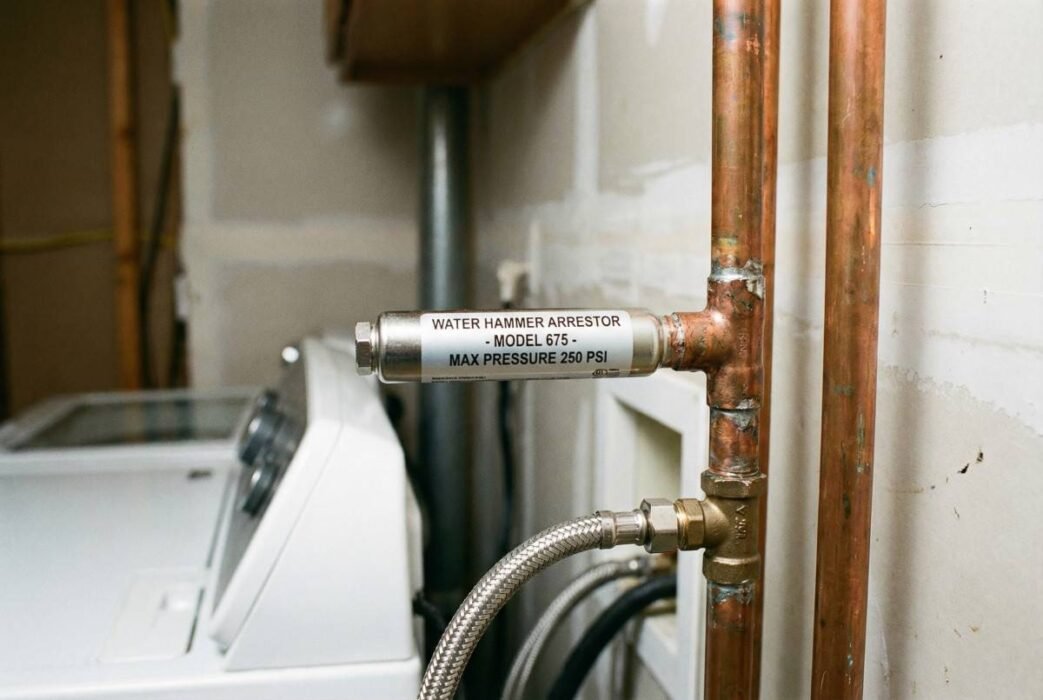
Water hammer, a common cause of banging pipes, can be effectively mitigated by installing water hammer arrestors or ensuring proper air chambers are present and functioning within the plumbing system. Water hammer arrestors are specialized devices designed to absorb the shockwaves created when water flow is suddenly stopped, preventing the pipes from banging against their supports or other structures. These devices typically contain a sealed air cushion or a spring-loaded piston that compresses to absorb the pressure surge, thereby dampening the impact. According to a report by the American Society of Plumbing Engineers (ASPE) (2021), properly sized and installed water hammer arrestors can significantly reduce noise and prevent damage to plumbing fixtures and connections. Additionally, ensuring that existing air chambers are not waterlogged can help restore their shock-absorbing function, though modern plumbing often relies more on mechanical arrestors for consistent performance.
Addressing Loose Pipes and Vibrations
Loose pipes, which often cause rattling or vibrating noises, can be secured by adding pipe clamps, straps, or insulation to prevent movement against building materials. When pipes are not adequately supported, they can shift and knock against joists, studs, or other pipes, especially during changes in water flow or temperature, leading to persistent and annoying sounds. Installing additional pipe hangers or clamps, particularly in areas where pipes pass through framing or are exposed, can significantly reduce this unwanted movement and stabilize the plumbing lines. According to the International Association of Plumbing and Mechanical Officials (IAPMO) (2022), proper pipe support is crucial for both noise reduction and the long-term integrity of the entire plumbing system. Wrapping pipes with foam insulation or rubber padding can also effectively dampen vibrations and reduce noise transmission through walls and floors, contributing to a quieter home environment.
Managing High Water Pressure and Air in Pipes
High water pressure and trapped air are common culprits behind various pipe noises, and both can be resolved through relatively straightforward adjustments to the plumbing system. Excessive water pressure can lead to humming, whistling, or even banging sounds as the increased force stresses pipes and fixtures, potentially causing premature wear. Installing a pressure reducing valve (PRV) at the main water supply line can effectively regulate the incoming pressure to a safe and consistent level, typically between 40-60 psi, thereby alleviating stress on the system. According to the Environmental Protection Agency (EPA) (2020), maintaining appropriate water pressure not only reduces noise but also conserves water and extends the lifespan of plumbing appliances. Trapped air in pipes can cause gurgling or sputtering noises, particularly when faucets are first opened, indicating air pockets within the lines. This issue can often be resolved by bleeding air from the system, which involves turning off the main water supply, opening all faucets to drain the system, and then slowly refilling it to purge the air completely.
Comparison of Common Pipe Noise Solutions
| Noise Type | Primary Cause | Recommended Solution | Complexity |
|---|---|---|---|
| Banging/Knocking | Water Hammer | Install water hammer arrestors | Medium |
| Rattling/Vibrating | Loose Pipes | Secure with clamps/insulation | Low to Medium |
| Humming/Whistling | High Water Pressure | Install Pressure Reducing Valve (PRV) | Medium |
| Gurgling/Sputtering | Trapped Air/Blockage | Bleed air/Clear blockage | Low to Medium |
Steps to Bleed Air from Your Plumbing System
- Turn off the main water supply to your home.
- Open all faucets (hot and cold) throughout the house, starting from the highest floor and working your way down.
- Allow all water to drain completely from the pipes.
- Close all faucets, starting from the lowest floor and working your way up.
- Slowly turn the main water supply back on.
- Open each faucet one by one, starting from the lowest floor, until water flows smoothly and all air is expelled.
FAQ: How to Stop Pipes from Making Noise
Q: What causes pipes to make a banging noise?
A: Banging noises in pipes are most commonly caused by “water hammer,” which occurs when water flowing through pipes is abruptly stopped or changes direction, creating a pressure surge. This sudden stop causes the water to slam against the pipe walls or valves, leading to a distinct banging sound.
Q: Can high water pressure cause noisy pipes?
A: Yes, high water pressure can definitely contribute to noisy pipes. Excessive pressure can cause pipes to vibrate, hum, or even whistle as water rushes through them with too much force. It can also exacerbate issues like water hammer and put undue stress on your plumbing system.
Q: How do I know if I have loose pipes?
A: Loose pipes often manifest as rattling or vibrating sounds, particularly when water is running through them or when the heating system kicks on. These noises are typically heard within walls, floors, or ceilings where pipes are not adequately secured and are knocking against framing or other surfaces.
Q: Is it normal for pipes to gurgle?
A: Occasional minor gurgling might occur, but persistent or loud gurgling often indicates trapped air in the plumbing system or a partial blockage in a drainpipe. If you hear frequent gurgling, especially from drains, it may be a sign of a more significant issue that requires attention.
Q: What is a water hammer arrestor?
A: A water hammer arrestor is a plumbing device designed to absorb the shock waves created when water flow is suddenly stopped in a pipe. It typically contains a sealed air chamber or a piston that compresses to cushion the impact, preventing the characteristic banging noise and protecting the plumbing system from damage.
Q: How can I reduce noise from pipes in walls?
A: To reduce noise from pipes in walls, you can secure loose pipes with pipe clamps or straps, especially where they pass through studs or joists. Adding insulation around the pipes can also help dampen vibrations and sound transmission. In some cases, installing water hammer arrestors can alleviate banging noises that resonate through walls.
Q: When should I call a professional plumber?
A: You should consider calling a professional plumber if you are unable to identify the source of the pipe noise, if the noise persists after attempting basic solutions, or if you suspect a more serious underlying issue such as a significant blockage, high water pressure problems, or extensive pipe damage. A professional can accurately diagnose and safely resolve complex plumbing issues.
Addressing noisy pipes promptly can prevent potential damage to your plumbing system and restore peace to your home. By understanding the common causes and implementing appropriate solutions, homeowners can effectively mitigate issues ranging from water hammer to loose pipes and high water pressure. Regular maintenance and timely intervention are key to ensuring a quiet and efficient plumbing system.
