The Unforeseen Incident on Seawall Boulevard
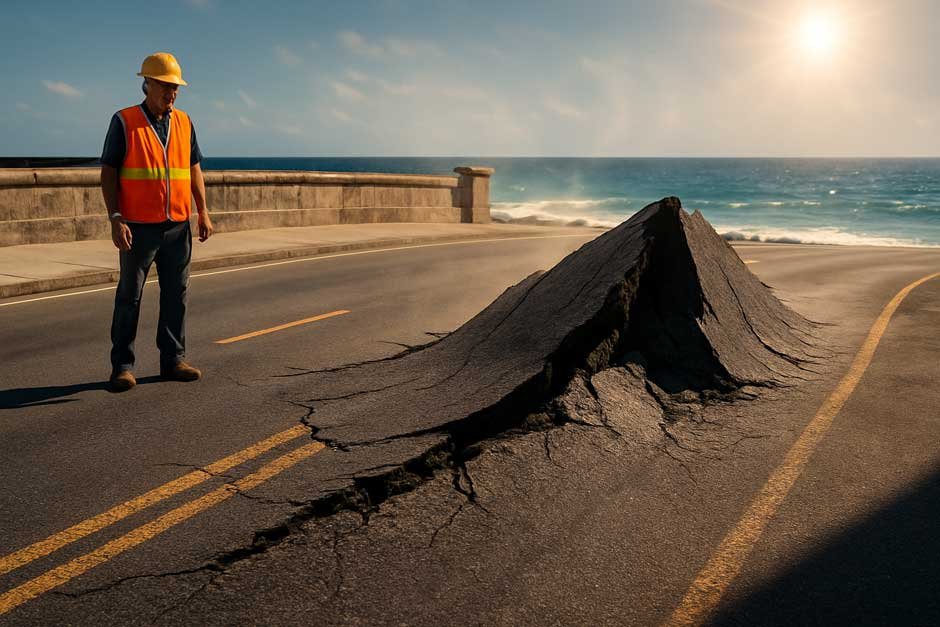
It was a typical sweltering summer Sunday in Galveston, Texas, when the unexpected happened. A section of the iconic Seawall Boulevard, the main artery running along the coast, suddenly buckled. The incident occurred near the 77th Street intersection, transforming a smooth stretch of asphalt into a jagged, impassable ridge.
The sight was startling. Drivers and pedestrians were confronted with a dramatic upward shift in the road surface, a clear sign that something significant had given way beneath the pavement. Local authorities and the Texas Department of Transportation (TxDOT) were immediately alerted to the hazard.
The area was quickly cordoned off, leading to an immediate closure of the affected lanes. This swift action was crucial to prevent any accidents, as the buckled road presented a serious danger to passing traffic. The closure, while necessary, caused temporary disruption to the flow of weekend beachgoers and local residents.
The Primary Culprit: Extreme Texas Heat
The immediate and most widely accepted explanation for the road’s failure pointed directly to the relentless Texas heat. The region was, and often is, experiencing a prolonged period of extreme temperatures, pushing materials to their limits.
Asphalt and concrete, like most materials, expand when heated. When the temperature soars, the road surface attempts to expand, but it is constrained by the surrounding, cooler pavement. This immense pressure builds up until the material has nowhere left to go but up, resulting in a sudden, violent buckle.
This phenomenon, known as thermal expansion, is a constant challenge for infrastructure engineers in hot climates. The sheer intensity of the summer heat on the Texas coast proved to be too much for this particular stretch of road to withstand.
A Secondary Factor: Water Intrusion
While heat was the main driver, many experts and local observers noted that water likely played a significant, secondary role. The Seawall Boulevard is constantly exposed to the elements, including heavy rains and high humidity.
Rainwater can seep into existing micro-cracks and joints in the asphalt. When this water is trapped beneath the surface, the intense heat causes it to expand or creates hydrostatic pressure. This trapped pressure then works in tandem with the thermal expansion of the pavement itself.
The combination of extreme heat and internal water pressure provides a powerful one-two punch, making the road far more susceptible to buckling than heat alone might suggest. It highlights the complex maintenance challenges of coastal infrastructure.
Swift Response and Temporary Fixes
The response from the Texas Department of Transportation was both rapid and decisive. Crews were mobilized almost immediately to assess the damage and begin the necessary repairs. The goal was to restore traffic flow as quickly as possible.
The initial work involved a temporary fix to grind down the buckled section and repave the area. This overnight effort allowed the road to be reopened to traffic by the following morning, minimizing the impact on the busy tourist and commuter route.
This quick turnaround demonstrated the priority placed on keeping the Seawall Boulevard operational. However, it was understood that a more permanent, long-term solution would be required to prevent a recurrence of the issue.
The Seawall’s Resilience and History
It is important to put the road buckling incident into its proper historical context. The Galveston Seawall itself, a massive concrete structure, was built after the devastating 1900 hurricane to protect the city from the Gulf of Mexico.
The seawall structure remains robust and unaffected by the road surface issue. The buckling was a failure of the asphalt pavement laid on top of the structure, not a structural failure of the historic seawall itself.
The incident serves as a reminder that while the seawall protects the city from the sea, the road that runs alongside it is subject to the relentless forces of nature, particularly the extreme heat that defines the Texas summer.
Looking Ahead: Permanent Solutions and Prevention
Following the temporary repair, TxDOT announced plans for a more comprehensive, permanent fix. This involves not just replacing the damaged asphalt but also addressing the underlying causes, such as improving drainage and using more heat-resistant materials.
Engineers are continually exploring new road construction techniques designed to better accommodate thermal expansion and contraction. This incident provides valuable data for future infrastructure planning in coastal areas facing rising temperatures.
For Galveston, the buckling of a small section of its famous boulevard is a clear signal. It underscores the need for proactive maintenance and investment to ensure that this vital piece of coastal infrastructure can continue to serve the community for decades to come.
