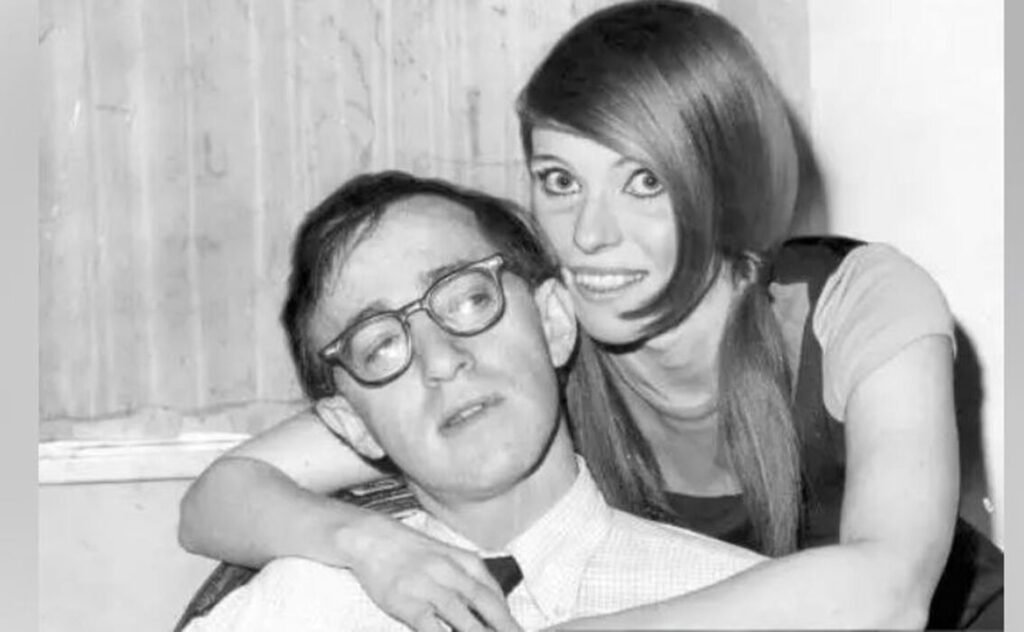
In 2015, after nearly half a century of silence, a voice from the past emerged. Harlene Rosen, a name largely forgotten by the public, sent a heartfelt message to her ex-husband, Woody Allen, for his 80th birthday. It was a moment that quietly rippled through the media, a brief but poignant reminder of a life lived deliberately outside the spotlight. But who was Harlene Rosen, and why does her story resonate so powerfully today?
She was more than just Woody Allen’s first wife. She was a talented pianist, a college-educated woman, and a private individual who found herself thrust into the turbulent world of a rising comedy star. Her story is one of young love, public humiliation, and quiet resilience. It is a narrative that challenges our modern obsession with fame and offers a timeless lesson in dignity and self-preservation.
This article delves into the life of Harlene Rosen, exploring her journey from a gifted musician in 1950s New York to a woman who took a pioneering stand for her privacy. We will uncover the details of her early life, her tumultuous marriage, the infamous “Quasimodo” incident, and the courageous legal battle that followed. Her story is not just a footnote in celebrity history; it is a testament to the strength of a woman who chose to define her own life, on her own terms.
The Making of a Pianist: Harlene’s Early Years
Harlene Susan Rosen was born in Brooklyn, New York, into a world that valued intellect and culture. While some sources cite her birth year as 1941, others point to 1939, placing her at the heart of a generation shaped by the echoes of war and the promise of a new era. She was raised in a Jewish family where education was not just encouraged but revered. Her father, Julius Rosen, was a respected figure within the New York City public school system, and her mother, Judith, fostered a home environment where artistic pursuits could flourish.
This upbringing instilled in Harlene a quiet confidence and a deep appreciation for the arts. Alongside her sister, Phyllis, she navigated a childhood that was both intellectually stimulating and creatively nurturing. It was in this environment that she discovered her first love: the piano. The instrument became more than a hobby; it was a language through which she could express the thoughts and emotions that words could not capture. Her dedication to music was a testament to her discipline and passion, qualities that would define her character long after she left the familiar streets of Brooklyn.
While many young women of her time were encouraged to prioritize marriage over personal ambition, Harlene pursued higher education, completing four years of college. This commitment to her own intellectual growth was a quiet act of rebellion against the era’s prevailing social norms. It was this blend of artistic sensibility and academic rigor that shaped the woman who would soon find herself in the orbit of a comedic genius, armed with a resilience she did not yet know she would need.
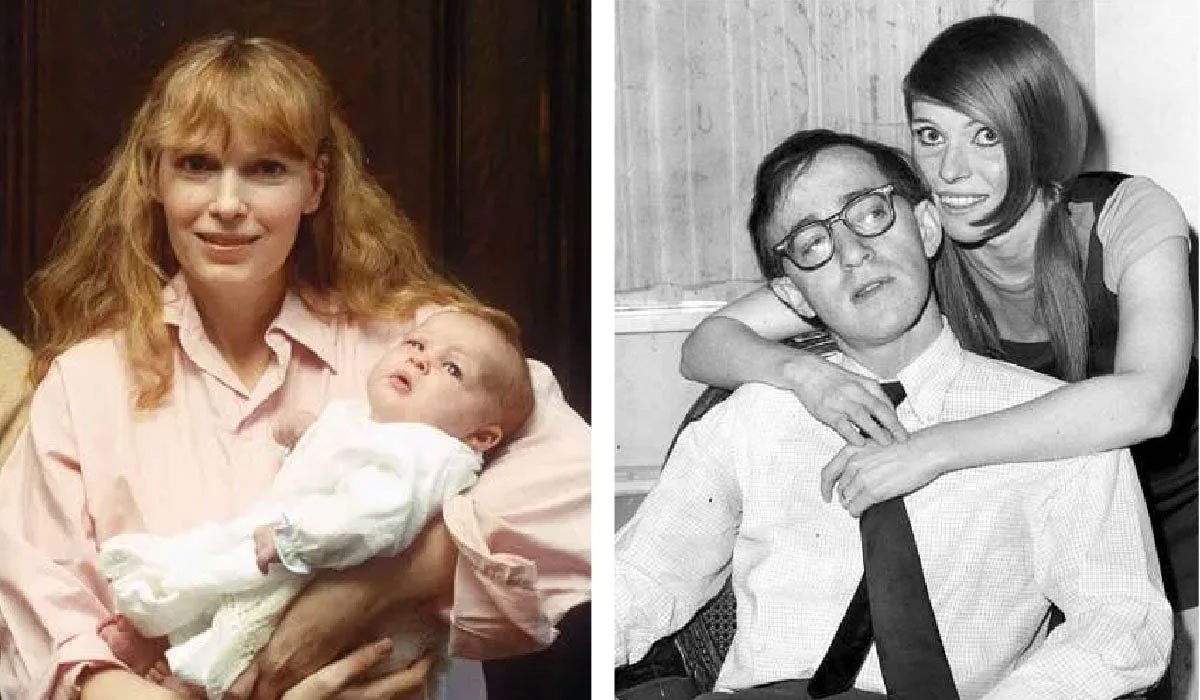
A Gifted Pianist Before the Fame
Long before her name was linked to Woody Allen, Harlene Rosen was, first and foremost, a musician. Her identity was forged not in the shadow of a celebrity but in the black and white keys of a piano. Music was her sanctuary and her voice. It was a world where she held complete creative control, a stark contrast to the life that awaited her.
Her passion for the piano was not a fleeting interest. It was a serious pursuit that shaped her youth. Immersed in the vibrant jazz scene of 1950s New York, she found a community that shared her artistic language. It was this shared passion that would eventually lead her to cross paths with a young Woody Allen, playing piano in his jazz band. Their connection was initially one of creative synergy, a mutual appreciation for the rhythm and soul of the music that defined their generation.
For Harlene, the piano was more than an instrument; it was an extension of her being. It was a source of strength, a constant companion through the joys and sorrows of her young life. This deep-rooted artistic identity provided her with an inner resilience, a core of selfhood that would prove invaluable in the years to come. Her story is a powerful reminder that her life had its own melody long before it became intertwined with someone else’s narrative.
A Chance Meeting in 1950s New York

The New York of the mid-1950s was a crucible of cultural energy. It was a city alive with the bebop rhythms of jazz clubs, the intellectual fervor of coffee houses, and the ambitious dreams of a generation eager to make its mark. It was in this electric atmosphere that a 16-year-old Harlene Rosen, a thoughtful pianist, met a 19-year-old Woody Allen, a quick-witted comedy writer with a restless mind.
Their worlds collided within the city’s creative circles. He was just beginning to shape the neurotic, intellectual persona that would later define him, writing jokes for television and performing in small clubs. She was a student and a musician, grounded in the discipline of her art. They found common ground in their shared love for jazz, art, and the sharp, observational humor that permeated their conversations. It was a romance that blossomed quickly, fueled by youthful intensity and the feeling that they were part of something new and exciting.
After a whirlwind courtship, they were engaged in 1955 and married on March 15, 1956. [1] In an era when early marriage was common, their union was not unusual. Yet, it was a decision that would irrevocably shape both of their lives. For Harlene, it meant stepping into a world that was increasingly public, a world that would test the boundaries of her quiet nature and challenge her sense of self.
The Early Years: Love, Struggle, and Growing Tension
Their life together began not in the glamour of Hollywood, but in a modest Brooklyn apartment. The early years of their marriage were a blend of shared dreams and financial struggles. As Woody Allen worked tirelessly to build his career, writing for others and honing his own stand-up act, Harlene provided a stable and supportive home life. She was not merely a bystander to his ambition; she was an active participant in their shared journey, all while continuing her own college education.
They collaborated creatively, with Harlene’s musical talents complementing his comedic pursuits. Yet, as his star began to rise, a subtle but powerful tension emerged. The very wit that had drawn her to him was now being sharpened for a public audience, and the lines between their private life and his professional material began to blur. His ambition was geared toward the spotlight, while her instincts pulled her toward a life of quiet dignity.
This fundamental difference in their personalities created a growing emotional distance. The more successful he became, the more their worlds diverged. The private, intimate space they had built together was slowly being eroded by the demands of his burgeoning fame. It was a classic tale of two people who, while once in sync, found themselves on divergent paths, one leading to global recognition and the other to a deliberate, self-prescribed anonymity.
When Private Pain Became Public Comedy
As Woody Allen’s stand-up career gained momentum, his personal life became a primary source for his comedic material. The intimate, and at times painful, details of his marriage to Harlene were transformed into punchlines for a paying audience. What was once private became public fodder, and Harlene found herself the unnamed, yet unmistakable, subject of his increasingly sharp-edged humor. This was not just a case of a comedian drawing from life; it was a public dismantling of a private relationship.
The most infamous of these jokes was his reference to her as “Quasimodo,” [2] a cruel and dehumanizing comparison that struck at the heart of her dignity. He also referred to her in his act as “the dread Mrs. Allen,” [3] a moniker that painted her as a burdensome figure in his life. For Harlene, this was not just a bad joke; it was a profound betrayal. The man she had married, the creative partner she had supported, was now using his public platform to mock and belittle her. The psychological toll of this public humiliation was immense, turning her private pain into a spectacle for strangers.
In the context of 1960s comedy, where personal boundaries were often blurred for the sake of a laugh, Allen’s jokes were not entirely unique. However, the relentless and targeted nature of his humor set a new, and troubling, precedent. It raised a critical question that remains relevant today: where is the line between artistic expression and personal cruelty? For Harlene Rosen, that line had been crossed, leaving her with no choice but to find a way to reclaim her narrative and her name.
Taking a Stand: Her Pioneering Defamation Lawsuit
By 1959, the marriage had fractured beyond repair, and the couple separated. The divorce was finalized in 1962 [1], but the end of their legal union did not stop the public mockery. Faced with ongoing humiliation from Woody Allen’s stand-up routines, Harlene Rosen made a decision that was both courageous and exceptionally rare for her time: she sued him for defamation. In an era when women were often expected to endure such slights in silence, her lawsuit was a defiant act of self-preservation.
The legal battle was not about money; it was about dignity. Harlene sought to reclaim her name from the caricature it had become in Allen’s comedy. The case drew media attention, highlighting the ethical dilemma at the heart of their dispute. Her lawsuit challenged the notion that a comedian’s artistic license was a blank check to inflict personal harm. It was a pioneering move that foreshadowed the modern discourse on privacy rights and the responsibilities of public figures.
The lawsuit was eventually settled out of court. Allen was ordered to stop using her in his act, and she was awarded a small amount of alimony—just $75 a week. But the victory was not in the financial terms. It was in the precedent she set. By taking a stand, Harlene Rosen asserted her right to be seen as a person, not a punchline. It was a quiet but powerful victory that underscored her resilience and her unwavering commitment to her own dignity.
Reclaiming Privacy: A Deliberate Retreat from the Spotlight
After the divorce and the ensuing legal battle, Harlene Rosen made a conscious and resolute choice: she disappeared from public life. This was not a passive fading into obscurity but an active, deliberate retreat. In a world that was becoming increasingly fascinated with celebrity, she chose anonymity. She did not write a tell-all book, grant sensational interviews, or attempt to leverage her connection to a rising star. She simply walked away.
Her decision stands in stark contrast to the norms of modern celebrity culture, where every breakup is a potential media event and every personal story is a commodity. Harlene’s silence was her power. It was a refusal to let her life be defined by a famous ex-husband or a painful public chapter. The psychological toll of the public humiliation she endured undoubtedly fueled this desire for a life lived on her own terms, far from the intrusive glare of the media.
This choice reveals a profound strength of character. It speaks to a woman who valued her inner peace and personal integrity above any potential for fame or fortune. In an age of oversharing, her story is a powerful reminder that there is dignity in privacy. Her disappearance was not an act of defeat; it was an act of liberation, a reclaiming of her own narrative by refusing to participate in the public spectacle any longer.
Beyond the Headlines: Her Quiet Life of Dignity
What became of Harlene Rosen after she stepped out of the spotlight? The public record is intentionally sparse, a testament to her success in achieving the privacy she so deeply desired. She did not remarry publicly, nor did she pursue a career that would place her back in the media’s gaze. Instead, she quietly rebuilt her life, finding purpose and fulfillment far from the world that had once treated her with such casual cruelty.
While concrete details are scarce, it is widely believed that she returned to her intellectual and artistic roots. Some speculate that she pursued a career in education or social work, fields that align with her family background and her own college education. It is almost certain that her love for music, particularly the piano, remained a constant source of solace and expression throughout her life. The instrument that had been her voice before the fame likely became her sanctuary after it.
The extraordinary anonymity she maintained is, in itself, a remarkable achievement in the digital age. Her story is not one of a life unlived, but of a life lived on her own terms. Her silence was not empty; it was filled with the quiet dignity of a person who knew her own worth, independent of public validation. Her resilience is found not in headlines, but in the deliberate and successful creation of a peaceful, private existence.
Nearly 50 Years Later: A Message of Forgiveness and Reflection
For nearly five decades, Harlene Rosen remained a ghost, a name whispered only in biographies and historical articles about Woody Allen. Then, in 2015, the silence was broken. In a gesture that was as unexpected as it was graceful, she contributed a message to David Evanier’s biography, “Woody,” [2] to mark Allen’s 80th birthday. It was a moment of profound closure, a final, gentle word from a woman who had long ago chosen peace over bitterness.
Her message was not one of anger or resentment. Instead, it was a reflection on their shared youth, a testament to the complex and often contradictory nature of love and memory. She wrote: “Wondrous Woody, you inspired me with your enormous energy, creativity and charisma. I loved going to movies with you. I loved making music with you… After our teenage summer of love, marriage was difficult. You established a career. I completed four years of college. We supported each other, learnt about life and became adults. There was sadness, tears, laughter and love.”
These words, offered without any demand for apology or recognition, revealed the depth of her character. They spoke of a woman who had processed her pain and emerged with a sense of perspective and forgiveness. The message was a quiet triumph, a final act of agency in a story that had so often been told by others. It was a powerful and poignant postscript, a reminder that even after years of public humiliation and private struggle, grace can have the final say.
A Story That Challenges Everything We Know About Fame
Harlene Rosen’s story, though lived largely in the shadows, casts a long and revealing light on our culture’s relationship with fame. Her life is more than a historical footnote; it is a powerful counter-narrative to the modern gospel of celebrity. In an era where public exposure is often mistaken for success, her deliberate retreat into privacy serves as a timeless lesson in the value of self-preservation and personal dignity.
Her pioneering defamation lawsuit was a quiet but significant moment in the ongoing debate between artistic freedom and individual privacy. It challenged the then-prevailing notion that personal relationships were fair game for public consumption, especially at the hands of a powerful male figure. Her case raised fundamental questions about the responsibilities of artists and the right of individuals to control their own stories, a conversation that has become even more critical in the age of social media and reality television.
Ultimately, Harlene Rosen’s legacy is one of quiet strength and profound agency. She reminds us that the most powerful choice one can make is the choice to live authentically, even if it means turning away from the spotlight. Her story challenges us to reconsider our own definitions of success and to recognize the quiet, often unseen, courage it takes to forge a life of meaning and peace, far from the maddening crowd.
Frequently Asked Questions
- 1. Who is Harlene Rosen?
- Harlene Rosen is best known as the first wife of filmmaker Woody Allen. A talented pianist and college-educated woman, she was married to Allen from 1956 to 1962. She is also known for her decision to live a private life after their divorce and for suing Allen for defamation over his stand-up jokes about her.
- 2. Why did Harlene Rosen sue Woody Allen?
- Harlene Rosen sued Woody Allen for defamation because he repeatedly mocked her in his stand-up comedy routines after their divorce. He used derogatory nicknames for her, such as “Quasimodo,” causing her public humiliation and emotional distress. Her lawsuit was a pioneering effort to protect her privacy and dignity.
- 3. What was the outcome of her defamation lawsuit?
- The lawsuit was settled out of court. Woody Allen was ordered to stop using Harlene Rosen as a subject in his comedy act, and she was awarded a small amount of alimony. The victory for Rosen was not primarily financial but was a matter of principle, as it legally affirmed her right to not be publicly ridiculed by her ex-husband.
- 4. Did Harlene Rosen and Woody Allen have children together?
- No, Harlene Rosen and Woody Allen did not have any children during their marriage.
- 5. What is Harlene Rosen doing now?
- Harlene Rosen has successfully maintained a private life since the 1960s. There is no public information about her current activities, career, or personal life. This deliberate anonymity is a key part of her story, reflecting her choice to live outside the public eye.
- 6. Why is Harlene Rosen not well known?
- Harlene Rosen is not well known precisely because she chose to be. After her highly public and painful divorce from Woody Allen, she made a conscious decision to retreat from the spotlight and has not sought public attention in any form for over 50 years.
- 7. When did Harlene Rosen break her silence?
- After nearly 50 years of public silence, Harlene Rosen provided a brief, heartfelt message for David Evanier’s 2015 biography of Woody Allen, titled “Woody.” The message was to mark Allen’s 80th birthday.
- 8. What did her 2015 message say?
- Her message was one of reflection and forgiveness, acknowledging both the good and difficult times in their relationship. She wrote about their shared love of music and movies, their mutual support during their youth, and the sadness and laughter they experienced, concluding that they “learnt about life and became adults” together.
The Quiet Strength of Harlene Rosen
Harlene Rosen’s journey is a powerful testament to the resilience of the human spirit. From a young pianist in love to a woman publicly scorned, she navigated a tumultuous chapter of her life with a quiet strength that is both rare and inspiring. Her story is not one of victimhood but of agency. She took a stand when it mattered, and then, with equal courage, she chose a life of peace over a life of performance.
In a world that constantly demands our attention, Harlene Rosen’s legacy is a quiet but profound reminder that the most meaningful life is often the one lived on one’s own terms. Her story challenges us to look beyond the headlines, to find the humanity behind the famous names, and to respect the simple, powerful choice to live a life of dignity, far from the noise. Her story deserves to be remembered, not as a footnote in someone else’s biography, but as a remarkable narrative of her own.
References
- “Woody Allen.” Wikipedia, The Free Encyclopedia.
- Akbar, Jay. “Woody Allen’s forgotten first wife who he dubbed ‘Quasimodo’ in his nightclub act breaks her silence after nearly 50 years.” Daily Mail, 1 Nov. 2015.
- “Harlene Rosen: A Brief Biography of Woody Allen’s First Wife.” Vocal.media.
