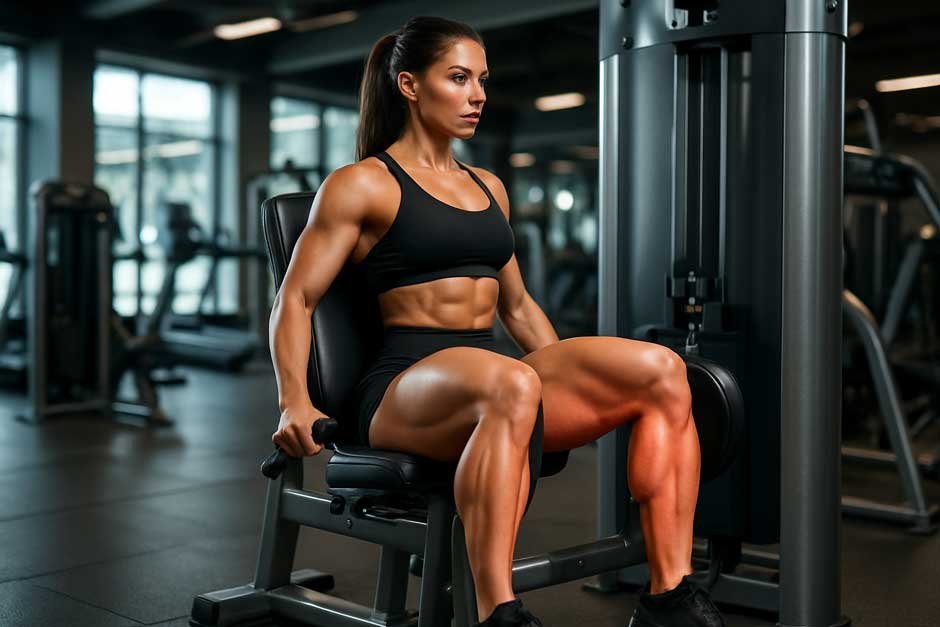
Why the Hip Adductor Machine Deserves Your Attention
The hip adductor machine is a fixture in most commercial gyms, yet it often sits underutilized or misunderstood. Many lifters focus solely on the major compound movements, overlooking the crucial role of the inner thigh muscles.
This specialized piece of equipment is designed to isolate and strengthen the adductor group, offering a safe and highly effective way to target this often-neglected area.
For anyone serious about a balanced physique, improved athletic performance, and injury prevention, incorporating the hip adductor machine into their routine is a smart move.
The Anatomy of Adduction
The adductor group is a powerful collection of five muscles situated on the inside of the thigh. These include the adductor longus, adductor brevis, adductor magnus, pectineus, and gracilis.
Their primary function is adduction, which is the action of pulling the legs back toward the body’s midline.
Beyond this, they are also key players in hip flexion, rotation, and overall pelvic stability. A strong adductor group is a sign of a truly balanced lower body.
The Undeniable Benefits of Adductor Training
Training the adductors goes far beyond simply toning the inner thighs. Their strength is intrinsically linked to how well your entire lower body functions, both in the gym and in daily life.
Strong adductors are essential for powerful, stable movements, acting as critical stabilizers during exercises like squats, deadlifts, and lunges.
Enhancing Core and Lower Body Stability
The adductor muscles work in a dynamic partnership with the glutes and abductors to stabilize the pelvis and hips. This stability is paramount, especially during single-leg movements or when carrying heavy loads.
When you use the hip adductor machine, you are building a more robust and balanced foundation for your entire kinetic chain. This improved stability translates directly into better form and greater strength in your main lifts.
A Shield Against Groin and Knee Injuries
Weak adductors are a common culprit behind various lower body issues, most notably painful groin strains. This risk is particularly high in sports that demand explosive lateral movements or sudden changes in direction.
Consistent, targeted training with the hip adductor machine can effectively “bulletproof” the groin area. It helps to ensure balanced muscle development around the hip joint, which is vital for long-term joint health and injury mitigation.
Mastering the Movement: Proper Form
To get the most out of the hip adductor machine, proper technique is non-negotiable. Simply moving the weight is not enough; the focus must be on muscle engagement and control.
Avoid the temptation to use excessive weight. A slow, deliberate tempo and a full range of motion will always yield superior results compared to a fast, heavy, and sloppy set.
H3: Machine Setup Essentials
Begin by adjusting the seat so that your knees are perfectly aligned with the machine’s central pivot point. This alignment ensures the resistance is applied correctly to the adductor muscles.
Next, set the starting width of the pads. Your legs should be spread comfortably, but without any pre-stretch that causes strain. Finally, select a weight that allows you to maintain perfect form for your target rep range.
H3: Executing the Perfect Rep
Sit tall, pressing your back firmly against the seat pad. Use the handles for balance, but do not pull on them to assist the movement.
Slowly and deliberately bring your legs together, focusing on a powerful squeeze of the inner thighs. Hold the peak contraction for a brief moment.
Control the weight as you slowly return to the starting position. The eccentric phase—the controlled lengthening of the muscle—is crucial for building both strength and muscle mass.
Integrating the Adductor Machine into Your Routine
The hip adductor machine is best utilized as a finishing or accessory exercise. It should typically be performed after your main, heavy compound lifts like squats, leg presses, or deadlifts.
A good starting point is 2 to 3 sets of 10 to 15 repetitions.
If your goal is muscular endurance and stability, opt for a lighter weight and the higher end of the rep range. For pure strength development, increase the weight and aim for 8 to 12 reps.
Beyond the Machine: Functional Adductor Strength
While the machine is an excellent tool for isolation, a well-rounded program should also include functional adductor exercises.
Movements like the Copenhagen plank, side lunges, and wide-stance sumo squats all contribute to comprehensive development.
By combining the targeted isolation of the hip adductor machine with functional movements, you ensure that your inner thigh muscles are not only strong but also fully integrated into your overall movement patterns.
The hip adductor machine is a valuable, effective, and often essential tool for anyone seeking a balanced, strong, and injury-resistant lower body. It provides a level of targeted training that is difficult to achieve through other means.
