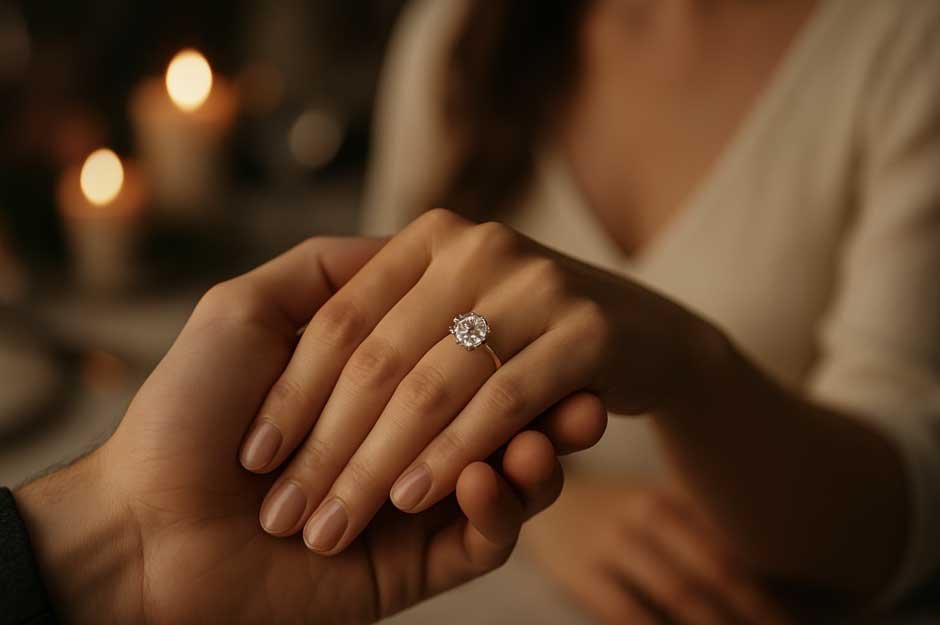
The Modern Answer to an Age-Old Question
Deciding to propose is a monumental step, and it often comes with an equally significant question: how much should an engagement ring cost? For generations, couples were guided by the so-called “three-month salary” rule, a marketing concept from the 1930s designed to boost diamond sales.
Today, that rule is largely considered obsolete. Modern couples understand that the value of an engagement ring isn’t measured in dollars but in the personal significance it holds. The right price is the one that feels comfortable for you and your partner, reflecting your unique journey and financial reality.
Setting a Budget That’s Right for You
Before you start browsing, establishing a clear and realistic budget is the most crucial step. This ensures the process remains joyful rather than stressful, allowing you to focus on what truly matters: celebrating your love.
Look Inward: Your Financial Landscape
Take an honest look at your financial situation. Consider your income, savings, and any outstanding debts. It’s also important to think about your shared future goals, whether that includes saving for a wedding, buying a home, or traveling the world.
Your engagement ring budget should fit comfortably within your broader financial picture. This purchase is the start of a new chapter, and beginning it without unnecessary financial strain is a gift to your future selves.
The Partner Perspective: Aligning Expectations
While a surprise proposal is romantic, a surprise financial decision might not be. Having an open conversation with your partner about the ring is becoming increasingly common and can be an incredibly bonding experience.
Discussing styles, preferences, and even financial boundaries ensures the final choice is something you both love. This collaborative approach frames the purchase as your first major decision as a team, strengthening your partnership from the very start.
Beyond the Ring: Factoring in Other Costs
The price tag on the ring isn’t the final number. Remember to account for additional expenses, such as sales tax, which can add a significant amount. It’s also wise to budget for ring insurance to protect your investment and potential resizing fees to ensure a perfect fit.
Decoding the Price Tag: What Determines an Engagement Ring’s Cost?
Understanding the key factors that influence a ring’s price will empower you to make informed decisions and find the best value within your budget.
The Four Cs: A Quick Guide to Diamond Value
The quality and price of a diamond are determined by the Four Cs. Cut refers to how well the diamond’s facets interact with light, determining its brilliance. Color is graded on a scale from colorless to light yellow, while Clarity measures the absence of internal inclusions or external blemishes.
Finally, Carat is the diamond’s weight. To maximize your budget, many experts suggest prioritizing the Cut, as a well-cut diamond can appear more brilliant and larger than a poorly cut stone of a higher carat weight.
Natural vs. Lab-Grown: A Modern Dilemma
Today’s market offers a choice between natural diamonds, formed over billions of years, and lab-grown diamonds, which are created in a controlled environment. Lab-grown diamonds are physically and chemically identical to their natural counterparts but often cost significantly less.
This choice allows you to get a larger or higher-quality stone for your budget. The decision between natural and lab-grown often comes down to personal values, whether you prioritize the rarity of a natural stone or the value and technology of a lab-grown one.
Beyond the Center Stone: Settings and Metals
The center stone is just one part of the equation. The metal for the band—such as platinum, white gold, or yellow gold—affects both the look and the price. Platinum is typically the most expensive due to its rarity and durability.
Likewise, a simple solitaire setting will be more affordable than an intricate pavé or halo design that requires more metal and additional smaller diamonds.
Smart Strategies to Maximize Your Budget
Getting the perfect ring doesn’t have to mean stretching your finances. With a few smart strategies, you can find a stunning piece that honors both your love and your budget.
Think Outside the Diamond Box: Exploring Gemstone Alternatives
Diamonds aren’t the only option. Colorful gemstones like sapphires, emeralds, and rubies offer a unique and often more affordable alternative. These stones can create a deeply personal ring that stands out from the crowd.
The Charm of a Story: Considering Vintage and Heirloom Rings
A vintage or heirloom ring carries a sense of history and romance that is impossible to replicate. These pieces are not only sustainable but can also be more budget-friendly than a brand-new ring, offering intricate craftsmanship from a bygone era.
Timing is Everything: How to Shop for Sales
If you have some flexibility in your timeline, consider shopping during major sales events. Jewelers often offer promotions around holidays like Black Friday or Valentine’s Day, which can lead to significant savings without compromising on quality.
A Symbol of Your Love, Not Your Salary
Ultimately, the question of how much an engagement ring should cost has a simple answer: it should cost what feels right for you. This ring is a symbol of your unique commitment, a private promise made public.
Forget the outdated rules and societal pressures. The perfect ring is one that reflects your shared values and celebrates your love story. Choose with your heart and your head, and you will find a piece that you both cherish for a lifetime.
